


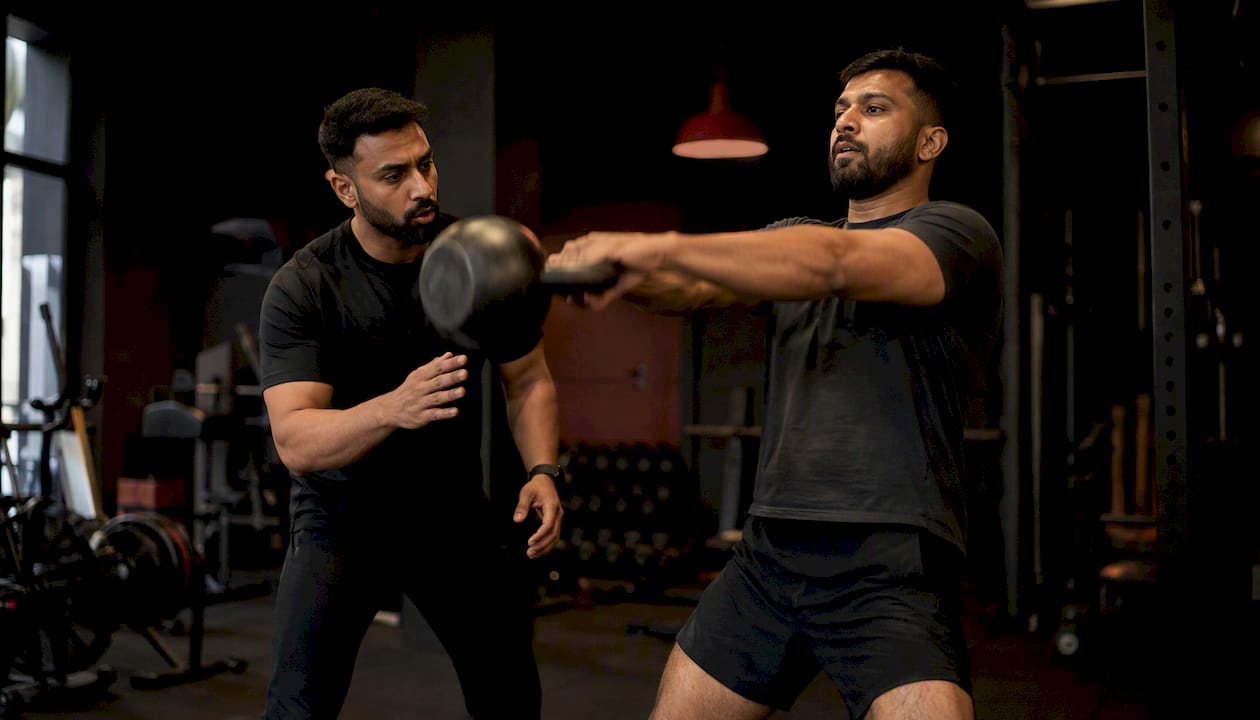
Choose a strength coach who demonstrates five things before you ever pay for a package: a real movement assessment, a progressive program (not random workouts), measurable tracking beyond the scale, credentials that match your goal, and communication you can actually work with. Skip any one of these and you’re rolling the dice on your time, your money, and, if you’re coming back from an injury, your joints.
These five elements aren’t arbitrary. A coach who assesses before programming catches the issues that cause injuries later. One who tracks progress systematically can prove the plan is working instead of asking you to take it on faith. Here’s what to check first:
- Does the coach test your movement and strength baselines before writing anything?
- Can they show you a written program or a sample training week?
- Do they track more than your body weight, and on what schedule?
Key Takeaways
Choosing the right strength coach comes down to verifying assessment practices, progressive programming, measurable tracking, and credentials before you commit money to any package.
| Point | Details |
|---|---|
| Demand an assessment first | No baseline testing means no way to measure whether the program is actually working. |
| Check for planned progression | Programs should repeat exercises across weeks, not change randomly every session. |
| Verify credentials match the job | Look for CSCS or a kinesiology degree for performance goals, plus current CPR/first-aid certification. |
| Get pricing and policies in writing | Confirm what’s included and the cancellation policy before buying any package. |
| Bodies by Mahmood covers the checklist | The Orlando facility runs assessment-first evaluations and coordinates directly with physical therapists for post-rehab clients. |
Table of Contents
- How to Choose a Strength Coach: The 9-Point Checklist
- Strength Coach vs. Personal Trainer: Which One Do You Need?
- Questions to Ask a Personal Trainer or Strength Coach Before You Sign Up
- Certifications and Education: What Actually Signals Competence
- What Should a Fair Strength Coaching Package Actually Cost?
- The Technical Side: Program Design and Progress Tracking
- Red Flags That Should Send You Elsewhere
- Post-Rehab Training vs. Physical Therapy: Where the Handoff Happens
- Does the Coach Have a Track Record With Your Specific Goal?
- Availability and Scheduling: Does the Fit Actually Work Logistically?
- Why Location and Facility Quality Change the Outcome
- How I Evaluate New Clients
- Ready to Start? Here’s How Training at Bodies by Mahmood Works
- Frequently Asked Questions
- Sources
How to Choose a Strength Coach: The 9-Point Checklist
A real strength coach behaves differently from someone who just runs you through a circuit. Here’s what separates the two, in the order you should check for it.
- Assessment before programming. They test movement patterns, strength baselines, and injury history before writing a single set. No assessment means no baseline to measure against later.
- Planned progression, not random workouts. Sessions repeat and build across weeks rather than changing every time. The NSCA’s own certification standards treat this kind of planned, repeated exercise selection as a mark of legitimate programming, since technical mastery requires repetition.
- Defined progress metrics. Volume, intensity, and movement quality under fatigue, tracked on a schedule, not just “how do you feel.”
- Relevant credentials. A recognized certification (more on this below) plus current CPR and first-aid certification, no exceptions.
- Specialization that matches you. A coach who mostly trains general population clients isn’t automatically wrong for an athlete, but the fit matters.
- Written program samples. A sample week or block you can look at before committing, plus session notes you can access afterward.
- Coaching style you can tolerate weekly. Teaching cues, motivation style, and general communication should fit how you actually respond to feedback.
- Transparent pricing and policies. Clear cancellation and billing terms in writing, not a verbal promise.
- References and retention signals. Long-tenured clients and a willingness to coordinate with your physical therapist or doctor when relevant.
Pro Tip: Ask to see one week of programming from a current client (names redacted). If a coach hesitates or can’t produce one, that alone tells you more than any certification on the wall.
Strength Coach vs. Personal Trainer: Which One Do You Need?
The terms get used interchangeably, but the daily practice differs. A strength coach typically works from performance-driven programming built around sport demands: force production, movement efficiency under load, and periodized cycles tied to a season or a return-to-sport timeline. A personal trainer more often focuses on general fitness, weight management, and broad health outcomes.
- Choose a degree- or CSCS-backed coach if you’re a competitive athlete, returning from injury with complex loading needs, or training for a specific sport outcome.
- A certified personal trainer is often enough for general health goals, basic strength building, or fat loss without sport-specific demands.
- Match the decision to your outcome, not the label on the business card. Someone chasing a faster 40-yard dash needs different expertise than someone chasing better blood pressure numbers.
Questions to Ask a Personal Trainer or Strength Coach Before You Sign Up
Bring these into your first conversation. The answers matter more than the resume.
- “Walk me through how you’d assess me in the first session.” A vague answer or a jump straight to selling a package is a yellow flag.
- “How do you decide when to increase my weight or intensity?” Listen for specific rules (percentage increases, rep targets hit for X sessions) rather than “when it feels right.”
- “What do you track besides my weight?” Green light: volume, movement quality, strength numbers. Red flag: nothing measurable at all.
- “What’s included in the price, and what’s your cancellation policy?” Get this in writing before paying for a bundle.
- “Can I see a sample week of programming, or try a session first?” A journalist-vetted trainer guide flags refusal to let you observe or trial a session as one of the clearest warning signs in the hiring process.
If the answers are specific and consistent, that’s green. If they’re vague or shift depending on what you ask next, walk.
Certifications and Education: What Actually Signals Competence
Not all credentials carry the same weight. A basic certified personal trainer (CPT) from a recognized body like ACE, NASM, or NSCA meets a minimum floor of knowledge on exercise technique, safety, and program basics. That floor matters, but it’s a starting point, not proof of advanced skill.
- The NSCA-CSCS credential requires deeper knowledge of periodization, biomechanics, and sport science than standard CPT certifications, and it’s the credential most strength and conditioning professionals treat as the industry benchmark.
- A degree in kinesiology or exercise physiology adds academic depth to real-world coaching, especially for complex cases.
- Current CPR and first-aid certification isn’t optional. It’s baseline safety infrastructure, not a nice extra.
- Credentials only matter when they show up in the work: better assessments, smarter progressions, sharper program design. A wall full of certificates with no written program to show is a mismatch worth noticing, since certification alone doesn’t guarantee quality coaching.
What Should a Fair Strength Coaching Package Actually Cost?
Prices vary by city, coach experience, and specialty, so there’s no single fair number. What matters more is what’s bundled into that price.
- A fair package includes the initial assessment, ongoing programming, scheduled progress checks, and a defined communication cadence, not just gym time.
- Get exactly what’s covered in writing: programming, nutrition guidance if promised, reassessment frequency, and billing terms.
- Red flags: unusually cheap rates that suggest a templated program, hard-sell tactics on day one, or long contracts with no reassessment built in.
- Before buying a package, ask for a written sample week and a clear cancellation policy. Both should take five minutes to produce if the coach actually has them.
The Technical Side: Program Design and Progress Tracking
Good programming isn’t improvisation. It follows planned cycles with defined progression rules, and it repeats exercises across weeks so you actually get better at them instead of learning a new movement every session.
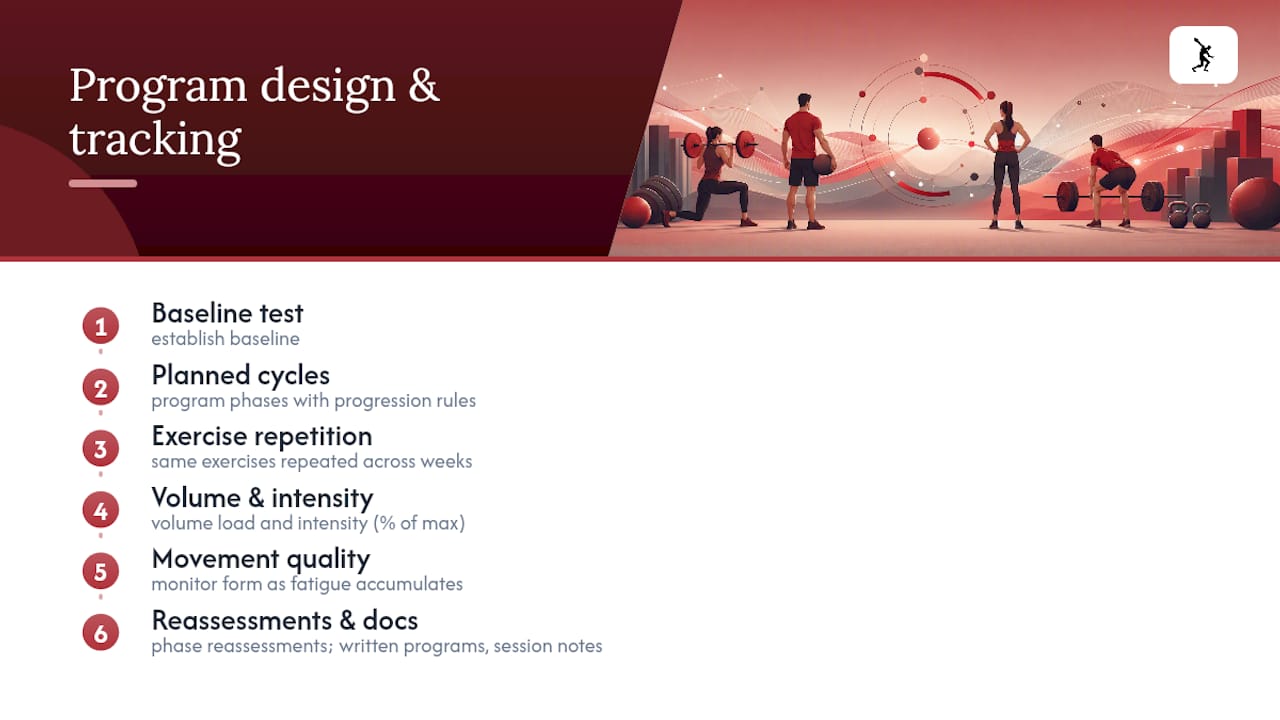
Tracking should go beyond body weight. Look for volume load (sets times reps times weight), intensity relative to your max, movement quality as fatigue accumulates, and personal records on key lifts or tests. A coach following this model tends to reassess on a rhythm: a baseline test, a check at four to six weeks, and formal reassessments tied to program phases rather than the calendar. This structure mirrors best practices in senior fitness tracking as much as it does athletic programming, since the principle of measuring before adjusting applies at every age.
Documentation matters as much as the workout itself. Evaluating coaching effectiveness comes down to whether the coach can show you assessment data, progression logic, and multi-dimensional tracking, not just anecdotes about how hard the sessions feel. Written programs and accessible session notes are the paper trail that proves the plan is real.
Red Flags That Should Send You Elsewhere
A few behaviors should end the conversation immediately, no matter how good the sales pitch sounds.
- Random workouts every session with zero progression or repeated exercises.
- Guarantees of extreme results in a suspiciously short timeframe.
- No assessment, no written program, and no clear answer on how progress gets measured.
- Aggressive upsells at the first meeting, missing CPR/first-aid certification, or refusal to coordinate with your physical therapist after an injury.
Post-Rehab Training vs. Physical Therapy: Where the Handoff Happens
Physical therapy ends when you’re medically cleared. That doesn’t mean you’re ready for max-effort squats or sprint work. The gap between “cleared” and “back to full performance” is exactly where post-rehab training lives, and it’s a specialized skill set, not something every general trainer handles well.
A good post-rehab coach rebuilds connective tissue tolerance gradually, restores the specific movement patterns the injury disrupted, and actively hunts for the compensatory habits that caused the problem in the first place. That’s different from general strength coaching, where the starting point is usually a healthy body with no history to work around.
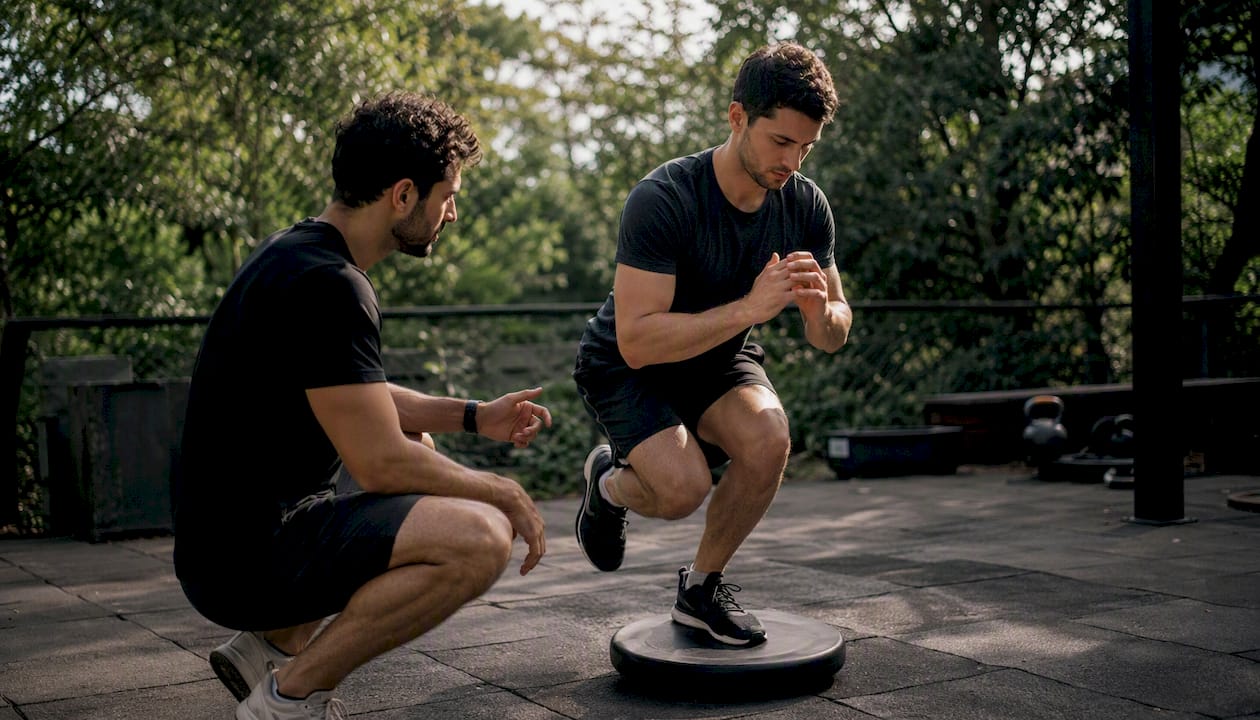
The biggest mistake clients make here is moving straight from a physical therapist to a generic trainer who doesn’t understand that gap. Programs built for training after physical therapy clearance prioritizes movement quality under fatigue and carefully calibrated loading, not just “getting back to normal training” as fast as possible. If you’re coming off an ACL repair, a disc injury, or a hamstring strain, this distinction determines whether you fully recover or re-injure the same tissue six months later. Reviewing a grade-by-grade hamstring recovery timeline gives a useful sense of how staged this kind of programming needs to be.
Realistic expectations matter too. Expect phases measured in weeks, not sessions.
Does the Coach Have a Track Record With Your Specific Goal?
A coach can be excellent and still be the wrong fit if their experience doesn’t match what you’re chasing. Someone who’s spent a decade helping seniors improve balance and mobility brings real expertise, just not necessarily the expertise a Division I football recruit needs for combine testing.
Ask directly: “What’s the last outcome you produced for someone with my exact goal?” A coach with real experience answers with specifics: a client’s vertical jump improvement, a return-to-sport timeline after ACL surgery, a body composition change over a defined period. Vague answers about “helping lots of people” usually mean the specialization isn’t there.
For athletes, this matters even more. A coach who regularly works with sport-specific power development will talk fluently about why jump training improves athletic output and how it applies to your sport specifically. A coach who’s never worked with competitive athletes will struggle to translate general strength gains into on-field speed or power.
Track record isn’t about years in the industry alone. A coach with five years of focused work with post-surgical athletes often knows more about your specific situation than someone with fifteen years training general fitness clients. Ask about the population, not just the tenure.
Availability and Scheduling: Does the Fit Actually Work Logistically?
Even the best coach on paper fails you if their schedule doesn’t match yours. This gets overlooked constantly during the credential-checking phase, then becomes the reason people quit three weeks in.
Ask upfront: How many session slots do they have open per week? Do they offer early morning or evening options if that’s when you can train? What happens if you need to reschedule on short notice, and does that trigger a cancellation fee?
Consistency matters more than perfect scheduling. A coach who can commit to the same two or three time slots weekly tends to produce better adherence than one who shuffles you around based on availability each week. If you’re training around a demanding job or family schedule, ask specifically how flexible their booking system is before you commit to a package. A rigid system that only works for 9-to-5 schedules isn’t a fit if you work nights.
Why Location and Facility Quality Change the Outcome
The equipment and space matter more than most people assume going in. A facility without a proper rack, platform, or range of free weights limits what kind of programming is even possible, regardless of how skilled the coach is.
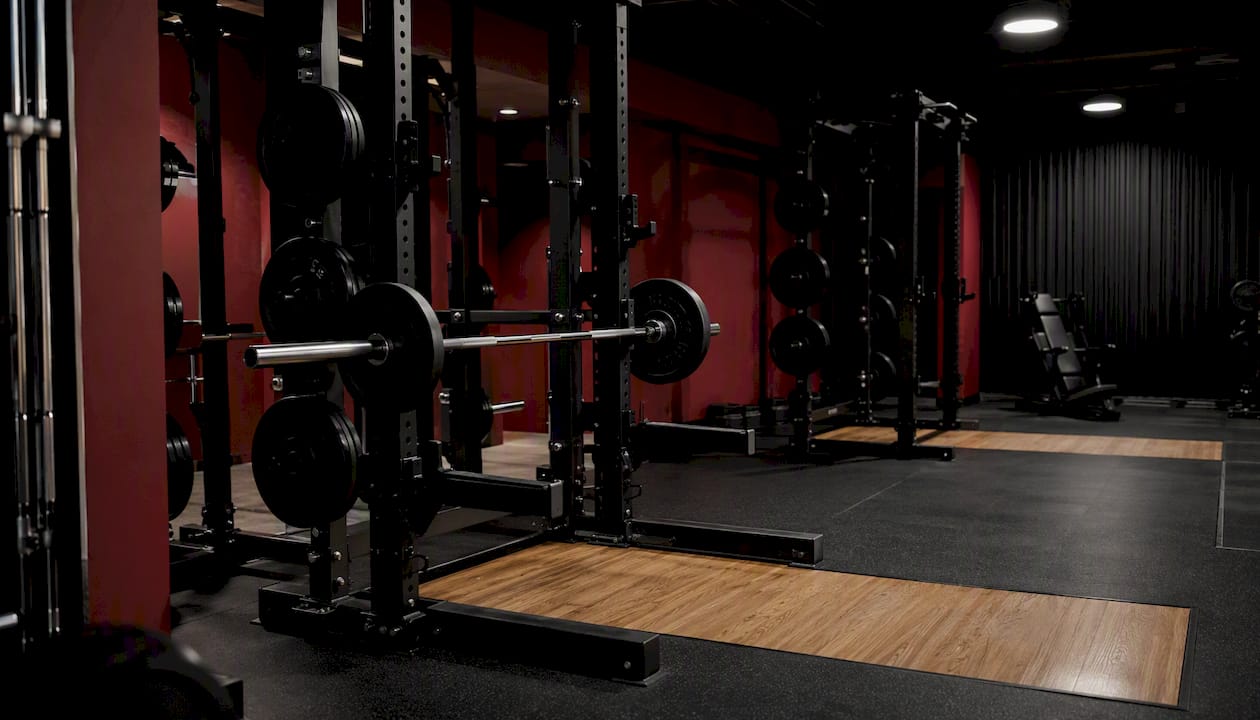
Look for a facility that supports the training you actually need: platforms for lifting, enough space for sprint or agility work if that’s relevant, and equipment maintained well enough that nothing’s a safety risk. A private, less crowded training environment also tends to allow more direct coaching attention per session compared to a packed commercial gym where trainers split focus across multiple clients at once.
Location matters practically too. A facility that’s a 40-minute drive each way quietly erodes consistency over months, even when the coaching itself is excellent. Weigh convenience against quality rather than treating them as separate decisions.
How I Evaluate New Clients
I open every first session the same way: with a real movement assessment, not a workout. That means checking movement patterns, going through injury history in detail, and confirming the client’s goal actually matches the plan we’re about to build, before a single rep gets programmed. For clients coming off physical therapy, we stay in direct contact with the treating physical therapist so the loading progression respects where the tissue actually is, not just where the calendar says it should be.
Ready to Start? Here’s How Training at Bodies by Mahmood Works
Once you know what to look for, the next step is simple: book a movement evaluation and see it in practice. That first session covers baseline strength testing, a movement screen, and a conversation about your specific goal, whether that’s returning to sport, building general strength, or working through post-rehab.

Bodies by Mahmood is built around sports-specific training, with staff who bring college-level education and professional sports backgrounds to every program. The facility blends full gym access with the attention of a private training environment, so programming stays personalized rather than templated. That checklist item about coordination with physical therapists after injury? It’s built into how post-rehab clients get handled here, following the same principle of bridging medical clearance to full performance training covered earlier.
After the evaluation, you’ll get a recommended package based on what the assessment actually shows, not a generic tier. From there, scheduling gets set around your availability. If you’re ready to see what a structured, assessment-first program looks like, book a personal training session and start with the movement evaluation.
Frequently Asked Questions
How do I choose a strength coach if I’ve never worked with one before? Start with the assessment. Book a consultation and ask how they test movement and strength before writing any program. If they skip straight to selling a package, keep looking.
What’s the difference between physical therapy and personal training for someone recovering from injury? Physical therapy treats and clears an injury; post-rehab training rebuilds the strength, movement patterns, and load tolerance that clearance alone doesn’t restore. The two should coordinate, not operate independently.
Is a CSCS certification necessary, or is a standard CPT enough? For general fitness and fat-loss goals, a certified CPT is often sufficient. For competitive athletes, return-to-sport programming, or complex loading decisions, a CSCS-credentialed coach brings deeper technical training.
How long should it take to see real strength gains? Most well-programmed clients notice measurable strength and movement improvements within four to six weeks, with more significant changes building over three to six months depending on starting point and consistency.
What should a strength coach’s price actually include? A fair price covers the initial assessment, ongoing programming, scheduled reassessments, and clear communication, not just time in the gym. Always get the cancellation and billing terms in writing.
Sources
- How to prepare for the NSCA-CSCS exam
- What is post-rehabilitation personal training? (Phys-EQ FAQ)
- 4 proven methods to evaluate coaching effectiveness
- 5 questions to ask before hiring a personal trainer (Women’s Health)