



A senior fitness progress tracking checklist is a structured set of standardized tests and logs that help older adults monitor strength, balance, mobility, and endurance to support healthy aging. The most effective checklists combine objective assessments like the 30-second chair stand and Timed Up and Go with qualitative markers such as movement quality and recovery patterns. Experts recommend testing every 6 months to detect changes early and guide safe exercise progression. Wearable technology and printed or digital workout logs round out a complete physical activity log for seniors. This guide walks you through every component you need.
1. What are the key functional fitness tests seniors should track?
Standardized functional fitness tests measure the physical abilities you use every day, from getting out of a chair to walking across a room. These tests form the backbone of any solid exercise progress log for older adults.
The five tests every senior health checklist should include are:
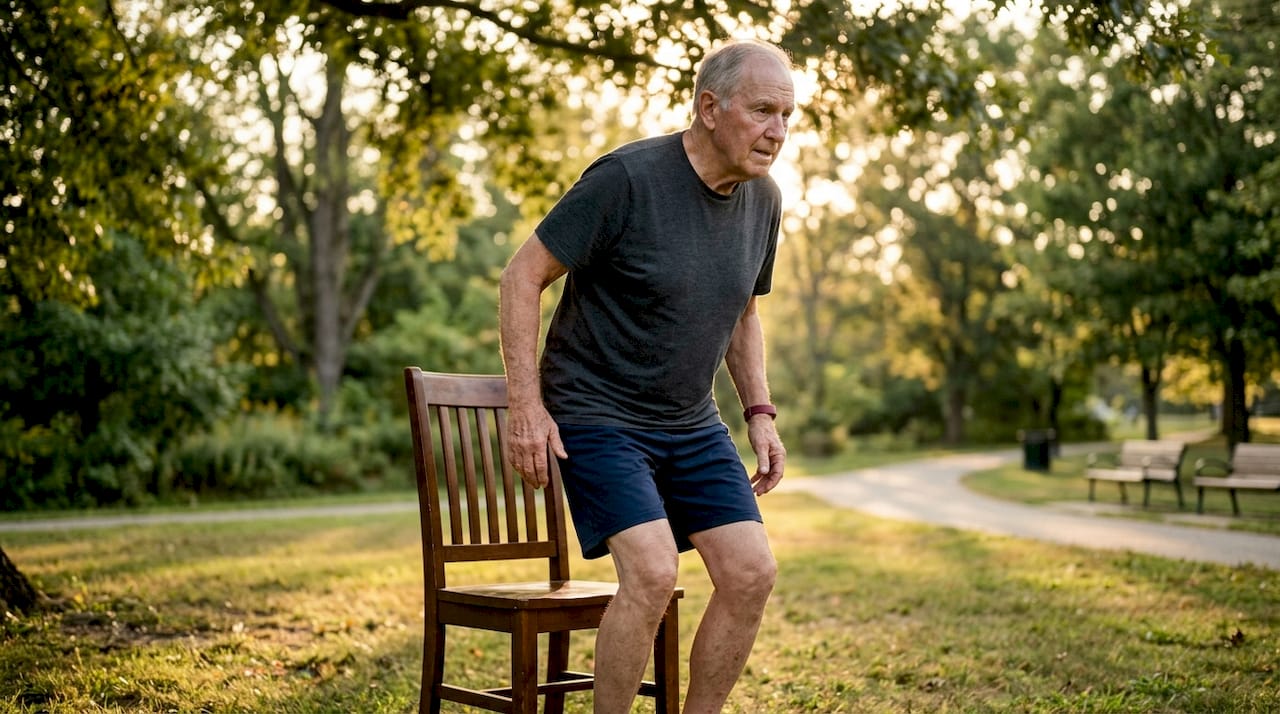
- 30-second chair stand. Count how many times you can stand fully upright from a chair in 30 seconds without using your arms. This measures lower-body strength and endurance directly tied to fall prevention.
- Timed Up and Go (TUG). Time how long it takes to rise from a chair, walk 10 feet, turn around, and sit back down. Scores above 12 seconds indicate elevated fall risk.
- 4-meter walking speed. Time yourself walking 4 meters at your normal pace. Slower gait speed correlates with reduced mobility and higher injury risk.
- Four-stage balance test or single-leg stance. Progress through four standing positions of increasing difficulty. This reveals static balance deficits before they become falls.
- 6-minute walk or 2-minute step test. Measure how far you walk in 6 minutes or how many steps you complete in 2 minutes. Both assess aerobic capacity without requiring gym equipment.
| Test | What it measures | Frequency |
|---|---|---|
| 30-second chair stand | Lower-body strength | Every 6 months |
| Timed Up and Go | Dynamic mobility and turning | Every 6 months |
| 4-meter walking speed | Gait efficiency | Every 6 months |
| Four-stage balance | Static balance and fall risk | Every 6 months |
| 6-minute walk | Aerobic capacity | Every 6 months |
Experts recommend biannual testing intervals using identical conditions each time. That means the same chair height, the same time of day, and the same warm-up routine before every session.
Pro Tip: Record your test scores in a dedicated notebook or spreadsheet immediately after each session. Waiting even a few hours increases the chance of misremembering a number.
2. How to use qualitative measures in your fitness progress tracking
Numbers tell part of the story. Qualitative markers tell the rest, and they often reveal problems before your scores drop.
Qualitative tracking focuses on how movement feels and looks rather than how fast or how many. Movement quality indicators like knee stability during a squat, trunk control during a walk, and smooth weight transfer during a step-up all signal whether your body is adapting well to training. A score that holds steady while your movement quality improves is genuine progress.
Key qualitative factors to log after every workout:
- Support dependence. Note whether you needed to hold a wall, rail, or chair during an exercise. Reducing that reliance is a clear sign of strength and confidence gains.
- Recovery patterns. Record how long muscle soreness lasts and how quickly your energy returns after a session. Soreness lasting more than 48 hours signals you may need to reduce load.
- Task confidence. Rate your confidence on a simple 1–10 scale for daily tasks like climbing stairs or carrying groceries. Rising confidence scores reflect real-world functional improvement.
- Daily life improvements. Write one sentence after each week describing a daily task that felt easier. These notes become powerful motivation when progress feels slow.
Pro Tip: Keep a small notebook in the same spot where you exercise. A two-minute log entry right after your session captures details you will forget by evening.
Qualitative data guides personalized exercise adjustments in ways that numbers alone cannot. If your TUG score holds steady but you note increasing trunk wobble during the turn, that signals a core stability deficit worth addressing before it shows up as a fall.
3. What tools and methods work best for recording fitness progress?
The best tracking tool is the one you will actually use consistently. Both printed logs and digital apps work well when used correctly.
Printed workout logs
A printed workout planner for elderly adults should include columns for exercise name, sets, reps, weight or resistance level, and a brief notes field. Logs that capture energy level ratings and progress notes alongside sets and reps give a fuller picture of progress than numbers alone. Print a fresh sheet for each week and store completed sheets in a binder for easy comparison.
Digital tracking apps and spreadsheets
Spreadsheet tools like Excel or Google Sheets let you build a custom wellness tracking sheet with charts that visualize trends over time. Strength training logs that track planned versus actual performance, rate of perceived exertion (RPE), rest periods, and tempo support informed decisions about when to increase load or pull back.
Wearable technology
Senior-focused wearables add a layer of passive tracking that printed logs cannot match. Specialized senior wearables offer features like fall detection and step counting that support real-time health monitoring for both you and your caregivers. Pair wearable data with your manual log to cross-check activity levels against how you feel each day.
Progress photos and visual scoring
Take a short video of yourself performing the chair stand or TUG test every 6 months. Watching the footage side by side across testing periods reveals movement quality changes that numbers miss entirely.
Pro Tip: Set a recurring calendar reminder for your biannual fitness assessment. Treat it like a medical appointment. Skipping it breaks the data chain and makes trend analysis impossible.
4. How should seniors interpret their tracking results?
Raw data only helps when you know what it means. The goal of a physical activity log for seniors is not to judge performance but to clarify the next step in your training.
Tracking results reveal specific focus areas based on where you struggle most. Difficulty rising from the chair without arm support points directly to a leg strength deficit. Instability during the TUG turn signals a balance and coordination gap. Use that information to adjust your program before a problem becomes an injury.
Signs your data is telling you to change something:
- Your chair stand count drops by two or more repetitions between testing periods.
- Your TUG time increases by more than 2 seconds.
- Your walking speed slows noticeably on the 4-meter test.
- Muscle soreness consistently lasts longer than 48 hours after moderate sessions.
- Your task confidence score drops two or more points on your self-rating scale.
Retest sooner than 6 months after a fall, a period of illness, or a sudden decline in any score. Waiting the full interval after a significant change delays the program adjustments you need. Align your tracking data with your actual fitness goals, whether that means maintaining independence, returning to a sport, or simply walking farther without fatigue.
5. How to set fitness goals for older adults using your tracking data
Tracking data is most powerful when it connects directly to goals that matter to you personally. Setting clear fitness goals turns raw scores into a roadmap.
Use your baseline test results to set specific, time-bound targets. If your 30-second chair stand score is 10 repetitions today, a realistic 6-month target might be 13 repetitions. If your TUG time is 14 seconds, aiming for 11 seconds gives you a concrete number to train toward. Specific targets make your workout planner for elderly adults far more motivating than vague intentions like “get stronger.”
Review your goals at every testing period and adjust them based on what the data shows. A goal that felt ambitious 6 months ago may now be too easy, or life circumstances may require scaling back. Both adjustments are valid. The tracking system exists to serve your health, not the other way around.
6. What are expert best practices for senior fitness progress tracking?
Professional guidance on fitness tracking for seniors centers on consistency, brevity, and using data to drive decisions rather than just record them.
Fitness assessments for seniors should take no more than 30–45 minutes and prioritize standardization over maximum output. Fatigue during testing skews results and increases injury risk. Brief, consistent sessions produce the most reliable data over time.
Sustainable, repeatable effort matters more than intensity spikes for older adults. A moderate session you complete every week builds more lasting fitness than an intense session that leaves you sore for five days. Your tracking log should reflect that reality by recording effort levels alongside outcomes.
When your data shows a plateau, the right response is structured aerobic maintenance, not a sudden jump in intensity. Fitness plateaus in older adults respond better to consistent moderate activity than to high-intensity bursts. Adjust your program gradually and retest at the next scheduled interval.
Pro Tip: Review your last three testing periods before every new training block. Patterns across multiple periods reveal trends that a single comparison misses.
Key Takeaways
A senior fitness progress tracking checklist works best when it combines standardized functional tests, qualitative movement notes, and consistent logging habits reviewed every 6 months.
| Point | Details |
|---|---|
| Test every 6 months | Use the 30-second chair stand, TUG, walking speed, balance, and aerobic tests on a fixed schedule. |
| Log qualitative markers | Record support dependence, recovery time, and task confidence alongside numeric scores. |
| Use consistent conditions | Same chair, same time of day, and same warm-up every session to keep data comparable. |
| Retest after setbacks | Schedule an early retest after a fall, illness, or sudden score decline. |
| Let data drive decisions | Use tracking results to adjust load, volume, or rest rather than simply recording performance. |
What I’ve learned from 25 years of tracking senior fitness
Most seniors I work with at Bodiesbymahmood make the same mistake when they start tracking. They focus entirely on the numbers and ignore how they feel. A client might celebrate a higher chair stand count while glossing over the fact that her knees wobbled on every rep. The number went up. The movement quality went down. That is not progress. That is a warning.
The other common pitfall is tracking too much at once. When you try to log every metric from day one, the system becomes a burden and you abandon it within two weeks. Start with two tests and one qualitative note per session. Build the habit first. Add complexity later.
What I have found actually works is treating your tracking log like a conversation with your future self. The notes you write today tell you exactly what to do six months from now. Seniors who stick with a personalized fitness plan and review their logs consistently make far better decisions about when to push and when to rest than those who train by feel alone.
Tracking is not pressure. It is clarity. The data removes the guesswork from aging well.
— Mahmood
How Bodiesbymahmood supports your senior fitness progress
Bodiesbymahmood has worked with older adults in Orlando for over 25 years, building individualized programs that take tracking seriously from day one.
Every senior who trains at Bodiesbymahmood starts with a baseline functional assessment covering the key tests in this guide. From there, our trainers build a personalized training program that uses your data to set realistic goals and adjust your plan at every testing interval. You get expert eyes on your movement quality, not just your scores. Whether you are working on balance, rebuilding strength after an injury, or simply staying active as you age, the Forty & Fit program at Bodiesbymahmood gives you the structure and accountability to make your tracking data count.
FAQ
How often should seniors do a fitness assessment?
Experts recommend seniors complete a standardized functional fitness assessment every 6 months. After a fall, illness, or sudden decline, retest sooner to catch changes early.
What is the best test for measuring senior balance?
The four-stage balance test and single-leg stance are the most practical options for home or gym use. Both reveal static balance deficits that predict fall risk before a fall occurs.
Can seniors track fitness without a wearable device?
A printed workout log covering sets, reps, energy levels, and qualitative notes captures the most important data without any technology. Wearables add value but are not required for effective tracking.
What does a senior fitness progress log include?
A complete log includes test scores from standardized assessments, qualitative notes on movement quality and recovery, weekly aerobic activity totals, and a brief self-rating of task confidence. Seniors should aim for at least 150 minutes of moderate aerobic activity weekly and record it consistently.
When should a senior change their fitness program?
Change your program when two consecutive testing periods show declining scores, when soreness consistently exceeds 48 hours, or when your task confidence rating drops. Use your tracking data to make that decision with evidence rather than guesswork.