



Cardiovascular fitness is defined as the body’s ability to deliver oxygen efficiently through the heart and lungs during sustained physical activity. The role of cardiovascular fitness in overall health extends far beyond athletic performance. It determines your risk of heart disease, diabetes, depression, and early death. Recent 2026 research confirms that regular cardio activity reduces all-cause and cardiovascular mortality by 36%–56%. That single finding reframes exercise not as a lifestyle preference but as a medical necessity. Bodiesbymahmood has spent over 25 years helping people in Orlando act on exactly that reality.
What is cardiovascular fitness and how does it influence overall health?
Cardiovascular fitness, also called cardiorespiratory fitness, measures how well your heart, lungs, and blood vessels work together under physical demand. The higher your cardiorespiratory fitness, the more oxygen your muscles receive per minute, and the less strain your heart endures at any given effort level.
Regular exercise triggers lasting physical changes inside the body. Exercise induces central adaptations including increased maximal stroke volume and improved endothelial function, which protect heart cells from oxidative stress and ischemia-reperfusion injury. Stroke volume is the amount of blood pumped per heartbeat. A higher stroke volume means your heart works less to move the same amount of blood, reducing wear over decades.

These adaptations also improve the health of your blood vessels. Endothelial function refers to how well the inner lining of your arteries expands and contracts. Poor endothelial function is one of the earliest signs of cardiovascular disease, often appearing years before symptoms. Exercise reverses this deterioration at a cellular level.
The cardiorespiratory system components most involved include the left ventricle, the pulmonary capillaries, and the peripheral vasculature. Training all three through sustained aerobic effort produces the widest health gains.
Pro Tip: Track your resting heart rate weekly. A downward trend over months is one of the clearest signs that your cardiovascular fitness is improving.
Key physiological benefits of improved cardiovascular fitness include:
- Lower resting heart rate and blood pressure
- Greater cardiac output during exercise
- Improved arterial elasticity and blood flow
- Reduced systemic inflammation markers
- Enhanced oxygen extraction by working muscles
What scientific evidence supports the health benefits of cardiovascular fitness?
The research on cardio and overall wellness is unusually consistent for a health topic. Studies rarely agree this clearly, which makes the cardiovascular fitness data worth examining closely.
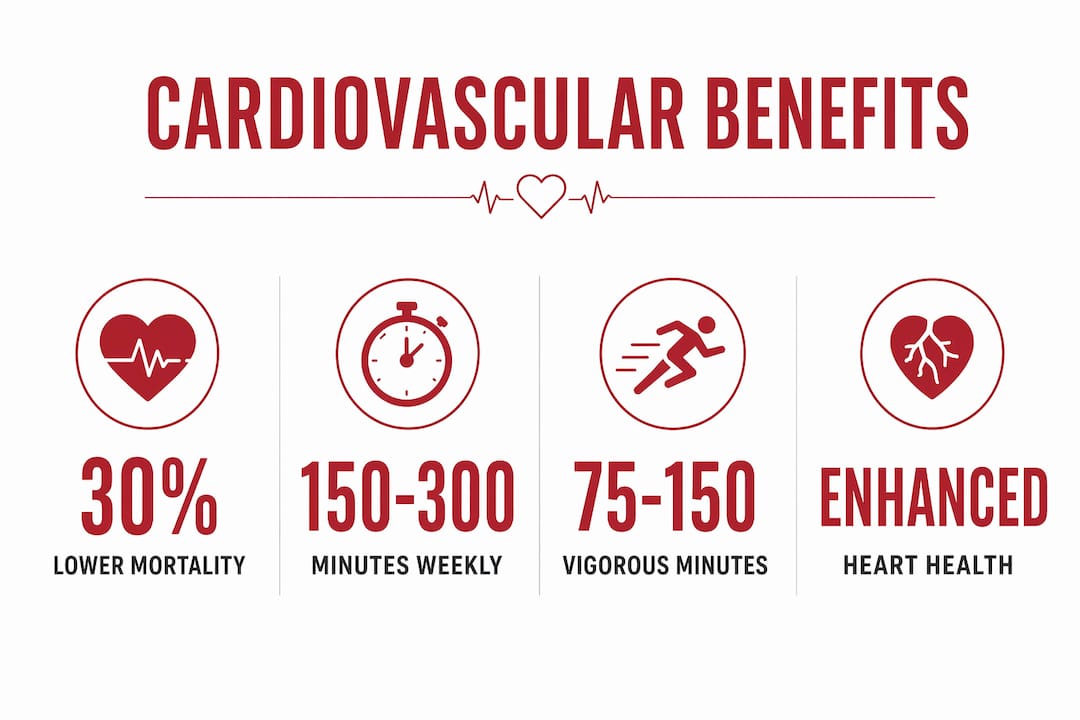
Adults who meet the standard weekly exercise guidelines carry up to 30% lower mortality risk compared to sedentary individuals. That benefit applies specifically to people with heart disease, not just healthy adults. The protection is real even when the disease is already present.
The volume of exercise matters beyond the minimum threshold. Adults completing 560–610 minutes of moderate-to-vigorous exercise weekly see over 30% lower cardiovascular disease risk than less active individuals. That is roughly 80–87 minutes per day, which sounds like a lot until you account for walking, cycling, and light activity spread across the day.
One of the most striking findings involves drug comparisons. In people with dyslipidemia, improved cardiorespiratory fitness matches statin therapy in lowering mortality risk. Combined exercise and statin therapy outperforms either alone. That result positions exercise not as a supplement to medical treatment but as a clinical intervention in its own right.
“Physical activity functions as a broad-spectrum medical intervention, impacting type 2 diabetes, depression, and musculoskeletal function with effects comparable to pharmacological treatments in several populations.” — Physical Activity as Medicine, 2026
The table below summarizes the key evidence tiers:
| Exercise Level | Weekly Volume | Mortality Benefit |
|---|---|---|
| Meets minimum guidelines | 150–300 min moderate | Up to 30% lower risk |
| Exceeds guidelines | 560–610 min moderate-to-vigorous | Over 30% lower cardiovascular risk |
| High cardiorespiratory fitness | Any volume sustaining high fitness | Matches statin therapy in dyslipidemic adults |
| Sedentary | Below minimum | Elevated all-cause and cardiovascular mortality |
The consistency across these findings is the key point. Whether the measure is exercise volume, fitness level, or disease status, more cardiovascular fitness reliably means better outcomes.
How much and what types of exercise optimize cardiovascular fitness?
Current guidelines from the American Heart Association recommend 150–300 minutes of moderate-intensity or 75–150 minutes of vigorous-intensity aerobic exercise per week. These numbers represent the floor, not the ceiling. The evidence shows benefits continue to grow well beyond those minimums.
Moderate activities include brisk walking, recreational cycling, water aerobics, and doubles tennis. Vigorous activities include running, swimming laps, singles tennis, and cycling above 10 miles per hour. The distinction matters because vigorous exercise produces greater cardiovascular adaptations in less time, which is useful for adults with limited schedules.
The practical steps for building cardiovascular fitness follow a clear progression:
- Start with light activity. Even light-intensity walking improves heart health among very inactive adults. Any movement is better than none.
- Build to moderate intensity. Aim for 30 minutes of brisk walking five days per week as your first milestone. This meets the minimum guideline and produces measurable cardiovascular changes within weeks.
- Add vigorous sessions. Replace two moderate sessions per week with vigorous activity. Running, swimming, or cycling at high effort accelerates stroke volume gains and endothelial improvements.
- Increase total weekly volume gradually. Work toward 300 minutes of moderate activity or 150 minutes of vigorous activity before attempting higher volumes.
- Personalize based on fitness level. Higher volumes of intense activity can be harmful without proper progression. Individualized exercise plans based on fitness level and health status produce the best outcomes.
Racquet sports, swimming, and aerobics consistently appear in research as the activities most strongly linked to mortality reduction. These are not coincidentally the activities that combine sustained aerobic demand with full-body movement.
Pro Tip: If you cannot hold a conversation during exercise, you are working at vigorous intensity. If you can sing, you are below moderate. Use this talk test to calibrate effort without any equipment.
What are the broader impacts of cardiovascular fitness on overall wellness and longevity?
The impact of fitness on health reaches well beyond the heart. Physical activity improves metabolic control, mental health, and functional capacity simultaneously. No single medication produces that range of effects.
Type 2 diabetes management is one of the clearest secondary benefits. Aerobic exercise increases insulin sensitivity in skeletal muscle, reducing blood glucose levels without medication in many adults. For people already on diabetes medication, regular cardio activity can reduce required dosages under medical supervision.
Mental health benefits are equally well-documented. Exercise reduces symptoms of depression and anxiety through multiple pathways, including increased brain-derived neurotrophic factor, reduced cortisol, and improved sleep quality. These effects accumulate over weeks, not days, which is why consistency matters more than intensity for mental health outcomes.
Functional independence in older adults is another underappreciated benefit. Adults who maintain cardiovascular fitness into their 60s and 70s retain the physical capacity to perform daily tasks without assistance. That independence has direct quality-of-life consequences that no metric fully captures.
Silent risk factors make the preventive role of exercise especially important. High blood pressure and elevated cholesterol are common and often symptom-free for years. Cardiovascular fitness improves both markers invisibly over time, building a protective effect that shows up in lab results before it shows up in how you feel.
Key wellness benefits beyond heart disease include:
- Reduced fasting blood glucose and improved insulin sensitivity
- Lower rates of clinical depression and anxiety
- Better sleep duration and quality
- Preserved muscle mass and bone density with age
- Greater functional independence in daily life
The Forty & Fit program at Bodiesbymahmood addresses exactly this range of benefits for adults over 40, where the stakes of inactivity rise sharply.
Key takeaways
Cardiovascular fitness is the single most evidence-backed modifiable factor for reducing all-cause mortality, preventing chronic disease, and extending functional independence across every age group.
| Point | Details |
|---|---|
| Mortality reduction is large | Regular cardio activity cuts all-cause and cardiovascular mortality by 36%–56%. |
| More volume means more benefit | Adults exercising 560–610 minutes weekly see over 30% lower cardiovascular disease risk. |
| Exercise rivals medication | High cardiorespiratory fitness matches statin therapy for mortality reduction in dyslipidemic adults. |
| Benefits extend beyond the heart | Cardio fitness improves blood glucose, mental health, sleep, and functional independence. |
| Any movement counts | Even light-intensity walking produces measurable heart health gains in sedentary adults. |
Why I think most people underestimate what cardio fitness actually does
After 25 years of working with athletes and everyday adults in Orlando, the pattern I see most often is this: people treat cardiovascular fitness as a weight-loss tool and ignore it the moment the scale stops moving. That is the wrong frame entirely.
The real value of cardio fitness is invisible. Blood pressure drops. Arterial walls become more elastic. Resting heart rate falls. None of that shows up in the mirror, but all of it shows up in your risk of dying from a heart attack at 58. The research is unambiguous on this point, and I have watched it play out with real people over real decades.
The other misconception I push back on constantly is the idea that it is too late to start. Exercise serves as a powerful intervention across all ages and health statuses. I have trained adults in their 60s who reversed measurable cardiovascular risk markers within six months of consistent training. The body responds at any age when you give it the right stimulus.
What I have found actually works is starting smaller than you think you need to and building more consistently than you think you can. The motivation problem is almost always a volume problem. People try to do too much too soon, feel terrible, and quit. A 20-minute walk five days a week beats a 90-minute gym session twice a month by every metric that matters.
The personal training approach at Bodiesbymahmood is built around this reality. We meet you where you are and build from there, because sustainable cardiovascular fitness is a long game worth playing.
— Mahmood
Bodiesbymahmood’s approach to cardiovascular fitness training
Bodiesbymahmood offers personalized training programs in Orlando built around the cardiovascular adaptations that research confirms matter most: stroke volume, endothelial function, and sustained aerobic capacity. Every program starts with an individual fitness assessment so the exercise prescription fits your current health status, not a generic template.
With over 25 years of experience and trainers from professional sports backgrounds, Bodiesbymahmood designs cardio-focused programs for adults at every fitness level. Whether you are starting from sedentary or training for a competitive event, the goal is the same: measurable, lasting improvement in heart health and overall wellness. Explore the full range of services at Bodiesbymahmood’s services page to find the program that fits your goals.
FAQ
What is cardiovascular fitness and why does it matter?
Cardiovascular fitness is the ability of the heart, lungs, and blood vessels to deliver oxygen during sustained physical activity. It is one of the strongest predictors of longevity and disease prevention across all age groups.
How does cardio improve heart health at a physiological level?
Regular aerobic exercise increases maximal stroke volume and improves endothelial function, reducing the heart’s workload and protecting arteries from damage over time.
How much cardio do I need each week for health benefits?
The American Heart Association recommends 150–300 minutes of moderate or 75–150 minutes of vigorous aerobic activity weekly. Benefits continue to grow with higher volumes up to approximately 560–610 minutes per week.
Can cardiovascular fitness replace medication for heart disease?
Research shows high cardiorespiratory fitness matches statin therapy in reducing mortality risk for people with dyslipidemia. Exercise does not replace prescribed medication but functions as a clinically significant intervention alongside it.
Is it too late to improve cardiovascular fitness after 40 or 50?
Exercise improves cardiovascular health at every age. Adults who begin consistent aerobic training in their 40s, 50s, or 60s see measurable reductions in blood pressure, resting heart rate, and cardiovascular disease risk within months.