



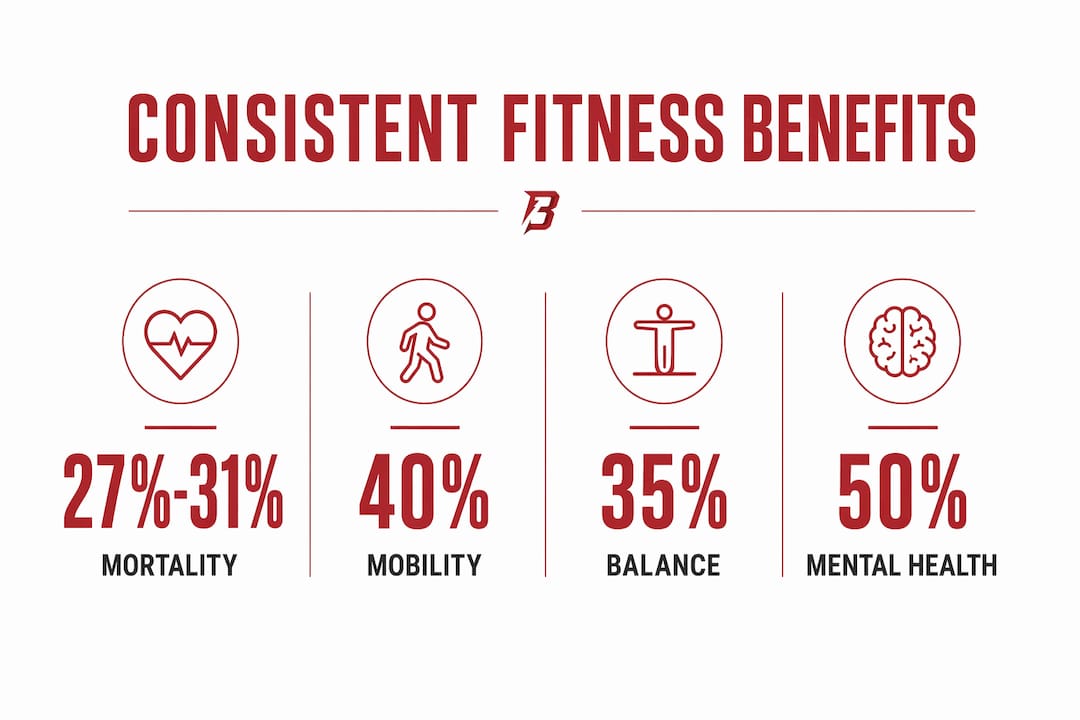
Consistency, not intensity, is the single most reliable predictor of long-term fitness outcomes for senior athletes. Running just once a week at a slow pace is linked to a 27% reduction in all-cause mortality risk, and 150 minutes of moderate activity weekly reduces that risk by 31%. The gap in results is not between moderate and intense exercisers. It is between those who show up regularly and those who do not.
Senior athletes face a specific vulnerability: the older body needs predictable movement signals to maintain joint stability, regulate the nervous system, and preserve muscle mass. Sporadic high-intensity sessions disrupt that process. They cause inflammation, demand extended recovery, and break the adaptive rhythm that produces real gains over months and years.
Key performance benefits of consistent training for senior athletes include preserved neuromuscular coordination and reaction time, sustained cardiovascular efficiency, reduced injury risk, improved sleep quality, and maintained bone density and balance which helps reduce fall risk.
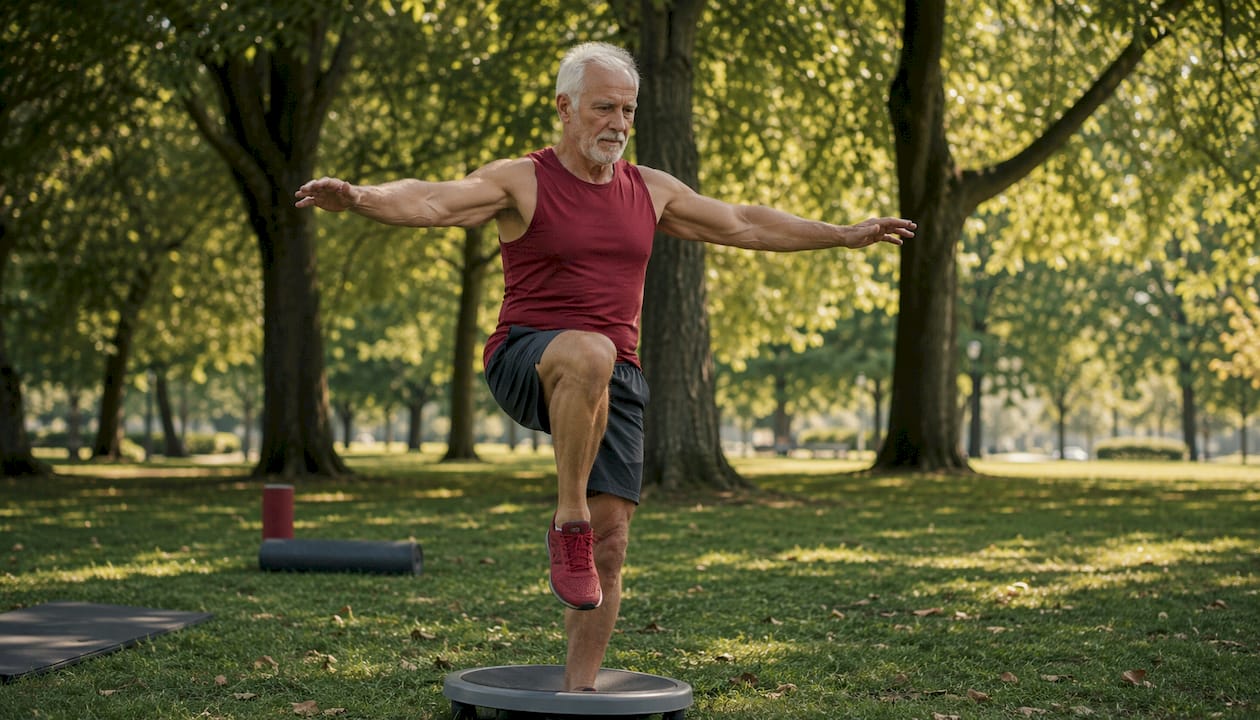
Bodiesbymahmood’s training approach at its Orlando facility is built around exactly this principle: regular, structured sessions that compound over time rather than peak-and-crash cycles that disrupt steady progress.
Table of Contents
- Why consistency in senior fitness drives measurable health gains
- Training principles that keep senior athletes on track long-term
- What actually stops senior athletes from staying consistent
- Practical strategies to maintain a consistent senior fitness routine
- How consistent training protects senior athletes from injury
- Adapted fitness programs that senior athletes actually stick with
- How to track progress and stay engaged over time
- Key Takeaways
Why consistency in senior fitness drives measurable health gains
The physiological case for regular exercise in older athletes is well-documented. The National Institute on Aging identifies consistent physical activity as protective against cardiovascular disease, type 2 diabetes, dementia, and eight specific cancers. These are not marginal benefits. They represent the difference between an athlete who competes at 70 and one who cannot.
| Health metric | Effect of consistent exercise |
|---|---|
| All-cause mortality | 27%–31% reduction with regular moderate activity |
| Muscle strength | Maintained with 2–3 sessions per week |
| Balance and fall risk | Reduced through repeated neuromuscular training |
| Cardiovascular markers | Lower resting blood pressure and improved heart efficiency |
| Bone density | Improved with consistent resistance training |
Consistent movement regulates the nervous system in older adults by signaling safety through repeated, predictable activity patterns. Joint stability improves. Fear of movement decreases. That neurological foundation has to come before intensity can be added safely.
Performance benefits that compound with regular training:
- Enhanced aerobic endurance across longer competitive seasons
- Faster recovery between training sessions
- Improved proprioception and body awareness during sport-specific movements
- Greater training volume tolerance over time
The active aging fitness guide from Bodiesbymahmood outlines how these gains translate into sport-specific performance targets for older athletes.
Training principles that keep senior athletes on track long-term
The
used by elite endurance athletes applies directly to senior training: 80% of sessions at low-to-moderate intensity, 20% at higher effort. This ratio prevents the inflammation and recovery debt that breaks consistent habits.
Short strength sessions of 20–30 minutes targeting major muscle groups two to three times per week produce meaningful adaptation while keeping recovery manageable. That is the minimum effective dose. It is also the most sustainable one.
Sustainable training principles for senior athletes:
- Target large muscle groups first: legs, back, and core
- Use controlled, deliberate movement over speed or load
- Build frequency before adding intensity
- Schedule rest days as deliberately as workout days
- Progress load or duration by small increments, not jumps
Pro Tip: Keep a session so manageable that you finish wanting to do more. That feeling is the signal that you will come back tomorrow. Athletes who leave the gym slightly under-challenged stay consistent far longer than those who leave exhausted.
Bodiesbymahmood designs each program around the individual athlete’s current capacity, not a generic template. That individualized approach is what separates sustainable progress from the cycle of effort and injury.
What actually stops senior athletes from staying consistent
About 50% of people who start a new exercise program quit within six months, and high initial intensity is a leading predictor of that dropout. The body cannot adapt fast enough. Soreness accumulates. Motivation collapses.
Common barriers senior athletes report:
- Unrealistic early expectations leading to discouragement
- Injury or soreness from excessive load too soon
- No accountability structure to maintain scheduled sessions
- Boredom from repetitive programming
- Life disruptions that break the habit before it solidifies
Overemphasis on intensity causes inflammation and soreness that demands extended recovery, which directly disrupts the frequency needed for adaptation. The athlete misses sessions. The habit breaks. Progress resets.
External motivation, such as “everyone at the gym is doing it,” fades quickly. Internal motivation, tied to personal goals like staying competitive in a sport or maintaining independence, sustains behavior far longer. Bodiesbymahmood coaches work with athletes to identify that internal driver early, then build the program structure around it.
Practical strategies to maintain a consistent senior fitness routine
Fixed scheduling is the most reliable adherence tool available. Treating a workout like a medical appointment, a time that does not move, removes the daily decision of whether to go. That decision is where most consistency breaks down.
Adherence strategies that work for senior athletes:
- Set the same workout window each day and protect it
- Use a training partner or coach for scheduled accountability
- Track sessions with a simple log or app to visualize streaks
- Stack workouts onto existing habits, such as after morning coffee
- Choose activities you genuinely enjoy, not just ones that seem productive
Pro Tip: When life disrupts your schedule, do not skip entirely. Do ten minutes. The habit of showing up matters more than the session’s quality. Returning after a disruption is the skill that separates long-term athletes from short-term ones.
A 2024 study cited in CMAJ found that interpersonal behavior-change strategies, such as discussing physical activity goals with peers, improved adherence at 1 week, 6 months, and 12 months post-intervention. Group training or coached sessions are not just motivating. They are structurally more effective. The senior progress tracking checklist from Bodiesbymahmood gives athletes a concrete system for monitoring that adherence over time.
How consistent training protects senior athletes from injury
Injury is the most common reason senior athletes lose their training momentum. The irony is that inconsistency itself is a primary injury driver. Tissues that are not regularly loaded lose tensile strength. Joints that are not regularly mobilized lose stability. When an athlete then returns to training after a gap, the mismatch between effort and tissue readiness is where injuries happen.
Regular, moderate training keeps tendons, ligaments, and cartilage conditioned for load. The nervous system learns which movements are safe and coordinates muscle activation accordingly. That protective adaptation only develops through repetition over weeks and months, not through occasional intense sessions.
Adapted fitness programs that senior athletes actually stick with
The programs with the highest adherence rates among older athletes share a few structural features: they are short enough to fit a busy schedule, varied enough to prevent boredom, and progressive enough to deliver visible results. Water aerobics, resistance band circuits, yoga combined with light weights, and sport-specific movement drills all meet those criteria.
Bodiesbymahmood builds programs around the athlete’s sport, not a generic senior template. A 65-year-old competitive tennis player needs lateral movement training and rotational strength. A masters-level swimmer needs shoulder stability and breathing mechanics. The strength training guidance from Level Up Gym reinforces this principle: three focused sessions per week, built around the athlete’s actual movement demands, produce better adherence and better results than generic high-volume programs.
How to track progress and stay engaged over time
Progress in senior fitness is not always visible on a scale or a stopwatch. Tracking the right metrics keeps athletes engaged when surface-level results are slow. Resting heart rate, session completion rate, balance test scores, and how a specific movement feels week over week are all meaningful data points.
Set short-term goals on a 4–6 week cycle, not a year-long arc. A goal that is too distant loses motivational pull. Reviewing progress monthly and adjusting the next cycle’s targets keeps the program feeling current and achievable. When a goal is met, replace it immediately with the next one. When a goal is missed, adjust the target rather than abandoning the habit. The habit stacking approach pairs well with this review cycle, anchoring fitness check-ins to existing weekly routines so they actually happen.
Bodiesbymahmood’s certified trainers work with senior athletes at every level to build programs that prioritize consistency, adapt to individual limitations, and deliver measurable performance gains. If you are ready to build a training routine that holds, personal training at Bodiesbymahmood is where that process starts.
Key Takeaways
Consistent moderate exercise predicts long-term fitness outcomes in senior athletes more reliably than any program design or intensity variable.
| Point | Details |
|---|---|
| Mortality reduction | Running once weekly links to a 27% lower all-cause mortality risk; 150 minutes weekly reduces it by 31%. |
| Optimal session structure | Strength sessions of 20–30 minutes, two to three times per week, build adaptation without excessive recovery demand. |
| Intensity split | An 80/20 low-to-high intensity ratio prevents inflammation and keeps senior athletes training without burnout. |
| Dropout risk | About 50% of new exercisers quit within six months, with high initial intensity as a leading cause. |
| Accountability works | Scheduled appointments and training partners transform exercise into a fixed commitment, improving long-term adherence. |