


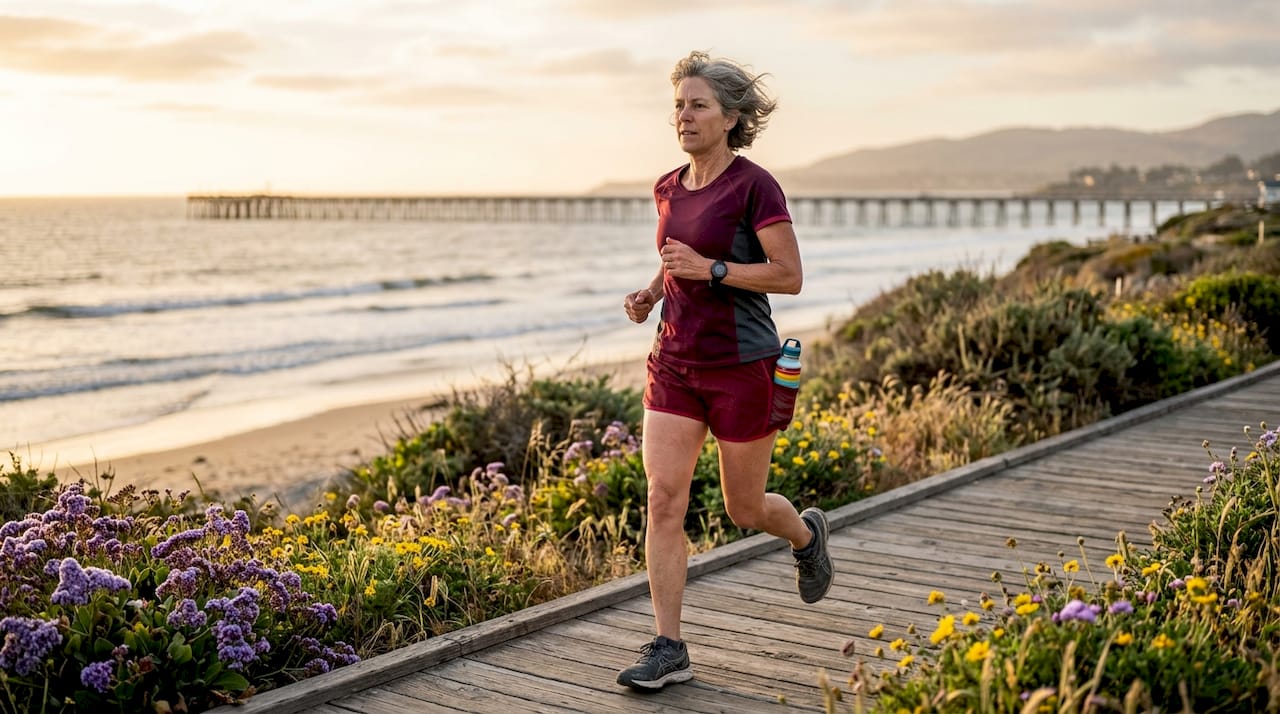
A healthy aging fitness approach is defined as a structured, multicomponent exercise regimen that combines aerobic activity, strength training, balance work, and flexibility exercises to preserve physical function and prevent age-related decline. This is the standard framework recommended by international exercise guidelines for adults 50 and older. Experts now recognize this approach as a primary therapeutic agent for managing chronic disease, not just a wellness bonus. The goal is simple: keep you moving, independent, and strong for as long as possible.
What is a healthy aging fitness approach, exactly?
A healthy aging fitness approach targets four physical qualities at once: cardiovascular endurance, muscular strength, balance, and flexibility. No single quality is enough on its own. Walking every day builds your heart and lungs but does nothing to stop muscle loss. Lifting weights builds strength but leaves your joints stiff if you skip stretching. The power of this approach comes from combining all four.
Guidelines recommend 150 minutes of moderate-to-vigorous activity weekly, spread across at least three days. That works out to roughly 30 minutes five days a week, which is far less daunting than it sounds. On top of that, at least two sessions per week should focus on strength training targeting all major muscle groups. These numbers are not arbitrary. They reflect decades of research on what it takes to maintain functional independence as you age.
The term “active aging” is sometimes used interchangeably with this concept. Active aging, as defined by the World Health Organization, is the process of optimizing opportunities for health, participation, and security as people grow older. A healthy aging fitness approach is the physical exercise component that makes active aging possible in practice.
What physiological changes does aging cause that fitness targets?
Muscle mass begins declining in your mid-30s and accelerates sharply after 60. Without intervention, strength and mobility can decline by as much as 3% per year in later life. That rate compounds quickly. A person who loses 3% of functional strength each year for a decade faces a dramatically different daily life than they did at 60.
The physical changes that accumulate with age include:
- Sarcopenia: Progressive muscle loss that reduces strength and power output
- Reduced aerobic capacity: The heart and lungs become less efficient at delivering oxygen during activity
- Decreased balance: Slower neuromuscular responses increase fall risk
- Joint stiffness: Reduced flexibility limits range of motion in daily tasks
- Increased body fat: Particularly visceral fat, which raises cardiovascular and metabolic risk
Each of these changes affects your ability to do ordinary things. Climbing stairs, carrying groceries, getting up from the floor, and walking on uneven ground all require the physical qualities that aging erodes. The good news is that exercise directly targets every one of these declines. Multicomponent exercise programs combining resistance training with aerobic work are the most effective at slowing this biological deterioration. That is not a minor finding. It means the right program does more than one thing at once.
What types of exercise make up a senior fitness program?
The four exercise types in a healthy aging program each serve a distinct purpose. They work best together, but each one also delivers standalone benefits.

Aerobic exercise
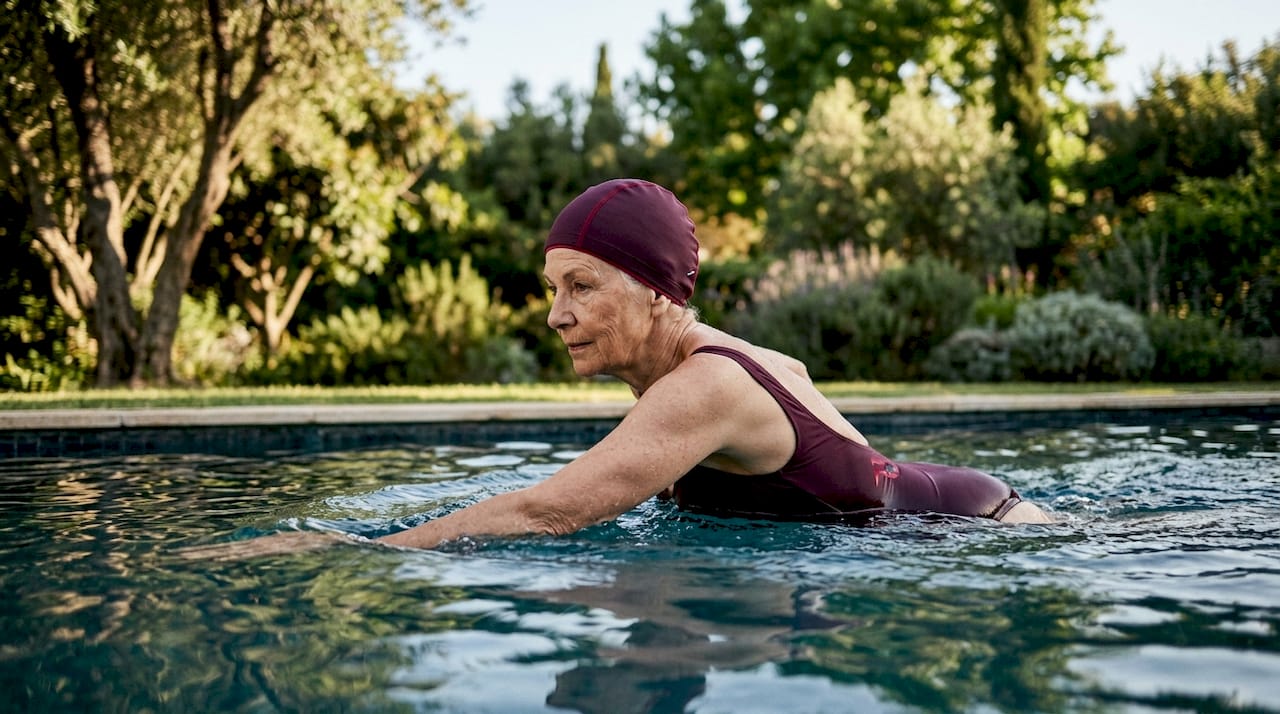
Aerobic exercise builds cardiovascular endurance and burns calories. Walking, swimming, and cycling are the most accessible options for adults 50 and older. These activities raise your heart rate without placing excessive stress on your joints. Swimming, in particular, is ideal for people with arthritis or joint pain because the water supports body weight during movement. Aim for moderate intensity, meaning you can talk but not sing during the activity.
Strength and resistance training
Strength training is the most critical component for fighting sarcopenia. Resistance bands, free weights, machines, and bodyweight exercises all qualify. The goal is progressive overload: gradually increasing the challenge so your muscles continue to adapt. Functional fitness exercises that mimic daily movements, such as squats (sitting and standing), rows (pulling), and presses (pushing), preserve independence better than isolated muscle exercises like bicep curls alone.
Balance training
Balance training reduces fall risk, which is one of the leading causes of injury in adults over 65. The most effective approach is building foundational strength around your joints rather than relying on unstable equipment. Balance boards and wobble cushions produce skill-specific improvements but carry real injury risk for older adults. Single-leg stands, heel-to-toe walking, and side-stepping exercises are safer and more transferable to real-world situations.
Flexibility exercises
Flexibility work keeps your joints moving through their full range of motion. Static stretching of major muscle groups, held for 20–30 seconds, is the standard recommendation. Focus on the hip flexors, hamstrings, calves, chest, and shoulders. These are the areas most affected by prolonged sitting and the muscle tightening that comes with age.
Pro Tip: Pair your strength training days with 10 minutes of stretching at the end of each session. You are already warmed up, and the combination takes no extra time.
| Exercise type | Primary benefit | Example activities |
|---|---|---|
| Aerobic | Cardiovascular endurance | Walking, swimming, cycling |
| Strength | Muscle mass and power | Resistance bands, weights, bodyweight squats |
| Balance | Fall prevention | Single-leg stands, heel-to-toe walking |
| Flexibility | Range of motion | Static stretching, yoga, gentle mobility work |
How should an exercise program be structured for healthy aging adults?
Exercise programming for older adults works best when it follows a dose-response model, meaning the right amount for one person is not the right amount for another. Exercise must be individualized based on medical condition, current fitness level, and personal goals, just like a medical prescription. A 55-year-old who has been active for years needs a different starting point than a 70-year-old returning to exercise after a decade away.
A practical weekly structure looks like this:
- Monday, Wednesday, Friday: 30 minutes of moderate aerobic activity such as brisk walking or swimming
- Tuesday and Thursday: 30–45 minutes of strength training covering legs, back, chest, shoulders, and core
- Daily: 5–10 minutes of flexibility work, especially after any exercise session
- One rest day per week: Full rest or gentle movement like a slow walk
Intensity matters more than most people realize. Moderate intensity means your heart rate is elevated and you are breathing harder, but you can still hold a conversation. Vigorous intensity means you can only speak a few words at a time. Both have a place in a senior fitness program, but moderate intensity is the safer starting point for most adults returning to exercise.
Pro Tip: Track your sessions with a simple notebook or phone app for the first 8 weeks. Seeing consistent progress on paper is one of the strongest motivators to keep going.
A personalized fitness plan also accounts for recovery time. Older adults generally need 48 hours between strength sessions for the same muscle groups. Skipping recovery does not build fitness faster. It increases injury risk and slows progress.
What barriers do older adults face in staying active?
Staying consistent with exercise is harder than starting. Overcoming barriers to activity requires addressing psychological, social, economic, and physical factors, not just willpower. Knowing the most common obstacles helps you plan around them before they derail your routine.
The most frequent barriers include:
- Fear of injury: Many adults 50 and older avoid exercise because they worry about hurting themselves, especially after a previous injury or surgery. A supervised program with a qualified trainer removes this fear by teaching proper form from the start.
- Lack of motivation: Exercise feels like a chore when it is disconnected from something you care about. Tying fitness to a goal, such as keeping up with grandchildren or traveling without pain, makes it personal and sustainable.
- Physical limitations: Arthritis, chronic pain, and cardiovascular conditions make some exercises uncomfortable or impossible. The solution is adaptation, not avoidance. Almost every exercise has a modification that works around a limitation.
- Social isolation: People who exercise with others are more consistent than those who train alone. Group classes, walking partners, and training with a coach all increase accountability.
- Cost and access: Gym memberships and personal training feel expensive. Starting with bodyweight exercises at home costs nothing. Resistance bands cost under $20 and replicate most gym movements.
Older adults show greater relative health improvements from starting exercise later in life compared to younger populations. That finding matters because it means the return on investment for starting now is higher than you might expect. The body responds strongly to exercise stimulus even after decades of inactivity.
A one-size-fits-all fitness approach fails most older adults precisely because it ignores these individual barriers. A program designed around your specific limitations, preferences, and goals is the one you will actually follow.
Key Takeaways
A healthy aging fitness approach requires four exercise types working together: aerobic activity, strength training, balance work, and flexibility, structured around individual health status and consistent weekly practice.
| Point | Details |
|---|---|
| Four-component structure | Combine aerobic, strength, balance, and flexibility training for complete physical coverage. |
| Weekly minimum | Aim for 150 minutes of moderate activity and two strength sessions per week. |
| Individualized dosing | Adjust intensity, volume, and exercise selection to match your health status and goals. |
| Functional movements first | Prioritize exercises that mimic daily tasks to preserve independence longer. |
| Start at any age | Older adults gain significant health benefits from exercise even when beginning late in life. |
What I have learned after 25 years of training adults at every stage of life
The biggest mistake I see adults over 50 make is waiting until something breaks before they start. They come in after a fall, after a diagnosis, after a decade of inactivity, and they want results fast. I understand that urgency. But the adults who make the most lasting progress are the ones who treat exercise as maintenance, not emergency repair.
Generic programs built for 30-year-olds do not work for a 60-year-old with a replaced hip and a history of lower back pain. I have seen it fail too many times. What works is starting with what you can do, not what you think you should be able to do. A squat to a chair is still a squat. A resistance band row still builds your back. The movement pattern matters more than the load.
The other thing I push back on hard is the obsession with balance boards and unstable surface training for fall prevention. I have seen adults wobble on a BOSU ball and feel like they are doing something productive. The research is clear: building strength around the knee, hip, and ankle joints does more for fall prevention than any piece of unstable equipment. Strength is the foundation. Balance follows.
What I tell every adult who walks into Bodiesbymahmood is this: your body is more adaptable than you think. The Forty & Fit program exists because I have watched adults in their 50s, 60s, and 70s rebuild strength and confidence they thought was gone for good. It is not about becoming an athlete. It is about staying capable, independent, and pain-free for the years ahead.
— Mahmood
Bodiesbymahmood’s approach to fitness for older adults
Bodiesbymahmood has spent over 25 years building individualized training programs for adults at every fitness level, including those returning to exercise after years away.
The personal training programs at Bodiesbymahmood are built around the same multicomponent principles covered in this article: aerobic conditioning, strength development, balance, and flexibility, all adjusted to your current health status and goals. Every program starts with an assessment, not a template. Trainers with professional sports backgrounds design your plan around what your body actually needs, not a generic routine pulled from a fitness magazine. If you are ready to build a program that keeps you strong, mobile, and independent, Bodiesbymahmood is the place to start.
FAQ
What is a healthy aging fitness approach?
A healthy aging fitness approach is a structured exercise program combining aerobic activity, strength training, balance exercises, and flexibility work to maintain physical function and prevent age-related decline in adults 50 and older.
How many minutes of exercise per week do older adults need?
Adults 50 and older should aim for at least 150 minutes of moderate-to-vigorous activity weekly, spread across at least three days, plus two strength training sessions targeting all major muscle groups.
Is it too late to start exercising after 60 or 70?
Starting exercise later in life still produces significant health gains. Older adults actually show greater relative improvements from beginning exercise than younger populations do, making it worthwhile at any age.
What is the best exercise for fall prevention in seniors?
Building strength around the knee, hip, and ankle joints through resistance training is more effective for fall prevention than balance boards or unstable surface training, which carry higher injury risk for older adults.
What does “active aging” mean compared to healthy aging fitness?
Active aging is the broader concept of maintaining health, participation, and security as you grow older. A healthy aging fitness approach is the physical exercise strategy that supports active aging by preserving strength, mobility, and independence.