


Active aging fitness goals are defined as targeted physical activities that maintain strength, balance, and mobility while reducing injury risk for adults 60 and older. This active aging fitness goals guide draws on 2026 CDC and NIA guidelines to show you exactly how to build a fitness plan that extends your health span, not just your lifespan. The right program combines aerobic exercise, strength training, balance work, and flexibility into a weekly routine you can actually stick with. Done consistently, it protects your independence, reduces fall risk, and keeps daily movement feeling natural.
What are realistic fitness goals for seniors?
Realistic fitness goals for older adults center on consistency, function, and health span rather than performance numbers. That shift in focus is the single most important factor for long-term exercise adherence, according to health-span focused research. Chasing personal records made sense at 35. At 65, the goal is to move well, stay strong, and avoid injury.
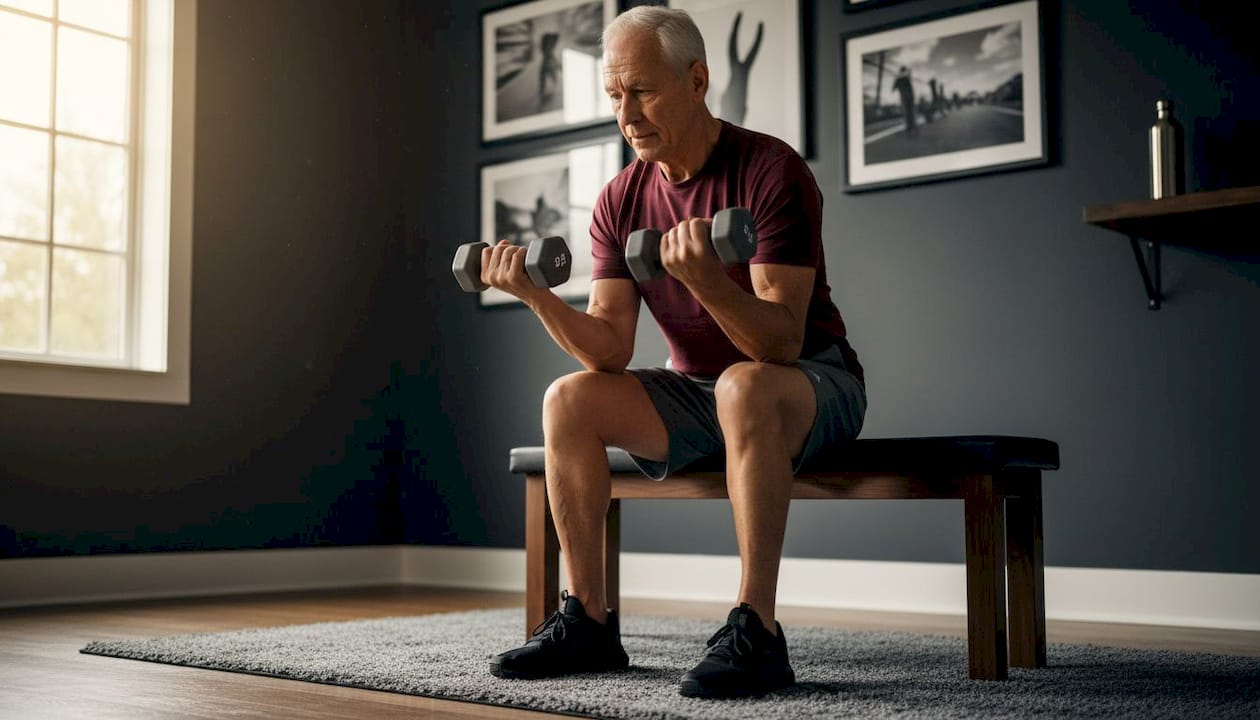
The physiology behind this shift is clear. Muscle loss accelerates to 3% per year in your 60s and 70s, while strength declines at roughly 1.5% annually starting in your mid-30s. That means by the time most adults reach retirement, they have already lost a meaningful base of muscle. The good news is that targeted training slows and even reverses that decline.
Achievable goals for most older adults include:
- Aerobic activity: 30 minutes of brisk walking five days a week
- Strength training: Two sessions per week targeting major muscle groups
- Balance practice: Daily single-leg stands or heel-to-toe walking
- Flexibility work: Gentle stretching or yoga two to three times per week
- Step count: Aiming for 7,000 steps per day as a sustainable daily target
These targets align with what the body needs, not what a 30-year-old athlete needs. A fitness goal-setting framework built around function and consistency produces far better long-term results than one built around maximum output.
Pro Tip: Write your weekly goals on paper and check them off. The physical act of tracking creates accountability without requiring any technology.
How do you build a balanced fitness plan for older adults?
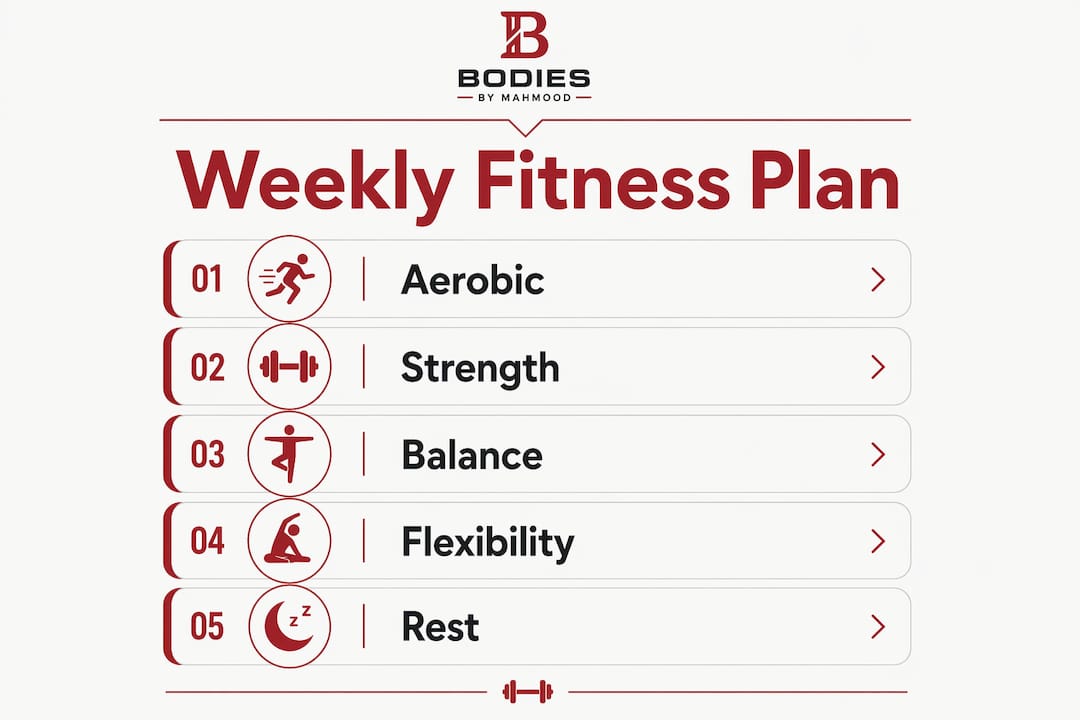
A balanced fitness plan for older adults combines four exercise types: aerobic, strength, balance, and flexibility. Each one addresses a different aspect of physical health, and skipping any one of them creates gaps that increase injury risk. An integrated routine prevents falls and functional decline better than fragmented sessions focused on only one category.
The four exercise types and what they do
- Aerobic exercise builds cardiovascular endurance and supports heart and lung health. Brisk walking, swimming, and cycling all qualify as moderate-intensity options.
- Strength training preserves muscle mass and protects joints. Resistance bands, light dumbbells, and bodyweight exercises like squats and wall push-ups all work.
- Balance training reduces fall risk by improving stability and coordination. Single-leg stands, heel-to-toe walking, and standing on one foot while brushing your teeth are low-barrier options.
- Flexibility training maintains range of motion and reduces stiffness. Gentle yoga, static stretching, and tai chi all deliver meaningful results.
Weekly structure at a glance
| Exercise type | Weekly target | Example activity |
|---|---|---|
| Aerobic | 150 minutes moderate intensity | Brisk walking, swimming |
| Strength | 2 days | Resistance bands, light weights |
| Balance | Daily or near-daily | Single-leg stands, heel-to-toe walk |
| Flexibility | 2–3 days | Gentle yoga, static stretching |
The CDC and NIA 2026 guidelines set the aerobic and strength targets above as the minimum for meaningful health benefit. Meeting those minimums consistently produces results. Exceeding them is a bonus, not a requirement.
When you start strength training, begin with light resistance, around 2 lb weights, and perform 12–20 repetitions per set. That range builds muscle endurance and reduces injury risk while your joints and connective tissue adapt. You can increase load gradually once the movement patterns feel solid.
Pro Tip: Pair balance training with an existing habit. Practice single-leg stands while waiting for your coffee to brew. Habit stacking removes the barrier of finding extra time.
How do you adapt and progress fitness goals safely as you age?
Adapting your fitness goals as you age is not a sign of failure. It is the most effective strategy for staying active long term. The body changes, and your program should change with it.
One critical and often overlooked fact: power declines faster than strength in aging adults, at more than twice the annual rate. Power is what gets you up from a chair quickly or catches you when you stumble. That means controlled, slightly explosive movements, like standing up from a chair without using your hands, deserve a place in your routine early, not just when you feel strong enough.
Key adaptation strategies include:
- Reduce intensity before duration. When energy is low or joints feel stiff, shorten the session rather than skipping it entirely.
- Add rest days deliberately. Older adults need more recovery time between sessions because physiological adaptation slows with age. Two rest days between strength sessions is a minimum, not a luxury.
- Prioritize joint health over load. If a movement causes joint pain rather than muscle fatigue, swap it for a lower-impact alternative. Chair-based exercises and water workouts reduce joint stress significantly.
- Monitor for warning signs. Sharp pain, dizziness, or unusual shortness of breath during exercise always warrant stopping and consulting a healthcare provider.
- Progress gradually. Increase resistance or duration by no more than 10% per week to give your body time to adapt without breaking down.
“The goal is not to train like you did at 40. The goal is to move better at 70 than most people do at 60. That requires patience, consistency, and a willingness to let recovery be part of the program.”
A healthy aging fitness approach built around these principles produces steady, sustainable gains without the injury setbacks that derail so many seniors.
Pro Tip: Keep a simple weekly log of how your body felt after each session. Patterns in that log will tell you more about your recovery needs than any fitness tracker.
What are the most common challenges in senior fitness and how do you fix them?
The most common reason older adults abandon fitness plans is not lack of motivation. It is a mismatch between the plan and their actual physical reality. A program designed for a 45-year-old will frustrate a 70-year-old and increase injury risk. Fixing that mismatch solves most adherence problems.
Common challenges and practical solutions:
- Injury fear: Start with chair-based or water workouts to build confidence. Joint-strengthening exercises reduce fall risk more reliably than skill-specific balance tools like balance boards, which often do not transfer to everyday movement.
- Low motivation: Exercise with a partner or join a group class. Social accountability is one of the strongest predictors of long-term adherence in older adults.
- Physical limitations: Adapt rather than eliminate. A bad knee does not mean skipping leg work. It means switching from squats to seated leg presses or resistance band extensions.
- Time constraints: Ten-minute sessions count. Three 10-minute walks deliver the same cardiovascular benefit as one 30-minute walk. Breaking activity into smaller chunks removes the all-or-nothing trap.
- Skipping warm-up: A 5-minute warm-up of light movement and dynamic stretching before every session reduces muscle strain and prepares joints for load. Skipping it is the fastest route to a setback.
Balance exercises practiced regularly in your 60s and 70s reduce fall risk significantly and correlate with improved survival rates. That single habit, practiced daily, delivers outsized returns relative to the time it takes.
How do you track progress and stay motivated over time?
Tracking fitness progress keeps motivation alive by making improvement visible. Without tracking, gains feel invisible, and invisible gains feel like no gains at all.
The simplest tracking methods work best for most older adults. A paper journal, a basic spreadsheet, or a wearable fitness tracker all serve the same purpose: creating a record you can look back on. Fitness tracking best practices suggest logging at minimum the type of activity, duration, and how you felt afterward.
| Tracking method | Best for | Key benefit |
|---|---|---|
| Paper journal | Low-tech preference | Simple, no learning curve |
| Fitness tracker (wearable) | Step and heart rate data | Automatic, real-time feedback |
| Spreadsheet or app | Structured goal tracking | Easy to spot trends over time |
| Working with a trainer | Accountability and form | Professional feedback and adjustments |
Set incremental goals rather than distant targets. Reaching “walk 20 minutes three times this week” feels achievable. “Lose 20 pounds by summer” feels abstract and discouraging when progress stalls. Celebrate small wins explicitly, because they reinforce the behavior that produces long-term results.
Professional support accelerates progress. A trainer experienced in senior fitness can identify compensations, adjust load safely, and keep programming aligned with your current capacity. That guidance is especially valuable when you are returning to exercise after a break or managing a chronic condition.
Key Takeaways
A consistent, integrated fitness program combining aerobic exercise, strength training, balance work, and flexibility training is the most effective approach to active aging and long-term functional independence.
| Point | Details |
|---|---|
| Follow the 2026 guidelines | Aim for 150 minutes of moderate aerobic activity and two strength sessions per week. |
| Prioritize health span over performance | Shift focus from maximum output to mobility, joint health, and daily function. |
| Start strength training conservatively | Begin with light resistance and 12–20 reps to build safely and reduce injury risk. |
| Build recovery into your plan | Older adults need more rest between sessions; treat recovery as part of the program. |
| Track and celebrate small wins | Visible progress through journaling or wearables sustains motivation over the long term. |
What I have learned from 25 years of training older adults
Most fitness content for seniors focuses on what to do. Very little focuses on what to stop doing. After 25 years of working with adults across all ages at Bodiesbymahmood, the biggest obstacle I see is not physical. It is the belief that slowing down means failing.
The adults who make the most consistent progress are not the ones who push hardest. They are the ones who show up regularly, respect their recovery, and treat mobility as a non-negotiable part of their week. I have watched people in their late 70s build more functional strength in six months than they had in the previous decade, simply by following a program built around their body rather than against it.
The number on the scale or the weight on the bar matters far less than whether you can carry groceries, climb stairs, and get up from the floor without help. Those are the real metrics of fitness success at this stage of life. When you train for function, the numbers tend to follow anyway.
One thing I tell every older adult I work with: the best workout is the one you will actually do next week. Consistency beats intensity every single time. Build a program you enjoy, protect your recovery, and give yourself permission to progress slowly. That patience is not weakness. It is the strategy.
— Mahmood
Bodiesbymahmood and your active aging fitness goals
Bodiesbymahmood has spent over 25 years helping adults at every fitness level build programs that actually work for their bodies and their lives. For older adults, that means personalized plans grounded in current exercise science, not generic routines copied from a younger demographic.
The personal training programs at Bodiesbymahmood are built around your current capacity, your health history, and your specific goals, whether that means building strength, improving balance, or simply moving through your day with less pain. Every session includes professional oversight to keep your form correct and your progress on track. If you are ready to build a fitness plan designed specifically for where you are right now, Bodiesbymahmood is the place to start.
FAQ
What is active aging in fitness terms?
Active aging is the practice of maintaining physical health and independence through regular, age-appropriate exercise. It focuses on strength, balance, aerobic fitness, and flexibility to support daily function and reduce injury risk.
How many days a week should seniors exercise?
Seniors should aim for at least five days of moderate aerobic activity per week and two dedicated strength training sessions, following CDC and NIA 2026 guidelines for adults 65 and older.
What is the safest way to start strength training as an older adult?
Start with light resistance, around 2 lb weights, and perform 12–20 repetitions per set. This builds muscle endurance while giving joints and connective tissue time to adapt before increasing load.
How does balance training reduce fall risk for seniors?
Regular balance exercises like single-leg stands improve stability and correlate with reduced fall risk and better survival rates in adults in their 60s and 70s. Strengthening the muscles around joints delivers the most reliable real-world benefit.
How do I stay motivated to exercise as I get older?
Track your activity in a journal or with a wearable device, set small weekly goals, and exercise with a partner when possible. Visible progress and social accountability are the two strongest drivers of long-term adherence in older adults.