


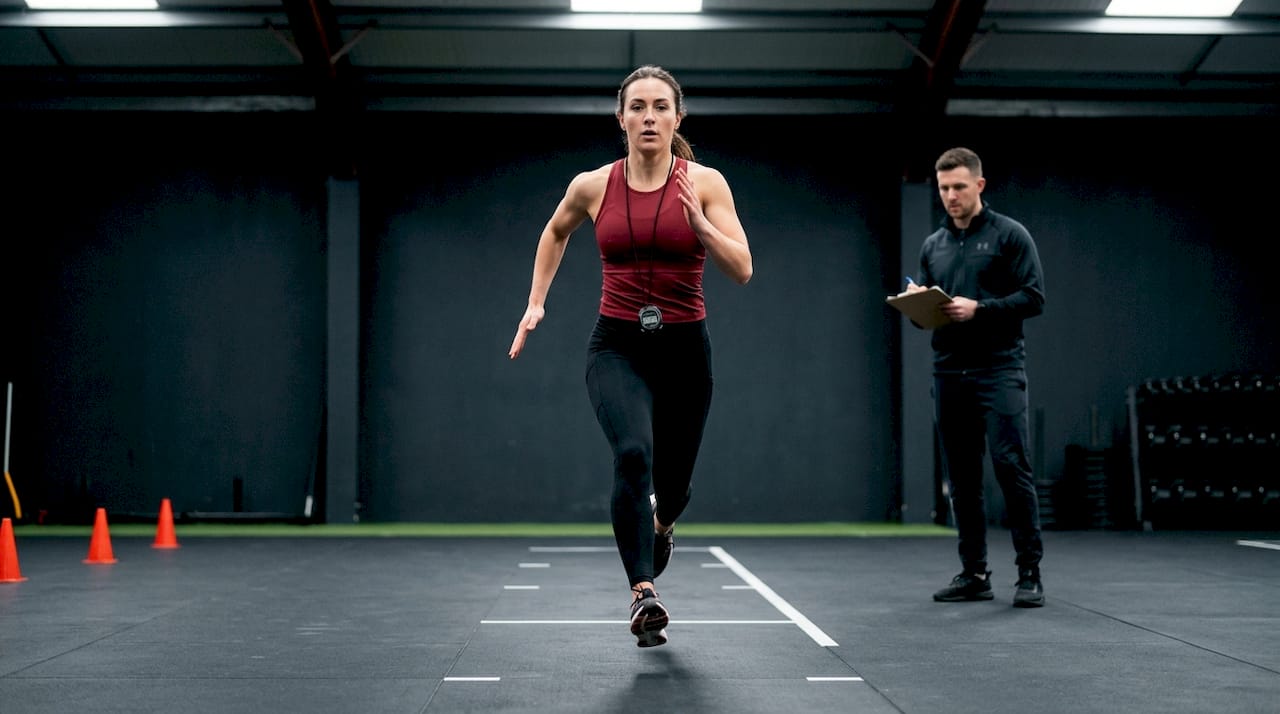
Fitness baseline testing is the process of measuring your current physical capabilities across five core components to establish an objective starting point for progress tracking and personalized training. Those five components are cardiovascular endurance, muscular strength, muscular endurance, flexibility, and body composition. A standard baseline assessment takes 30–60 minutes and should be repeated every 4–12 weeks to generate meaningful trend data. Without this starting point, any training program is built on guesswork rather than evidence. Bodiesbymahmood has used structured baseline assessments for over 25 years to build training plans that actually match the athlete in front of them, not a population average.
What is fitness baseline testing and what does it measure?
A fitness baseline evaluation is a structured, quantitative snapshot of where your body performs right now. It uses standardized tests to remove subjective opinion from the equation. The goal is not to grade you against a chart. The goal is to give you a clear, repeatable reference point.
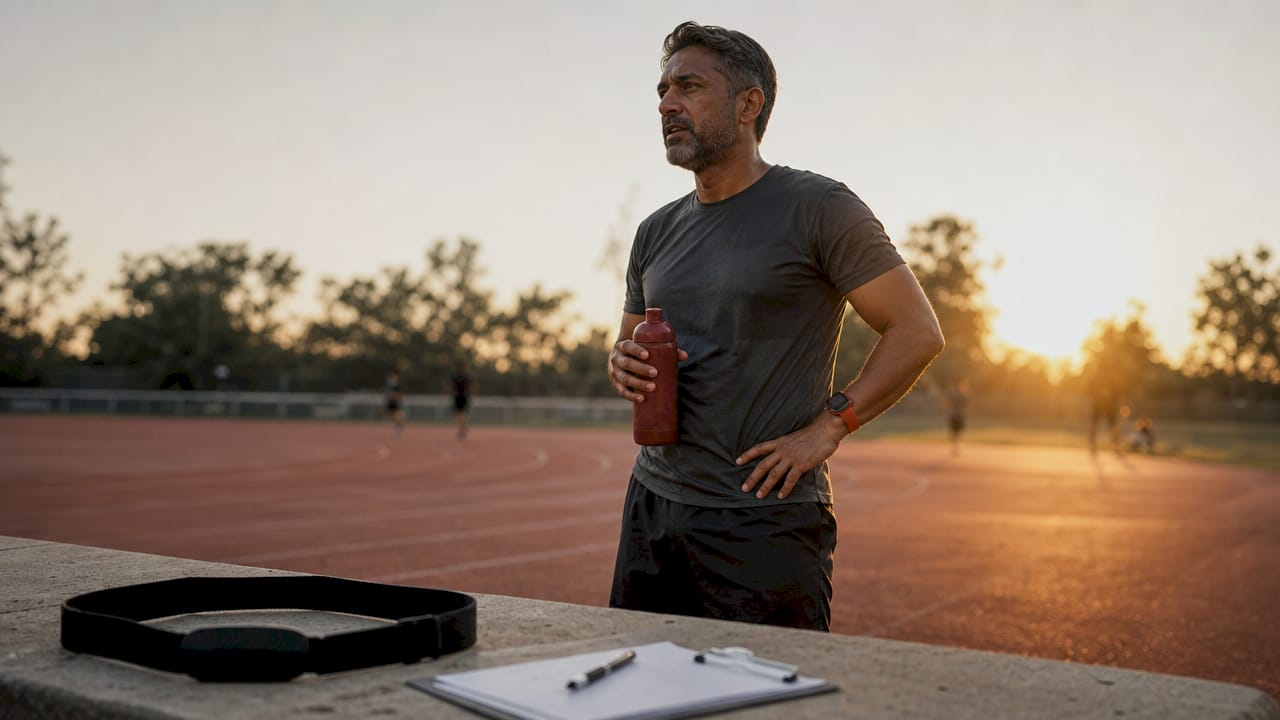
The five core fitness components each require a different test to measure accurately. Cardiovascular endurance is commonly assessed with the multi-stage fitness test (also called the beep test) or a timed 1.5-mile run. Muscular strength is measured through a one-repetition maximum (1RM) on compound lifts like the squat or bench press. Muscular endurance uses timed push-up or sit-up tests. Flexibility relies on the sit-and-reach test. Body composition goes beyond scale weight, using skinfold calipers, bioelectrical impedance, or DEXA scanning to separate fat mass from lean mass.
| Component | Common Test | What It Reveals |
|---|---|---|
| Cardiovascular endurance | Multi-stage fitness test, 1.5-mile run | Aerobic capacity and heart efficiency |
| Muscular strength | 1-rep max (squat, bench, deadlift) | Peak force production |
| Muscular endurance | Timed push-ups, sit-ups | Sustained muscle output |
| Flexibility | Sit-and-reach | Range of motion and injury risk |
| Body composition | Skinfold calipers, DEXA, bioimpedance | Fat vs. lean mass ratio |
Quantitative metrics like VO2 max and lactate profiles strongly correlate with long-term health and longevity. That correlation means your baseline data is not just a fitness score. It is a health indicator with real predictive value.
Pro Tip: Record every test condition: time of day, what you ate beforehand, and how much sleep you got. Those details matter more than most athletes realize when comparing results weeks later.
Why is fitness baseline testing important for athletes and individuals?
Baseline testing does two things that generic training cannot. It identifies where you are weak before injury finds it for you, and it gives you a personal benchmark that no population chart can replicate.
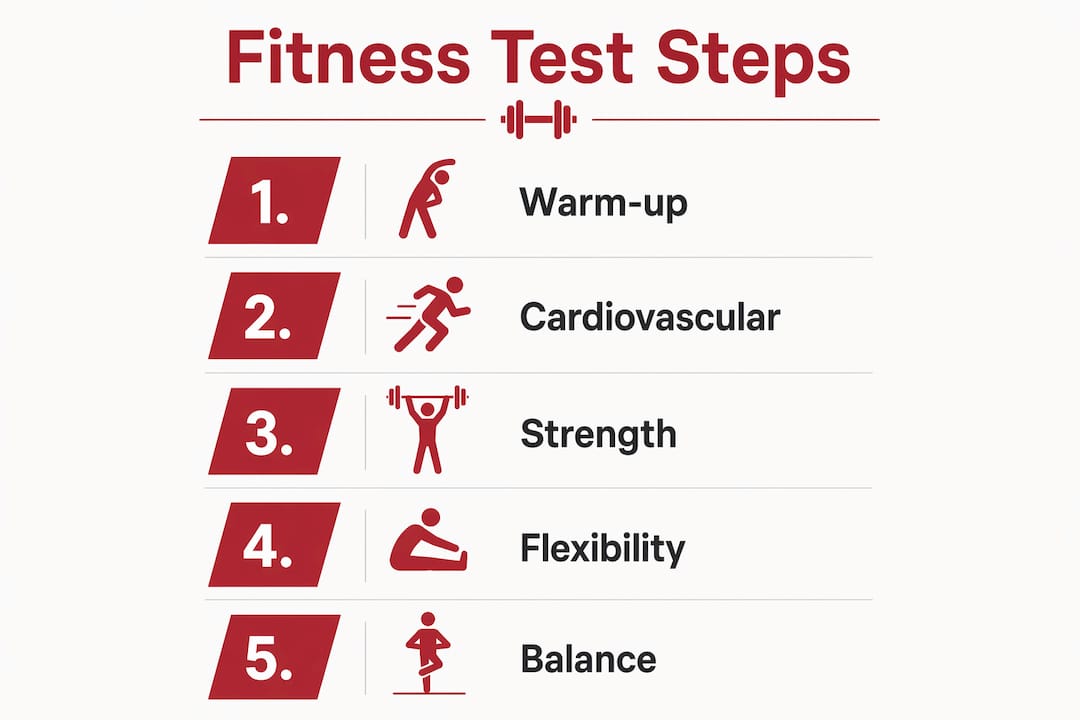
Baseline testing objectively identifies physical asymmetries and injury risks that would otherwise go unnoticed until they become problems. A runner with strong cardiovascular endurance but limited hip flexor range of motion is a stress fracture waiting to happen. A baseline assessment catches that imbalance before it costs you a season.
The benefits extend well beyond injury prevention:
- Personalized programming. Test results reveal whether you need to prioritize strength, endurance, or mobility, so your coach builds a plan around your actual gaps, not a template.
- Objective motivation. Seeing a 12% improvement in your push-up endurance over eight weeks is far more motivating than a vague sense that you “feel stronger.”
- Off-season planning. Professional programs use testing at training start, mid-season, and end-of-season to adjust emphasis and prevent overtraining.
- Long-term health tracking. Combining performance data with movement quality screenings prevents chronic injury and age-related functional decline.
- Psychological clarity. Knowing your numbers removes the anxiety of not knowing where you stand.
Focusing on personal baseline trends enhances motivation and reduces the discouragement that comes from comparing yourself to external averages or social media standards. Your progress is the only progress that matters.
The one-size-fits-all approach to fitness fails because it ignores individual starting points. Baseline testing is the direct solution to that problem. It makes every training decision defensible with data.
How often should you repeat a fitness assessment?
Re-testing frequency depends on your experience level and training phase. Beginners should retest every 4–8 weeks because their bodies adapt quickly and early gains are large enough to measure in short windows. Trained athletes typically retest every 8–12 weeks, as physiological changes occur more gradually at higher fitness levels.
Frequency matters less than consistency in conditions. Consistent testing conditions including time of day, equipment calibration, and participant readiness have more impact on data reliability than the specific test chosen. That is a counterintuitive finding that most athletes ignore. They obsess over which test to use and then run it at different times of day under different fatigue levels, which makes the data useless.
Follow these steps to protect your data quality every time you retest:
- Test at the same time of day. Morning tests and afternoon tests produce different results due to body temperature, hydration, and neuromuscular readiness.
- Standardize your pre-test nutrition. Eat the same type of meal at the same interval before each session.
- Control fatigue. Never test the day after a hard training session. Schedule tests after a rest day or a light recovery day.
- Use the same equipment. A different scale, a different measuring tape, or a different tester can introduce variation that has nothing to do with your fitness.
- Record environmental conditions. Temperature and humidity affect cardiovascular performance. Note them every time.
Pro Tip: Treat your retest day like a competition. Arrive rested, fueled, and mentally ready. The more seriously you take the testing conditions, the more useful your data becomes.
Variations in environment or testing protocols can mask true physiological change. Apparent progress might reflect inconsistent testing rather than real improvement. Trend analysis across multiple tests is always more reliable than reacting to a single data point.
How do you use baseline results to set real fitness goals?
Baseline data is only useful if you act on it. The first step is identifying your weakest component relative to your goals. A basketball player whose cardiovascular endurance scores low but whose strength scores high should shift training emphasis toward conditioning, not add more weight room sessions.
Body weight alone tells you almost nothing about fitness changes. Someone who gains muscle and loses fat may see a stable number on the scale while their body composition, strength, and endurance all improve significantly. Baseline testing captures that full picture where a scale cannot.
Use your results to build goals with these characteristics:
- Specific and measurable. “Improve my sit-and-reach by 3 centimeters in eight weeks” beats “get more flexible.”
- Tied to your weakest link. Address the component most likely to limit your performance or increase your injury risk first.
- Progressive. Set a short-term target for the next retest cycle, then a medium-term target for the following one. Stacking small wins builds momentum.
- Personal, not comparative. Trend analysis across multiple tests is more effective than comparing your scores to population norms. Your baseline is your competition.
Connecting baseline results to fitness goal setting creates a feedback loop that keeps training purposeful. Each retest either confirms the plan is working or signals that an adjustment is needed. That cycle of test, train, retest, and adjust is how real, lasting progress happens.
Movement quality deserves its own goal category. Movement pattern imbalances can lead to injury even when strength and endurance scores are high. A squat screen that reveals a lateral weight shift is telling you something that a 1RM test cannot. Build corrective work into your plan before that imbalance becomes a diagnosis.
Key Takeaways
Fitness baseline testing is the most direct way to remove guesswork from training by measuring where you actually are before deciding where you need to go.
| Point | Details |
|---|---|
| Five core components | Every complete assessment covers cardiovascular endurance, muscular strength, muscular endurance, flexibility, and body composition. |
| Retest every 4–12 weeks | Beginners retest every 4–8 weeks; trained athletes every 8–12 weeks to capture meaningful change. |
| Conditions matter most | Consistent time of day, equipment, and fatigue levels protect data reliability more than test selection does. |
| Personal trends beat norms | Comparing your current results to your own baseline eliminates emotional bias and external comparison fatigue. |
| Movement quality is non-negotiable | Strength and endurance scores without movement screening miss the injury risks that end seasons. |
What 25 years of testing athletes taught me about baselines
Most athletes walk into their first assessment hoping to score well. That is the wrong mindset, and I say that from watching it play out hundreds of times. A baseline is not a grade. It is a map. A low flexibility score is not a failure. It is a direction.
The mistake I see most often is inconsistency in testing conditions. An athlete retests after a bad night of sleep, on a hot afternoon instead of a cool morning, and then concludes the program is not working. The program may be working perfectly. The data is just broken. Strict control of testing variables is the unglamorous work that separates useful data from noise.
The second mistake is chasing population averages. I have worked with athletes who were demoralized because their VO2 max did not match a published norm for their age group. But that norm was built on a population with a completely different training history, genetics, and lifestyle. Your baseline is built on you. Comparing it to a population average is like comparing your marathon time to someone who has been running for a decade longer.
What I have found actually works is combining quantitative performance data with qualitative movement screening. A balanced approach pairing performance metrics with movement screenings is the standard for longevity-oriented programs. Numbers tell you how much. Movement screens tell you how well. You need both.
Baseline testing is not a one-time event. It is a recurring conversation between you and your body. The athletes who treat it that way are the ones who stay healthy and keep improving long after others plateau or get hurt.
— Mahmood
Bodiesbymahmood’s approach to baseline fitness assessment
At Bodiesbymahmood, every training relationship starts with a structured fitness assessment that covers all five core components. That data shapes the entire program, from weekly training split to recovery emphasis to retest schedule.
Our trainers have over 25 years of experience applying baseline data to real athletes across every level, from first-time gym members to professionals preparing for competition. We do not hand you a generic program and call it personalized. We build from your numbers, retest on a defined schedule, and adjust when the data tells us to. If you are ready to train with a clear direction instead of a guess, explore our personal training programs and see how a proper baseline changes everything. College-bound athletes can also review our specialized athlete programs built around performance testing and sport-specific development.
FAQ
What is fitness baseline testing?
Fitness baseline testing is a structured evaluation of your current physical capabilities across five components: cardiovascular endurance, muscular strength, muscular endurance, flexibility, and body composition. It establishes an objective starting point for tracking progress and building personalized training plans.
How long does a baseline fitness assessment take?
A complete baseline fitness assessment typically takes 30–60 minutes depending on the number of components tested and the protocols used.
How often should I repeat a fitness assessment?
Beginners should retest every 4–8 weeks, while trained athletes typically retest every 8–12 weeks. Consistency in testing conditions matters more than the exact interval.
Can baseline testing help prevent injuries?
Yes. Baseline assessments identify physical asymmetries and movement pattern imbalances that increase injury risk, even in athletes with strong strength and endurance scores. Addressing those gaps before they cause problems is one of the primary benefits of regular testing.
Is body weight a reliable fitness metric?
Body weight alone is not a reliable indicator of fitness. Someone can maintain stable weight while losing fat and gaining muscle, which represents a significant improvement in health and performance that only body composition testing captures accurately.