


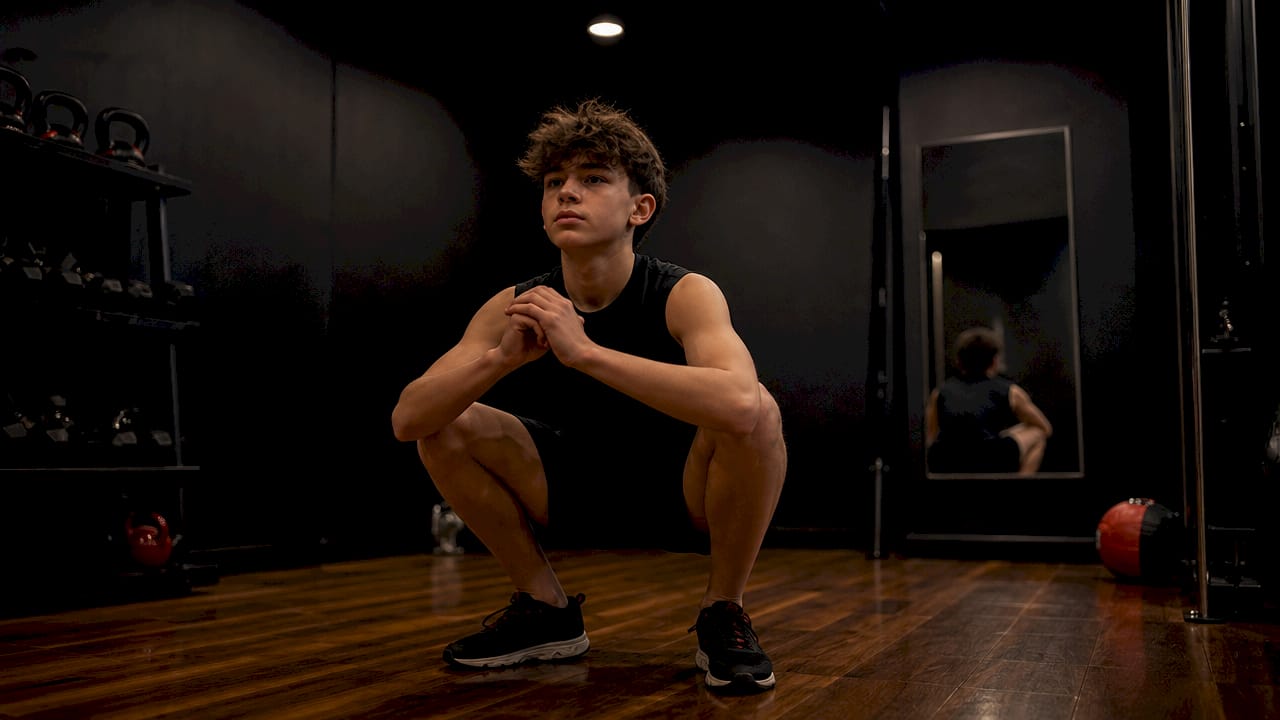
Bodyweight training is defined as strength exercise that uses your own body mass as resistance, and it is the most developmentally appropriate training method for athletes aged 12–18. Sports medicine consensus confirms that properly structured bodyweight resistance training does not stunt growth and builds the foundational movement skills young athletes need before advancing to weighted exercise. The core of this approach sits in mastering movement patterns like the squat, hip hinge, push, pull, and core bracing before adding any external load. For athletes between 12 and 18, this is not a shortcut or a beginner phase to rush through. It is the foundation everything else is built on.
Why bodyweight training suits young athletes at every stage
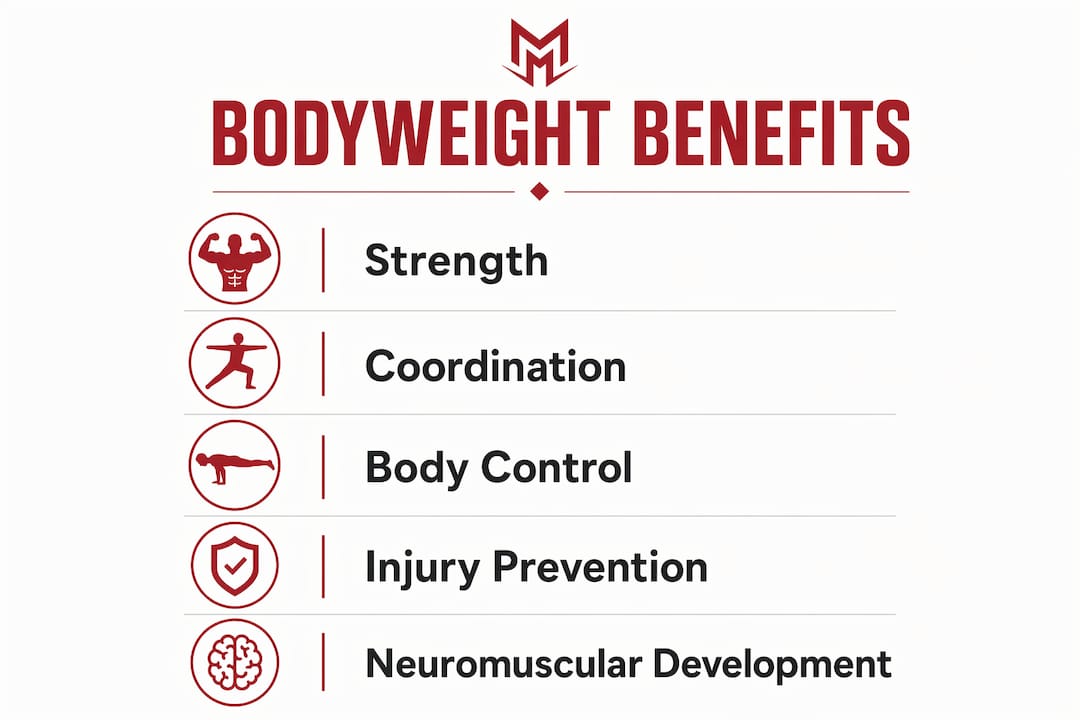
Bodyweight training suits young athletes because it develops strength, coordination, and body control without placing excessive stress on developing bones and joints. The American Academy of Pediatrics and sports medicine researchers agree that resistance training is safe for youth when technique is prioritized over load. That finding matters because it removes the biggest fear parents and coaches have about strength training for kids.
Young athletes are in a critical window for neuromuscular development. This means the nervous system is highly responsive to movement learning, and bodyweight training builds neuromuscular coordination that machines and free weights cannot replicate as efficiently at this stage. Controlling your own body through space teaches the brain and muscles to work together in ways that directly transfer to sprinting, jumping, cutting, and throwing.
Bodiesbymahmood has worked with young athletes in Orlando for over 25 years, and the pattern is consistent. Athletes who build movement competence first progress faster and stay healthier longer than those who jump straight to barbells.
What are the physiological benefits of bodyweight training for young athletes?
Bodyweight training produces measurable improvements across several physical qualities that matter directly to sport performance.
- Lean muscle development: Bodyweight exercises like push-ups, squats, and lunges recruit multiple muscle groups simultaneously. This builds functional strength that transfers to sport movements rather than isolating muscles in ways that do not.
- Neuromuscular coordination: Controlling body mass through space sharpens the connection between the nervous system and muscles. Better coordination means faster, more accurate movement on the field or court.
- Posture and balance: Exercises like single-leg squats and planks train stabilizer muscles that support posture and reduce the risk of ankle, knee, and lower back injuries.
- Tendon and ligament resilience: Controlled tempo in bodyweight exercises builds connective tissue durability. Slow, deliberate reps stress tendons in a productive way that prepares them for higher training loads later.
- Joint stability: Bodyweight training reinforces proper joint alignment through repeated, controlled movement. This is especially valuable during growth spurts when coordination temporarily decreases.
Pro Tip: Track progress by movement quality, not by how many reps you complete. A clean set of 8 squats beats a sloppy set of 20 every time.
The physiological case for bodyweight workouts for youth is strong. These adaptations are not just about looking fit. They are about building a body that performs better and breaks down less.
Which core bodyweight movements should young athletes master?
Movement mastery is the goal, not exercise variety. Young athletes should focus on a small number of patterns and execute them well before adding complexity.
The five foundational patterns are:
- Squat: Develops leg strength, hip mobility, and knee stability. Linked directly to jumping and change-of-direction ability.
- Hip hinge: Trains the posterior chain, which powers sprinting and athletic explosiveness. The bodyweight Romanian deadlift and glute bridge are the starting points.
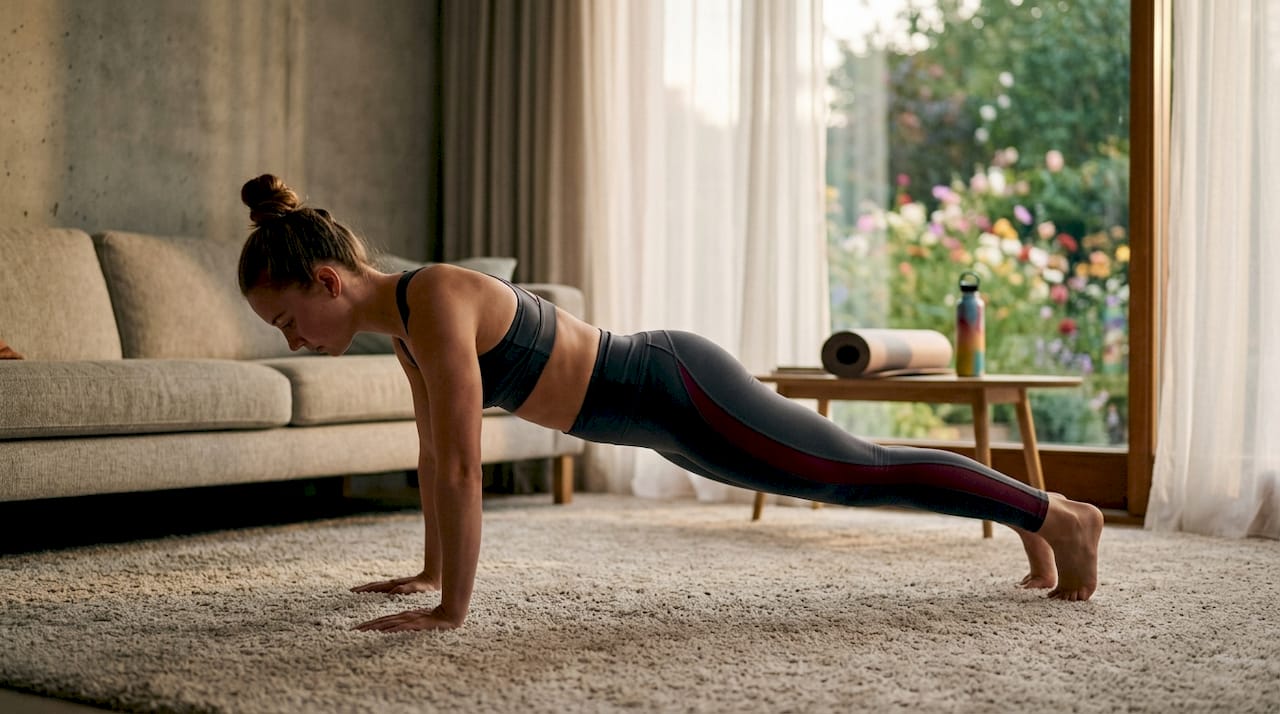
- Push: Push-ups in all variations build chest, shoulder, and tricep strength while training core stability simultaneously.
- Pull: Inverted rows and eventually pull-ups develop the upper back and biceps. Pulling strength is underdeveloped in most young athletes.
- Core bracing: Planks, dead bugs, and hollow holds teach rib-to-pelvis stacking and neutral spine alignment, which is the foundation for safe loading in any future exercise.
Pro Tip: Before adding reps or harder variations, slow the tempo down. A 3-second lowering phase on a squat builds more strength and body awareness than rushing through double the reps.
| Movement | Primary muscles | Sport application |
|---|---|---|
| Squat | Quads, glutes, hamstrings | Jumping, acceleration |
| Hip hinge | Glutes, hamstrings, lower back | Sprinting, power output |
| Push-up | Chest, shoulders, triceps, core | Throwing, contact sports |
| Inverted row | Upper back, biceps, rear delts | Pulling, posture |
| Plank | Deep core, glutes | All sport movement |
Mastering squat, hip hinge, and core bracing reduces injury risk and improves athletic performance across virtually every sport. That is not an opinion. It is the consensus of youth strength training research.
How often and how long should young athletes train with bodyweight exercises?
Structure matters as much as exercise selection. Without the right frequency and recovery, even good training produces poor results or leads to overuse injuries.
- Train 2–3 times per week. Standard protocols recommend 2–3 bodyweight sessions weekly with at least one rest day between sessions. This frequency builds strength without accumulating fatigue that interferes with sport practice.
- Keep sessions to 20–30 minutes. Young athletes do not need long workouts. A focused 25-minute session with quality movement beats a 60-minute session with poor attention and sloppy form.
- Prioritize rest days. Muscles grow and adapt during recovery, not during the workout itself. Skipping rest days is the fastest route to overuse injuries like shin splints and patellar tendinitis.
- Separate strength sessions from sport practice when possible. Balancing conditioning with sport participation supports long-term athleticism. Stacking a hard training session directly before a game or practice reduces performance and increases injury risk.
- Know the difference between muscle fatigue and pain. Soreness 24–48 hours after training is normal. Sharp pain during a movement, joint pain, or pain that persists beyond 72 hours is a signal to stop and seek guidance.
Young athletes who follow this structure consistently for 6–12 months build a physical base that supports safe progression to more demanding training later.
What common myths and mistakes should young athletes avoid?
Two myths hold more young athletes back than any other. Addressing them directly matters.
Myth 1: Strength training stunts growth. Pediatric guidance shows no evidence linking proper bodyweight resistance training to stunted growth. Growth plate injuries in youth sports are caused by poor technique, excessive load, and inadequate supervision. Not by resistance training itself.
Myth 2: More reps equals better results. Chasing rep counts without controlling movement quality is one of the most common mistakes in youth training. Poor form and early progression to heavy loads increase injury risk significantly. Quality coaching and gradual progression are what produce safe, lasting results.
“Strength training for young athletes is foundational and long-term, not quick-results driven. Athletes who master fundamental movements before advancing excel in performance and avoid injury setbacks.” This is the principle that separates athletes who thrive from those who burn out or get hurt.
Mistake: Rushing to explosive or weighted training. Plyometrics, Olympic lifts, and heavy barbell work require a movement foundation that most athletes under 16 have not yet built. Advancing too fast does not accelerate development. It creates injury patterns that take months to recover from.
Mistake: Ignoring slow tempo work. Slow tempos on reps build joint and tendon resilience that fast, sloppy reps cannot produce. A 3-second lowering phase is not a sign of weakness. It is a sign of a smart athlete.
How can young athletes safely progress beyond bodyweight training?
Progression is earned, not scheduled. The timeline is different for every athlete, and readiness is determined by movement quality, not age or time spent training.
Signs you are ready to progress:
- You can perform 3 sets of 10 clean squats, push-ups, and hip hinges with full control and no form breakdown.
- You can hold a plank for 60 seconds with proper rib-to-pelvis alignment.
- You follow coaching cues consistently and can self-correct during a set.
- Consistent clean bodyweight technique with supervision is the primary readiness indicator.
Progression strategies before adding external weight:
- Increase the range of motion (deeper squat, fuller push-up)
- Slow the tempo further (4-second lowering phase)
- Move to harder variations (single-leg squat, archer push-up, Nordic hamstring curl)
- Add instability (single-leg balance work, elevated surface push-ups)
| Progression stage | Method | Example |
|---|---|---|
| Beginner | Standard bodyweight | Squat, push-up, plank |
| Intermediate | Tempo and range increase | 4-second squat, deep push-up |
| Advanced bodyweight | Harder variations | Single-leg squat, pike push-up |
| Transition to load | Light external resistance | Goblet squat with light kettlebell |
Strength training is a multi-year project. Mastering bodyweight movement from ages 12–16 builds the movement competence needed to handle heavier loads safely later. Athletes who skip this phase often plateau early or develop chronic injuries that limit their potential.
Key takeaways
Bodyweight training is the most effective and safest strength development method for young athletes aged 12–18 because it builds movement competence, neuromuscular coordination, and injury resilience before any external load is introduced.
| Point | Details |
|---|---|
| Movement mastery first | Master squat, hip hinge, push, pull, and core bracing before adding any weight. |
| Train 2–3 times weekly | Sessions of 20–30 minutes with rest days between produce the best results safely. |
| Slow tempo builds resilience | A 3-second lowering phase builds tendon and joint durability faster than rushing reps. |
| Growth stunting is a myth | Pediatric research confirms proper bodyweight training does not affect growth plates. |
| Readiness determines progression | Progress to weighted training only after consistent, clean technique under supervision. |
What I have learned coaching young athletes over 25 years
Most young athletes I work with arrive wanting to lift heavy. That is understandable. Heavy lifting looks impressive, and social media is full of teenagers deadlifting twice their body weight. My job is to redirect that energy without killing the motivation.
The athletes I have seen develop the most consistently are the ones who spent their early years mastering movement. Not chasing numbers. A 14-year-old who can perform a perfect single-leg squat, a controlled Nordic curl, and a hollow hold with full tension is more prepared for elite training than a 16-year-old who has been maxing out on bench press for two years with poor shoulder mechanics.
The injury patterns I see most often in young athletes come from one source: advancing too fast. A young sprinter with patellar tendinitis, a baseball pitcher with shoulder impingement, a basketball player with chronic ankle sprains. In almost every case, the foundation was skipped. The body was asked to produce force it had not yet learned to control.
Patience is not passive. Building movement quality at ages 12–16 is the most aggressive thing a young athlete can do for their long-term career. The student athletes who commit to this process early are the ones who show up healthy and performing at their peak when it matters most.
— Mahmood
How Bodiesbymahmood supports young athletes in Orlando
Bodiesbymahmood specializes in sports-specific training for athletes at every level, from beginners learning their first squat to college-bound athletes preparing for competitive programs. Every young athlete who trains with us starts with a movement assessment. That assessment determines where the gaps are and builds a program around them.
The training programs at Bodiesbymahmood prioritize technique, foundational strength, and safe progression. No athlete is rushed into weighted training before they are ready. If you are between 12 and 18 and want to build real athletic strength the right way, personal training at Bodiesbymahmood is the place to start. Our trainers bring over 25 years of experience and a genuine commitment to athlete development at every age.
FAQ
Does bodyweight training stunt growth in young athletes?
No. Pediatric research confirms that proper bodyweight training does not stunt growth. Growth plate injuries result from poor technique and excessive load, not from resistance training itself.
How many times per week should a young athlete do bodyweight training?
Young athletes should train 2–3 times per week with sessions lasting 20–30 minutes. This frequency builds strength while allowing enough recovery between sessions.
What is the best bodyweight exercise for young athletes?
The squat is the single most valuable bodyweight exercise for young athletes because it builds leg strength, hip mobility, and knee stability that transfer directly to jumping, sprinting, and change of direction.
When is a young athlete ready to progress to weights?
A young athlete is ready to progress when they can perform multiple sets of clean squats, push-ups, and hip hinges with full control and consistently follow coaching cues. Technique, not age, determines readiness.
Can bodyweight training improve sport performance?
Yes. Bodyweight training improves neuromuscular coordination and functional strength that transfers directly to sprinting, jumping, and sport-specific movement patterns.