


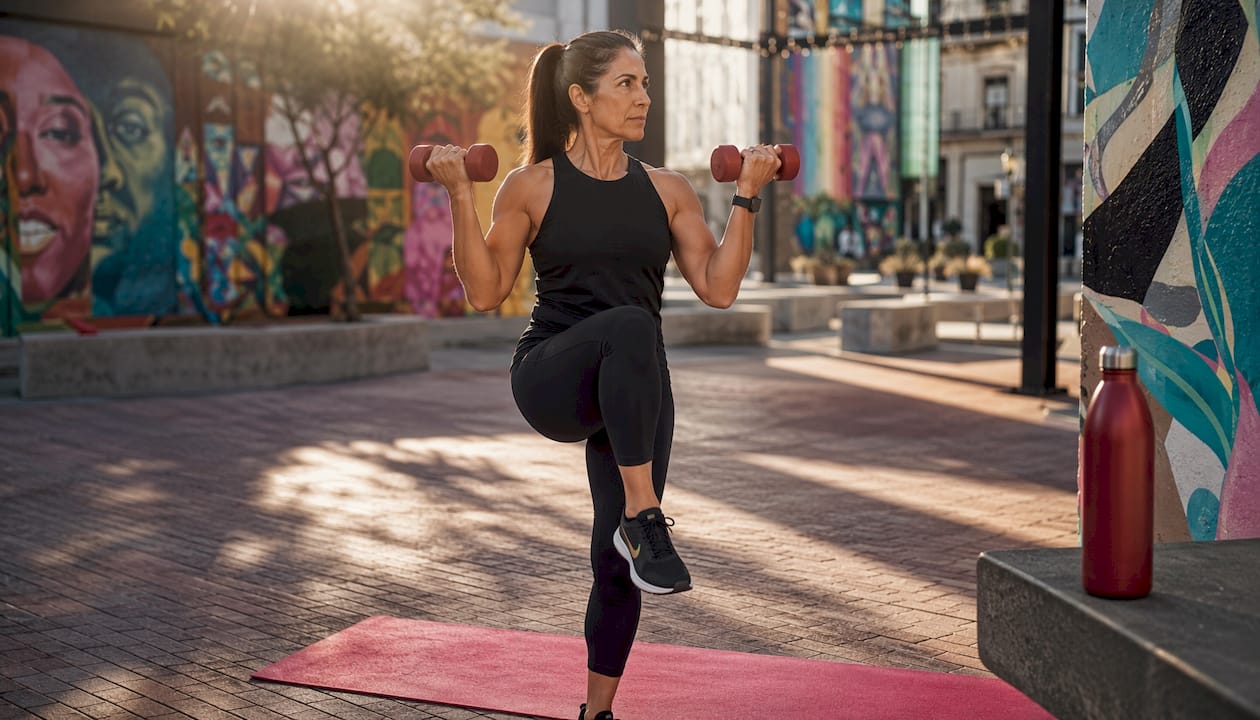
A personal fitness program that integrates balance, strength, and flexibility training is the most direct path to functional health, injury prevention, and lasting mobility. You don’t need to choose between lifting heavy and moving well. The research is clear: combining all three components in one program outperforms any single-focus approach.
Here’s what a practical integrated weekly structure looks like:
- Monday: Strength training (compound movements, full range of motion) + 5-minute dynamic flexibility warm-up
- Tuesday: Balance and mobility work (single-leg exercises, hip mobility drills)
- Wednesday: Active recovery or light aerobic activity
- Thursday: Strength training + balance primer exercises before main lifts
- Friday: Flexibility-focused session (dynamic and static stretching, yoga-style flows)
- Saturday: Full integrated session combining all three components
- Sunday: Rest or gentle walking
The NHS recommends working all major muscle groups multiple times per week, with several sets of moderate repetitions per exercise. Flexibility work carries no fixed time quota; consistency matters far more than session length. Sessions under half an hour are often enough to build a habit that sticks.
How do you safely start and progress an integrated fitness program?
Starting an integrated program without a plan is how people get hurt or burn out in the first three weeks. A short self-assessment before you begin tells you where to focus first.
Initial readiness check:
- Can you stand on one leg for 10 seconds without losing balance? If not, balance work is your priority.
- Can you squat to parallel with your heels flat? Limited ankle or hip mobility signals a flexibility gap.
- Can you perform a push-up or bodyweight squat with control? This sets your strength baseline.
Warm-up and cool-down for combined training:
- Warm-up (5–8 minutes): Dynamic movements like leg swings, arm circles, hip rotations, and bodyweight squats. These prepare joints and prime the nervous system before loading.
- Cool-down (5–10 minutes): Static stretches targeting the muscles you just worked. Hold each stretch 20–30 seconds. This is where flexibility gains accumulate over time.
Progressive overload without overdoing it:
Add one variable at a time: more reps, more sets, more load, or reduced rest. Never increase all four in the same week. Periodized programs that evolve intensity and volume over time prevent both plateaus and overuse injuries far better than static templates.
Common mistakes to avoid:
- Skipping the warm-up because you feel fine
- Stretching cold muscles aggressively before strength work
- Training the same muscle groups on back-to-back days without recovery
- Ignoring one component (usually balance) because it feels less productive
Adapting for individual constraints: If you’re working around a past injury, reduce the range of motion first and build back gradually. For limited equipment, bodyweight progressions cover all three components without a single piece of gear. The seated strength training approach is a solid option for anyone with mobility restrictions.
Pro Tip: Do 2–3 minutes of single-leg balance work before your strength sets. This activates the stabilizer muscles and neurological pathways that control movement, which improves motor control and makes your compound lifts more effective.
What are the best balance exercises for functional fitness?
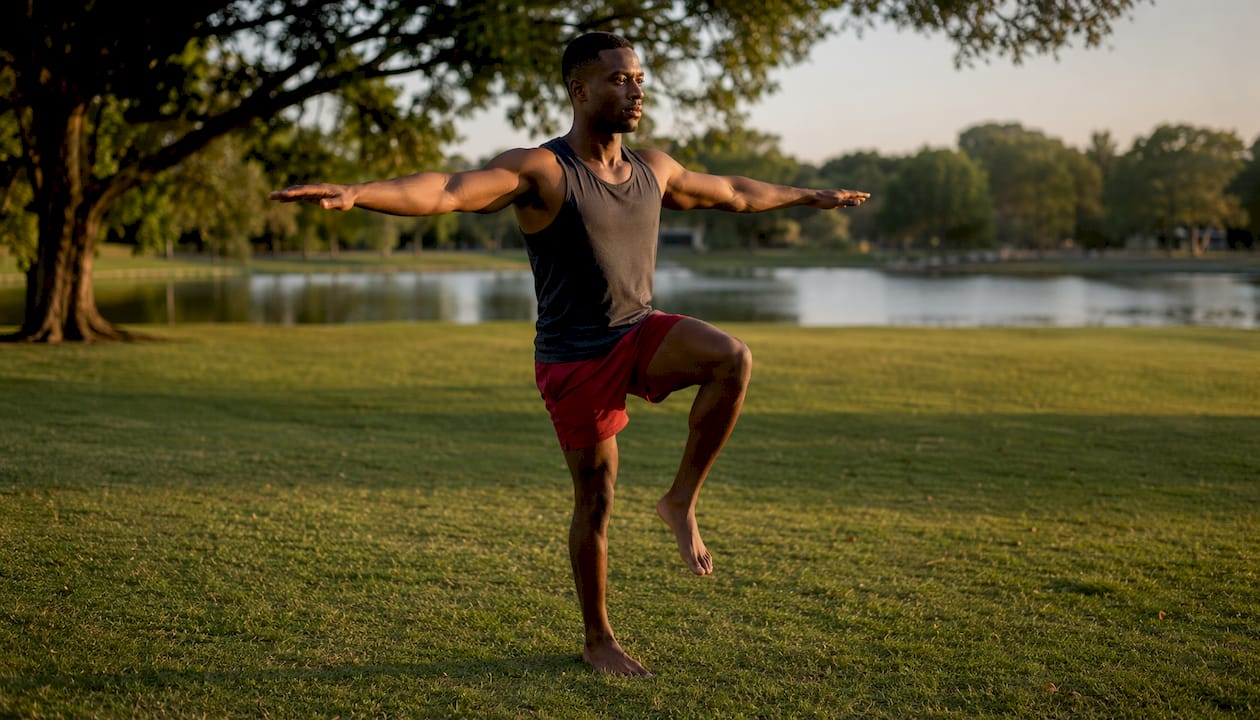
Balance training is the most underused component in most personal programs, yet it directly reduces fall risk, improves joint stability, and makes every strength movement safer. The NHS notes that exercises improving leg strength, balance, and coordination help people maintain muscle function and avoid falls as they age.
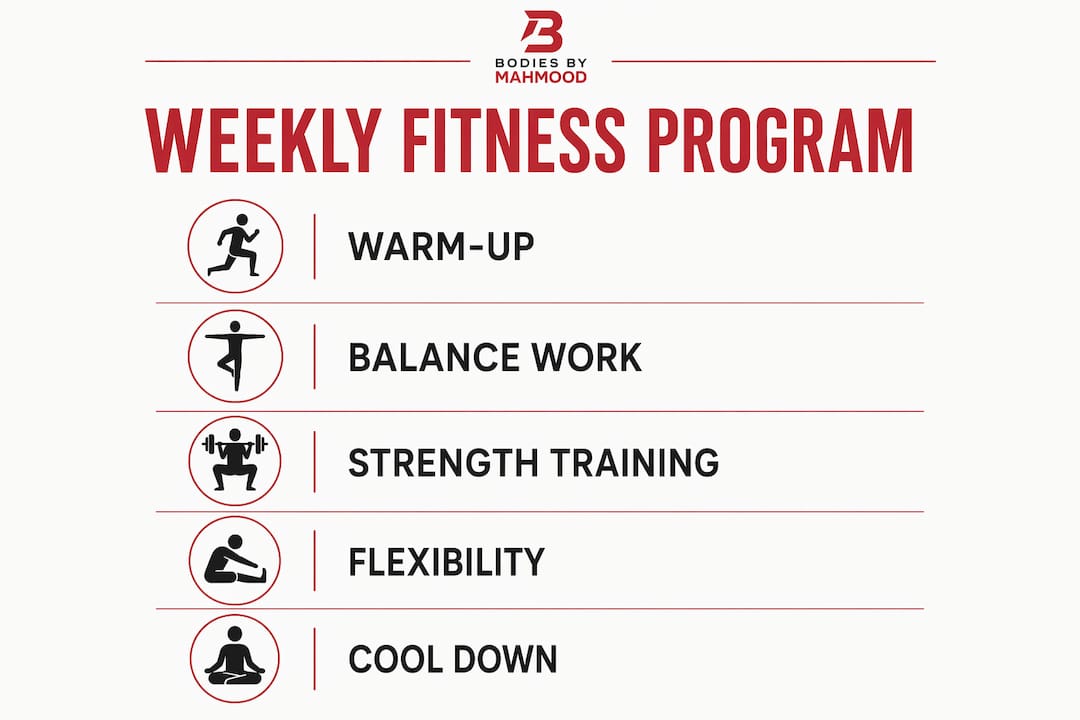
Balance exercises fall into three categories: static, dynamic, and reactive.
Static balance exercises (control and stability):
- Single-leg stand: Stand on one foot for 20–30 seconds. Progress by closing your eyes or standing on a folded towel for an unstable surface.
- Tandem stance: Stand heel-to-toe in a straight line. Hold for 30 seconds, then switch which foot leads.
- Single-leg deadlift (bodyweight): Hinge forward on one leg, extending the other behind you. Builds hip stability and hamstring control simultaneously.
Dynamic balance exercises (movement through space):
- Tightrope walk: Walk heel-to-toe in a straight line for multiple steps. Arms out for counterbalance.
- Lateral step-overs: Step sideways over a low object, controlling each landing. Trains lateral hip stability.
- Step-up with knee drive: Step onto a box or stair, drive the opposite knee up, pause, then step down with control.
Reactive balance exercises (responding to perturbation):
- Perturbation training: Have a partner give light pushes while you stand on one leg. Your body learns to correct quickly.
- Hop and stick: Jump forward or laterally and land on one foot, holding the position for 3 seconds before moving.
For beginners, start with static exercises and add 5 seconds of hold time each week. Intermediate trainees can move to dynamic drills and add load (a light dumbbell) to single-leg movements. If you’re working with older adults, the active aging fitness guide covers balance progressions specifically designed to reduce fall risk.
Which strength exercises also build balance and joint mobility?
The most efficient strength exercises are the ones that train multiple muscle groups while also challenging your balance and moving your joints through their full range. Resistance training through full range of motion improves joint flexibility as effectively as static stretching, while building strength at the same time.
Compound movements with balance demands:
- Goblet squat: Hold a dumbbell or kettlebell at chest height and squat deep. The counterweight encourages an upright torso and full hip flexion, training both strength and mobility.
- Romanian deadlift: Hinge at the hips with a slight knee bend, lowering the weight along your legs. Builds posterior chain strength while lengthening the hamstrings under load.
- Reverse lunge: Step back into a lunge, keeping the front shin vertical. Challenges single-leg stability and hip flexor length simultaneously.
- Single-arm dumbbell row: Brace on a bench with one hand, row with the other. The anti-rotation demand trains core stability alongside back strength.
Bodyweight options (no equipment needed):
- Push-up with shoulder tap: After each push-up, tap the opposite shoulder. The pause forces core and shoulder stability.
- Bulgarian split squat: Rear foot elevated on a bench, front foot forward. One of the most demanding single-leg strength exercises available without a barbell.
- Glute bridge with march: From a bridge position, lift one knee toward the chest and hold. Trains hip extension strength and pelvic stability together.
Resistance band exercises:
- Banded lateral walk: A resistance band around the ankles, step side to side in a half-squat. Targets glute medius, which is critical for knee and hip alignment.
- Pallof press: Anchor a band at chest height, press it straight out and hold. Pure anti-rotation core strength.
A meta-analysis of 36 studies covering 1,469 participants found an effect size of 0.63 for flexibility gains from resistance training, with high-intensity protocols producing the strongest results. You don’t need a separate stretching session if your strength work uses full range of motion consistently.
How does flexibility training support your strength and balance work?
Flexibility is not just about touching your toes. It determines how well your joints move under load, how far you can squat, and whether your body compensates in ways that eventually cause injury. Regular flexibility practice slows age-related muscle and bone loss, improves posture, and reduces chronic pain.
Dynamic flexibility (use before strength or balance sessions):
- Leg swings: Forward and lateral, 10 reps each side. Opens the hip joint before lower-body work.
- World’s greatest stretch: A deep lunge with a thoracic rotation. Hits hip flexors, hamstrings, and the thoracic spine in one movement.
- Inchworm: Walk hands out to a plank, walk feet to hands, repeat. Warms up the entire posterior chain dynamically.
Static flexibility (use after training or on recovery days):
- Hip flexor stretch (kneeling lunge): Hold 30 seconds per side. Critical for anyone who sits for long periods.
- Doorway chest stretch: Arms at 90 degrees against a doorframe, lean forward gently. Counteracts rounded shoulders from pressing movements.
- Seated hamstring stretch: Legs extended, hinge forward from the hips. Hold 20–30 seconds; avoid rounding the lower back.
- Pigeon pose or figure-four stretch: Deep external hip rotation stretch. Directly supports single-leg balance work and squat depth.
Daily integration tips:
- Spend several minutes on dynamic stretches every morning, even on rest days.
- After any strength session, hold 3–4 static stretches targeting the muscles you trained.
- Pilates-based movements are particularly effective for combining core strength with flexibility. Building a Pilates routine at home with minimal gear is a practical way to add this layer without extra gym time.
Isolated flexibility training alone does not significantly improve strength. Pair it with resistance training to get both benefits from the same investment of time.
What does a sample weekly program look like in practice?
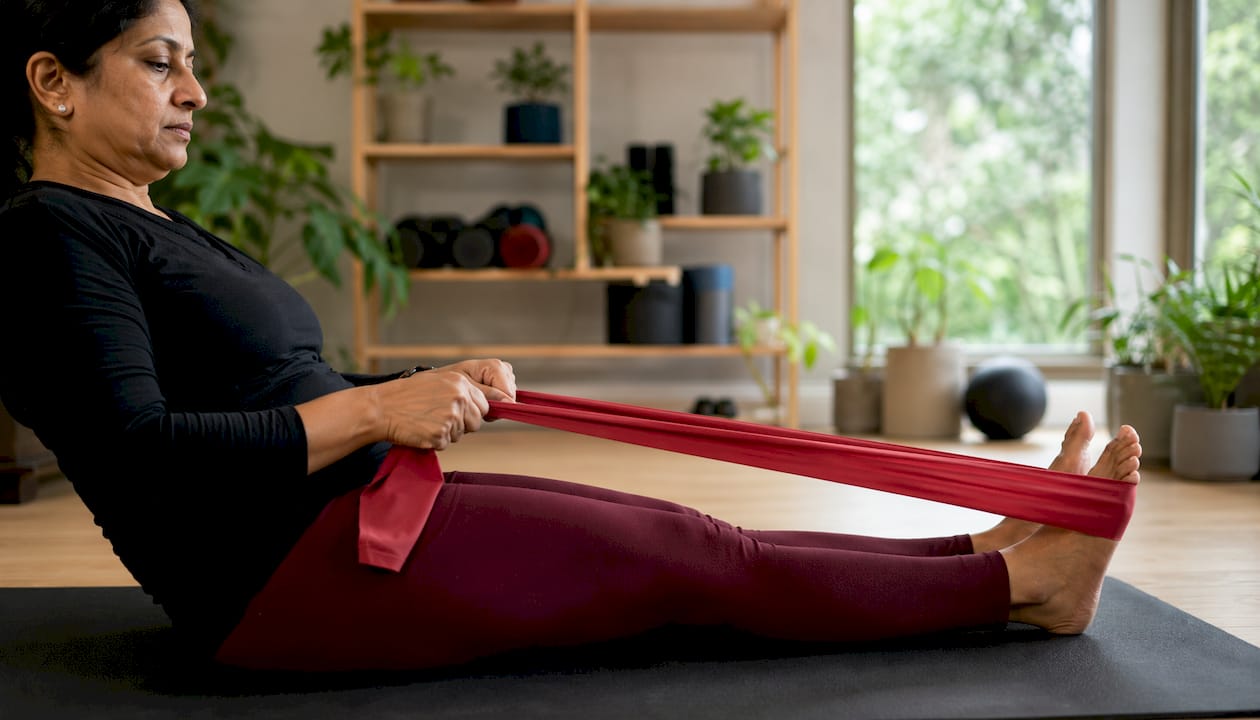
A well-structured week alternates intensity, gives each component dedicated attention, and keeps sessions short enough to stay consistent. Sessions under 20–30 minutes increase the likelihood of sustainable practice, which matters more than any single workout.
| Day | Focus | Session Duration | Key Exercises | Sets/Reps |
|---|---|---|---|---|
| Monday | Strength + flexibility warm-up | Under 30 minutes | Goblet squat, Romanian deadlift, push-up with shoulder tap | Multiple sets with moderate repetitions |
| Tuesday | Balance + mobility | Under 30 minutes | Single-leg stand, tightrope walk, world’s greatest stretch | Several sets with controlled hold durations |
| Wednesday | Active recovery | Under 30 minutes | Walking, light cycling, or gentle yoga flow | Continuous activity |
| Thursday | Strength + balance primer | Under 30 minutes | Bulgarian split squat, Pallof press, single-leg deadlift | Multiple sets with moderate repetitions |
| Friday | Flexibility focus | Under 30 minutes | Hip flexor stretch, pigeon pose, inchworm, doorway chest stretch | Multiple rounds with controlled hold durations |
| Saturday | Full integrated session | Under 30 minutes | Lateral step-overs, reverse lunge, banded lateral walk, full cool-down | Multiple sets with moderate repetitions |
| Sunday | Rest | — | Light walking or complete rest | — |
Warm-up protocol for combined sessions: 5 minutes of dynamic movement (leg swings, arm circles, hip rotations) followed by 2–3 minutes of balance priming (single-leg stance, lateral step-overs at slow tempo).
Cool-down protocol: 5–8 minutes of static stretching targeting the primary muscles used. On strength days, prioritize hip flexors, hamstrings, and chest. On balance days, focus on ankles, calves, and the glutes.
Modifications by fitness level:
- Beginner: Replace Bulgarian split squats with reverse lunges. Reduce sets to 2. Extend rest periods to 90 seconds.
- Intermediate: Add load progressively each week. Introduce perturbation balance drills on Tuesday.
- Advanced: Combine balance and strength in supersets (e.g., single-leg deadlift paired with a Pallof press). Reduce rest to short intervals between sets.
For those training at home without equipment, the home training options at Bodiesbymahmood cover bodyweight progressions that fit this exact weekly structure.
How do you adapt and progress your program over time?
A program that never changes stops working. The body adapts to any consistent stimulus within 4–6 weeks, which is why progression needs to be built into the plan from the start, not added as an afterthought.
Progression variables to cycle:
- Volume: Add a third set before increasing load.
- Intensity: Gradually increase resistance in small increments once you can complete all reps with clean form.
- Frequency: Add a fourth training day only after 6–8 weeks of consistent three-day training.
- Complexity: Progress from bilateral to unilateral movements (two-leg squat to single-leg squat).
Monitoring recovery and overtraining:
- Persistent soreness that lasts several days signals too much volume too soon.
- Declining performance on exercises you’ve been doing for weeks is a reliable early warning sign.
- Sleep quality and resting heart rate are practical daily indicators. A resting heart rate noticeably above your normal baseline often precedes overtraining symptoms.
Tailoring for age and limitations:
Older adults benefit from prioritizing balance and lower-body strength, since these directly protect against falls. The healthy aging fitness approach for adults 50+ addresses how to scale intensity while maintaining joint health. For those with arthritis or chronic joint pain, the arthritis-friendly fitness guide provides specific modifications for integrated training.
Tracking progress practically:
- Log reps, sets, and load for strength exercises each session.
- Test your single-leg balance hold time every four weeks.
- Photograph or measure your squat depth and hip flexor stretch range monthly.
- Note energy levels and mood after sessions. Consistent positive responses confirm the program is calibrated correctly.
Multi-component programs that integrate balance, strength, and flexibility reduce injury risk and build functional fitness more effectively than programs focused on a single quality. The key is treating progression as a variable you control, not something that happens automatically.
Key Takeaways
A personal fitness program combining balance, strength, and flexibility training builds functional health, reduces injury risk, and outperforms any single-focus approach when structured with consistent progression.
| Point | Details |
|---|---|
| Strength frequency | Work all major muscle groups multiple times per week, with several sets of moderate repetitions per exercise. |
| Resistance training for flexibility | Full range of motion strength work improves joint flexibility as effectively as static stretching. |
| Balance as a primer | Two to three minutes of balance work before strength sets improves motor control and lift quality. |
| Session length for consistency | Sessions under 20–30 minutes increase the likelihood of sustainable long-term practice. |
| Progression over time | Advance one variable at a time (volume, load, complexity) and reassess every 4–6 weeks to prevent plateaus. |
Ready to build your program with expert guidance?
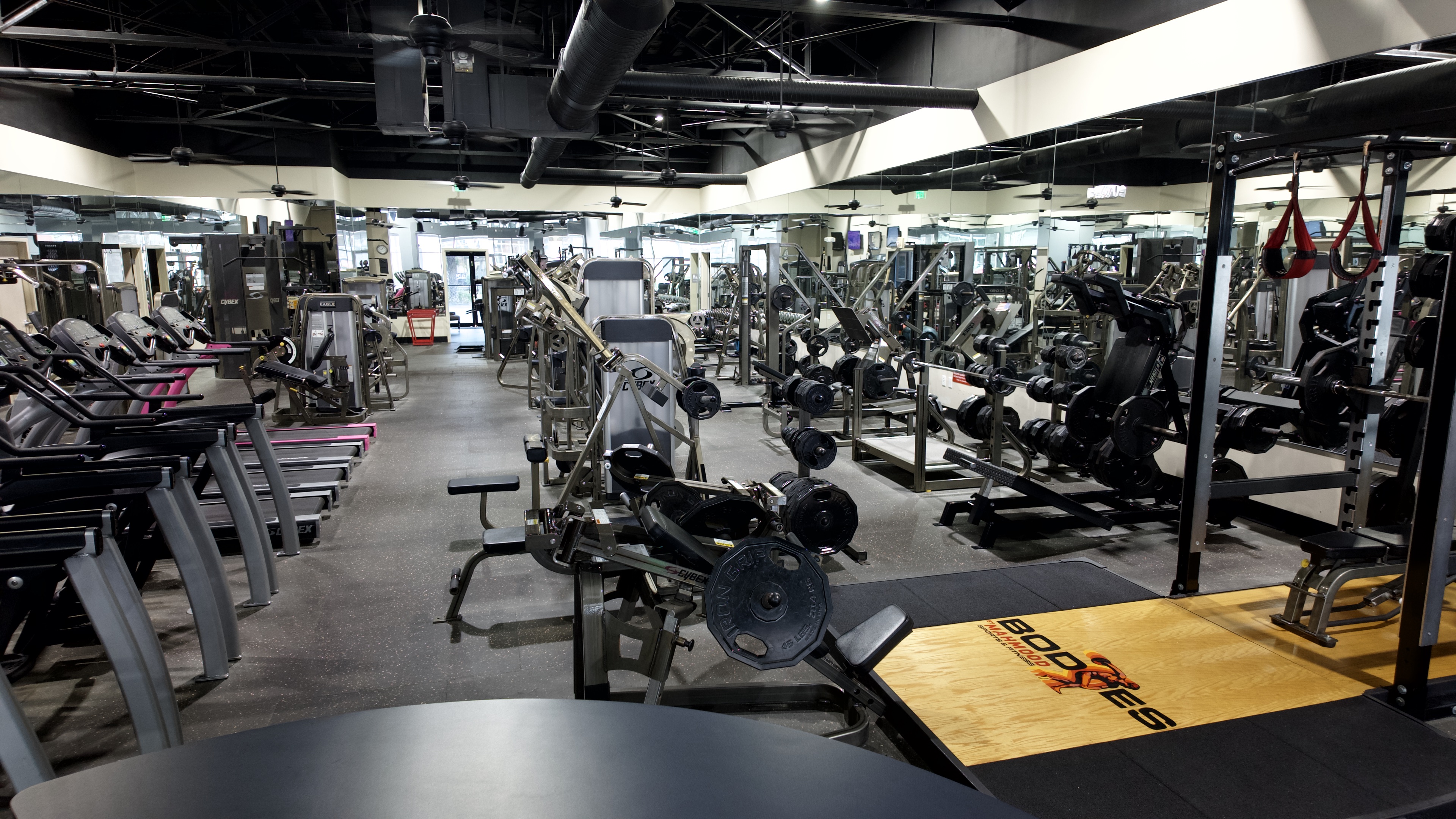
A well-designed program is only as good as the coaching behind it. At Bodiesbymahmood, the training team brings over 25 years of experience building personalized fitness programs that integrate balance, strength, and flexibility for real, measurable results. Whether you’re starting from scratch or breaking through a plateau, the approach is built around your goals, your body, and your schedule. No generic templates.