


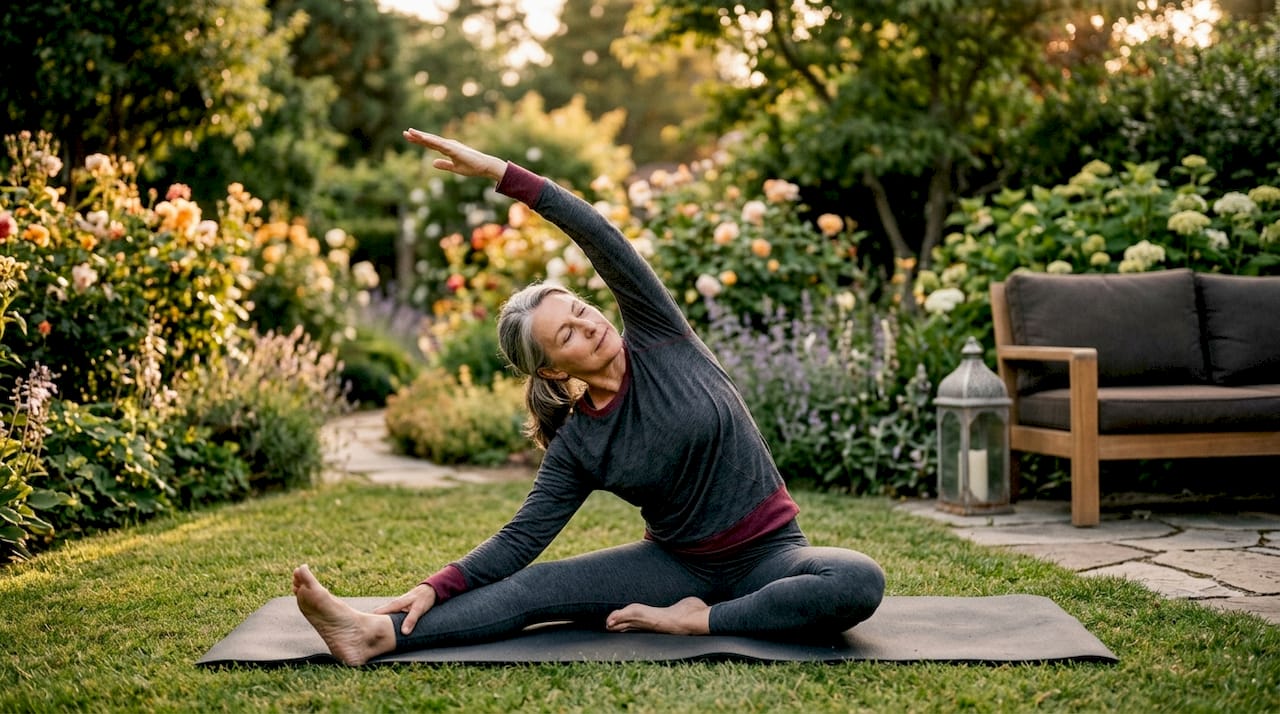
Arthritis-friendly fitness training is defined as exercise specifically designed to protect joints, reduce pain, and improve mobility for people living with arthritis or chronic joint conditions. The standard industry term for this approach is “joint-protective exercise,” and it covers low-impact aerobic activity, resistance training, and flexibility work adapted to each person’s joint capacity. The 2026 EULAR update classifies physical activity as a first-line, standard-of-care treatment for both inflammatory arthritis and osteoarthritis. That classification matters because it puts exercise on the same level as medication for managing symptoms. Knowing what is arthritis-friendly fitness training gives you the foundation to move safely, consistently, and with real results.
What is arthritis-friendly fitness training and which exercises qualify?
Arthritis-friendly training centers on movement that loads joints gently while building the muscles that support them. The goal is not to avoid exercise. The goal is to choose the right kind.
Low-impact aerobic exercise
Walking, cycling, swimming, and water aerobics are the four most recommended aerobic options for people with joint pain. Each keeps at least one foot on the ground or removes body weight from the equation entirely. Water aerobics, for example, reduces effective body weight by up to 90% in chest-deep water, which means your knees and hips work hard without absorbing impact. These activities also stimulate synovial fluid production, the natural lubricant inside every joint. More synovial fluid means less friction and less morning stiffness.

Strength and resistance training
Resistance training builds the muscles that act as shock absorbers around vulnerable joints. Exercises like seated leg presses, resistance band rows, and wall push-ups strengthen the quadriceps, glutes, and rotator cuff without forcing joints through painful ranges of motion. Controlled resistance training builds what clinicians call “joint capacity,” the ability of the surrounding tissue to handle load safely. The key is starting light and progressing slowly based on how your joints respond.
Flexibility and balance work
Yoga, tai chi, and Pilates round out a complete joint-protective program. Tai chi, in particular, has strong clinical backing for reducing fall risk and improving balance in people with arthritis. These practices also train proprioception, your body’s sense of where joints are in space, which directly reduces the risk of missteps that cause flare-ups.
| Exercise type | Impact level | Primary joint benefit |
|---|---|---|
| Swimming | Very low | Full-body mobility, zero compression |
| Cycling | Low | Knee and hip strength, cardiovascular health |
| Walking | Low to moderate | Bone density, synovial fluid production |
| Resistance bands | Low | Muscle support around joints |
| Tai chi | Very low | Balance, proprioception, fall prevention |
| Yoga / Pilates | Low | Flexibility, core stability |
Pro Tip: If a pool is accessible to you, start your fitness program there. Water removes most of the gravitational load on joints, letting you build strength and confidence before moving to land-based exercise.
How to safely start and progress your joint-protective routine
Starting too hard is the single most common mistake people with arthritis make. The result is a flare-up that sidelines them for days and reinforces the false belief that exercise makes arthritis worse.
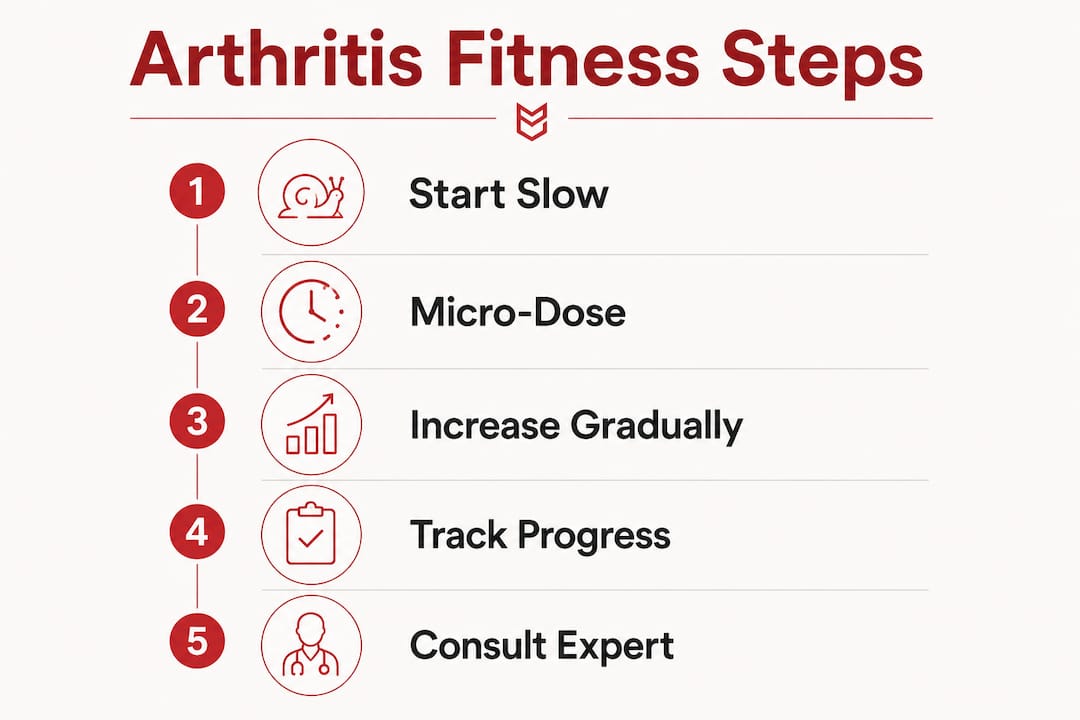
The correct approach is micro-dosing. Start with 5–10 minute sessions of low-intensity movement and assess how your joints respond over the next 24 hours. If pain stays at baseline or improves, you can add a few minutes the following session. This method builds adherence because it removes the fear of overdoing it.
Use the Two-Hour Pain Rule as your guide. If joint pain is noticeably worse two hours after exercise compared to before you started, the session was too intense or too long. That is your signal to scale back, not to stop entirely.
Here is a stepwise progression for beginners:
- Consult your doctor or rheumatologist before starting any new program. Share your joint history and ask about specific movements to avoid.
- Begin with 5–10 minutes of a single low-impact activity, such as walking or seated cycling, three times per week.
- Monitor joint response for 24 hours after each session using the Two-Hour Pain Rule.
- Add 2–3 minutes per session every one to two weeks if your joints tolerate the current load.
- Introduce resistance training once aerobic tolerance is established, starting with bodyweight or light resistance bands.
- Add flexibility and balance work such as tai chi or gentle yoga in week four or five.
- Work toward the CDC target of 150 minutes per week of moderate aerobic activity plus two strength sessions, reached gradually over weeks or months.
Pro Tip: Keep a simple exercise log. Write down the activity, duration, and a pain score from 1–10 before and two hours after. Patterns in your log tell you more than any generic guideline.
Working with an exercise physiologist or a fitness trainer experienced with joint conditions accelerates this process significantly. Bodiesbymahmood offers personalized training programs built around exactly this kind of individualized progression.
What are the full benefits of arthritis-friendly exercise?
The benefits of joint-protective exercise extend well beyond the joints themselves. People who exercise consistently with arthritis report improvements across nearly every dimension of health.
Exercise promotes anti-inflammatory effects by increasing anti-inflammatory cytokines and reducing body fat, both of which directly lower joint pain. Less systemic inflammation means fewer flare-ups and less reliance on pain medication over time.
The full list of documented benefits includes:
- Reduced joint pain and stiffness through improved synovial fluid circulation
- Stronger muscles that absorb load and protect cartilage from compression
- Better cardiovascular health from consistent aerobic activity
- Lower fall risk through improved balance and proprioception
- Weight management that reduces mechanical load on weight-bearing joints like knees and hips
- Reduced anxiety and improved mood from endorphin release and the psychological benefit of staying active
- Better sleep quality linked to regular moderate physical activity
Low-impact routines reduce cortisol and systemic stress, which speeds recovery and lowers injury risk for people managing chronic joint conditions. Lower cortisol also supports better immune function, which matters for people with inflammatory arthritis.
Pro Tip: Consistency beats intensity every time. Three 20-minute walks per week done reliably produce better long-term outcomes than one intense session followed by three days of pain and rest.
For people over 50, these benefits compound with age. The healthy aging fitness approach at Bodiesbymahmood addresses exactly this overlap between joint health and aging.
Which exercises should you avoid with arthritis?
Not every exercise is safe for every joint condition. Knowing which movements to avoid is as important as knowing which ones to pursue.
High-impact and high-load activities place excessive stress on already compromised cartilage. Heavy loaded deep squats and high-impact running on hard surfaces are the two most commonly cited culprits for arthritis flare-ups. Plyometric exercises like box jumps, burpees, and jump squats generate ground reaction forces that cartilage cannot absorb safely.
Warning signs that a movement is causing harm rather than benefit:
- Sharp or stabbing joint pain during the exercise
- Significant swelling in the joint within hours of training
- Pain that is worse two hours after exercise than before
- Grinding or locking sensations inside the joint
| Exercise | Risk level | Safer alternative |
|---|---|---|
| Running on concrete | High | Walking on grass or a track |
| Heavy barbell squats | High | Seated leg press or wall sit |
| Box jumps / plyometrics | High | Step-ups on a low platform |
| Deep kneeling exercises | Moderate | Standing or seated variations |
| High-intensity interval training | Moderate | Low-intensity interval cycling |
Kneeling and deep twisting movements can also be problematic, particularly for people with knee or hip arthritis. The fix is almost always a modification rather than elimination. A kneeling stretch becomes a seated stretch. A standing twist becomes a seated rotation with a smaller range of motion.
Pro Tip: Distinguish between muscle fatigue, which is normal and productive, and joint pain, which is a stop signal. Muscles should feel worked. Joints should feel neutral or better after a session.
How to build arthritis-friendly movement into your daily life
Consistency is the real challenge. A perfect program done twice a month produces no lasting benefit. The goal is to make movement a default part of your day, not a scheduled event you have to psych yourself up for.
Breaking exercise into short bouts throughout the day is just as effective as one continuous session for reaching weekly activity targets. Three 10-minute walks produce the same cardiovascular and joint benefits as one 30-minute walk. That insight removes the biggest barrier most people face: finding a 30-minute block in a busy schedule.
Practical daily integration strategies:
- Walk after meals. A 10-minute walk after lunch and dinner adds 70 minutes of activity per week with no schedule disruption.
- Use a pool or community center. Water-based classes remove weather and impact barriers simultaneously.
- Try group classes. Programs like tai chi or Enhance Fitness, a CDC-recognized program for older adults with chronic conditions, add social accountability to physical benefit.
- Set a movement reminder. Stand and move for two minutes every 45–60 minutes to break sedentary patterns that stiffen joints.
- Track simple metrics. Step count, session duration, or a weekly pain score gives you feedback without complexity.
- Adapt your environment. Keep resistance bands near your couch. Put your walking shoes by the door. Reduce friction between intention and action.
A personalized fitness plan built around your schedule and joint capacity makes all of these strategies far easier to maintain. Generic programs fail people with arthritis because they do not account for the variability of symptoms day to day. A plan that bends with your body is one you will actually follow.
Key Takeaways
Arthritis-friendly fitness training works because low-impact, progressive movement builds joint capacity, reduces inflammation, and improves quality of life without triggering pain flare-ups.
| Point | Details |
|---|---|
| Exercise is first-line treatment | EULAR 2026 classifies physical activity as standard-of-care for arthritis, equal in priority to medication. |
| Start with micro-dosing | Begin with 5–10 minute sessions and add time only when joints tolerate the current load. |
| Synovial fluid is the mechanism | Movement stimulates joint lubrication, which directly reduces stiffness and friction. |
| Avoid high-impact movements | Running on hard surfaces, deep loaded squats, and plyometrics risk flare-ups and should be replaced with safer alternatives. |
| Consistency beats intensity | Short, frequent sessions produce better long-term joint outcomes than occasional hard workouts. |
What 25 years of training people with joint pain taught me
Most people come to me believing that their arthritis means they should move less. That belief is the most damaging thing I encounter in this work. The joint does not heal by resting. It heals by moving correctly.
What I have seen over and over is that the people who make the most progress are not the ones who push hardest. They are the ones who show up consistently with a plan that fits their body on that specific day. Some days that means a 20-minute resistance session. Some days it means a 10-minute walk and some gentle stretching. The program has to flex, or people quit.
The other thing I have learned is that generic advice fails people with joint conditions faster than almost any other population. A one-size-fits-all approach to fitness simply does not work when two people with “arthritis” can have completely different joint profiles, pain patterns, and movement histories. The label is the same. The program cannot be.
Exercise is medicine. But like any medicine, the dose and delivery method matter enormously. Get those right, and the results are real.
— Mahmood
Bodiesbymahmood: training built around your joints
Bodiesbymahmood has spent over 25 years building individualized programs for people at every fitness level, including those managing joint pain and arthritis. The trainers at Bodiesbymahmood understand how to progress a program safely, identify movements that protect rather than stress your joints, and adjust your plan when symptoms change.
If you are ready to move with more confidence and less pain, personal training at Bodiesbymahmood gives you a program built specifically for your body, your joints, and your goals. No guesswork, no generic templates. Just a plan that works for you, backed by real experience.
FAQ
What is arthritis-friendly fitness training?
Arthritis-friendly fitness training is exercise designed to protect joints, reduce pain, and improve mobility through low-impact, progressive movement. It combines aerobic activity, resistance training, and flexibility work adapted to each person’s joint capacity.
Can I exercise with arthritis if I am in pain?
Yes, gentle movement is generally safe and beneficial even during mild pain. Use the Two-Hour Pain Rule: if pain is significantly worse two hours after exercise, reduce intensity or duration at the next session.
What are the best exercises for joint pain?
Swimming, cycling, walking, tai chi, and resistance band training are the most recommended exercises for joint pain. These activities build strength and stimulate synovial fluid production without high-impact stress on cartilage.
How much exercise should someone with arthritis do per week?
The target is 150 minutes of moderate aerobic activity per week plus at least two strength and balance sessions. This can be broken into short daily bouts of 10–15 minutes to make it manageable.
Do I need a trainer to start arthritis-friendly exercise?
A trainer is not required, but working with one who understands joint conditions significantly reduces the risk of flare-ups and speeds progress. Bodiesbymahmood specializes in individualized fitness programs for people with joint health needs.