


Personalized fitness assessments are structured evaluations that measure key physical capabilities across multiple domains to design training programs built around your specific needs. A comprehensive initial assessment covers movement screening, body composition, strength, and cardiovascular capacity, typically in 30–45 minutes. These evaluations are not pass/fail tests. They are diagnostic tools that give trainers and athletes the objective data needed to build programs that actually work. Whether you are a weekend runner or a competitive athlete, knowing the types of personalized fitness assessments available puts you in control of your progress.
1. Types of personalized fitness assessments: an overview
Fitness assessments fall into four core categories: health and lifestyle evaluation, body composition analysis, physical fitness testing, and posture and movement screening. Each category targets a different dimension of your physical condition. Together, they create a complete picture that no single test can provide. Industry guidelines recommend reassessing every 3–6 months to track progress and adjust programming as your fitness changes.
2. Health and lifestyle evaluation
Every personalized fitness evaluation starts with a health and lifestyle intake. This step collects medical history, injury history, sleep quality, stress levels, nutrition habits, and daily activity patterns. The data shapes every decision that follows, from which exercises are safe to how hard you should train in week one. Skipping this step is the most common reason generic programs fail athletes and individuals alike. A thorough lifestyle and medical history review takes roughly 15 minutes and prevents costly programming mistakes.

3. Movement screening assessments
Movement screening is the foundation of any safe, individualized fitness plan. It identifies restrictions, asymmetries, and compensations before any load is placed on the body. Common screens include:
- Overhead squat: Reveals ankle mobility, hip flexibility, and thoracic spine restrictions simultaneously.
- Single-leg balance: Exposes stability deficits and side-to-side differences that predict injury risk.
- Hip hinge: Assesses posterior chain coordination and lumbar control under a basic movement pattern.
- Shoulder mobility screen: Identifies rotator cuff tightness and scapular positioning issues.
Movement screening must precede strength testing. Loading a dysfunctional movement pattern causes injury, not adaptation. A trainer who skips screening and jumps straight to a bench press test is guessing, not assessing.
Pro Tip: Film your overhead squat from the front and side. Watching the replay reveals compensations you cannot feel in the moment.
4. Body composition assessments: methods and what to use
Body composition assessment measures the ratio of fat mass to lean mass. The method you choose depends on your budget, access, and how frequently you plan to retest.
| Method | Cost | Accuracy | Best for |
|---|---|---|---|
| Circumference measurements | $0 | Moderate | Regular trend tracking |
| Skinfold calipers | Low | Moderate | Gym-based assessments |
| BIA scales | Low to moderate | Variable | Quick estimates |
| DEXA scan | High | Very high | Precision needs |
Circumference measurements cost nothing and remain the most repeatable option for most athletes and individuals. A tape measure taken at the waist, hips, chest, and thighs every four weeks reveals body composition trends without the noise that plagues high-tech tools. BIA scales are highly sensitive to hydration, room temperature, and meal timing, which makes consistent testing protocol the deciding factor in their usefulness.
DEXA scans provide the most accurate breakdown of fat, lean mass, and bone density, but they require a medical facility and cost $50–$150 per session. They are best reserved for athletes with specific body composition targets or clinical needs.
Pro Tip: Take all body composition measurements at the same time of day, in the same hydration state, and wearing the same clothing. Consistency in conditions matters more than the tool you use.
5. Strength and endurance assessments
Strength testing tells you how much force your muscles can produce and sustain. The data directly informs load selection, progression speed, and exercise selection in your program.
Submaximal strength testing using estimated one-rep max formulas, such as the Epley or Brzycki formula, provides safe and reliable data without the injury risk of true maximal lifting. The process is straightforward: perform 3–5 reps with a challenging but manageable load, then calculate your estimated max. This approach works especially well for athletes who are new to structured lifting.
Common strength and endurance tests include:
- Push-up test: Measures upper body endurance with zero equipment. Count reps to failure with strict form.
- Plank hold: Assesses core endurance and spinal stability under sustained load.
- Estimated 1RM (squat, deadlift, press): Uses submaximal loads and a formula to project maximal strength safely.
- Timed rep max: Counts reps in a set time window, such as 60 seconds of bodyweight squats, to measure muscular endurance.
Strength testing always follows movement screening. Testing a squat max on an athlete who cannot hinge properly produces bad data and risks injury. Sequence matters as much as the test itself.
6. Cardiovascular fitness assessments
Cardiovascular fitness tests measure how efficiently your heart and lungs deliver oxygen to working muscles. The results guide aerobic training zones, recovery protocols, and overall program intensity.
Accessible cardiovascular tests include resting heart rate monitoring, the 3-minute step test, the 6-minute walk test, and the Rockport 1-mile walk/run. Each provides a different layer of information:
- Resting heart rate: Measure over three consecutive mornings before rising. A lower resting heart rate generally indicates better cardiovascular conditioning.
- 3-minute step test: Step on and off a 12-inch bench for three minutes at a set cadence, then measure heart rate recovery. Faster recovery signals stronger aerobic fitness.
- 6-minute walk test: Measures total distance covered in six minutes. Useful for lower-fitness individuals and older athletes as a baseline.
- Rockport 1-mile walk/run: Time a one-mile effort, record heart rate at finish, and use age and weight to estimate VO2 max. This is one of the most practical field tests for general fitness populations.
For a deeper look at how cardiovascular data shapes program design, the cardiovascular fitness guide from Bodiesbymahmood covers training zone application in detail.
7. Flexibility, balance, and posture assessments
Flexibility, balance, and posture evaluations round out a complete fitness needs assessment. These tests identify the physical limitations that increase injury risk and reduce performance, even in athletes who score well on strength and cardiovascular measures.
Common flexibility and balance tests include:
- Sit-and-reach test: Measures hamstring and lower back flexibility. Poor scores correlate with increased low back pain risk.
- Shoulder mobility test: Assesses the distance between hands placed behind the back from opposite directions. Asymmetry signals rotator cuff or thoracic restriction.
- Romberg test: Standing with feet together and eyes closed for 30 seconds. Excessive sway indicates balance or proprioception deficits.
- Stork stand: Single-leg balance with eyes open, then closed. Reveals hip stability and neuromuscular control differences between sides.
Posture analysis examines spinal alignment, shoulder position, and pelvic tilt from the front, side, and rear. Forward head posture, rounded shoulders, and anterior pelvic tilt are the three most common deviations seen in desk workers and overhead athletes. Identifying these patterns early allows trainers to correct them through targeted exercise selection before they become injuries.
8. Sport performance testing for athletes
Athletes need assessments that go beyond general fitness. Sport performance testing adds speed, agility, power, and reaction time measures to the standard battery. A 40-yard dash, vertical jump, pro agility shuttle, and reactive strength index test provide sport-specific baselines that general fitness assessments miss entirely. These results directly inform periodization, position-specific conditioning, and return-to-play timelines after injury.
9. Reassessment frequency and progress tracking
A single assessment is a snapshot. Consistent reassessment is what turns data into results. Objective feedback from reassessments builds confidence, reveals what is working, and identifies when a program needs adjustment. The standard recommendation is to reassess every 3–6 months, though athletes in active competition cycles may benefit from monthly check-ins on key metrics. Tracking tools and fitness tracking best practices help maintain the consistency that makes reassessment data meaningful.
Key takeaways
Personalized fitness assessments require consistent protocols across movement, body composition, strength, cardiovascular, and flexibility domains to produce data that reliably guides programming.
| Point | Details |
|---|---|
| Screen before you load | Movement screening must precede strength testing to prevent injury from dysfunctional patterns. |
| Consistency beats technology | Circumference measurements taken under the same conditions outperform variable BIA readings for trend tracking. |
| Use submaximal strength tests | Epley or Brzycki formula estimates provide safe, usable strength data without maximal effort risk. |
| Reassess every 3–6 months | Regular reassessment tracks progress and signals when programming adjustments are needed. |
| Athletes need sport-specific tests | General fitness assessments miss speed, power, and agility data that athletic programming requires. |
What 25 years of assessments taught me about what actually matters
Most athletes walk in expecting me to put them through a gauntlet of high-tech tests. What I have learned over 25 years is that the most valuable data comes from the simplest, most consistently applied protocols. I have seen expensive BIA machines produce wildly different readings on the same athlete tested two hours apart. I have seen a basic overhead squat screen reveal a hip restriction that explained three years of recurring hamstring pulls.
The technology is not the point. The protocol is the point. When I assess someone at Bodiesbymahmood, I care far more about whether we are testing under the same conditions every time than whether we are using the most advanced equipment available. A tape measure taken at 7:00 AM in a fasted state, repeated monthly, tells me more than a DEXA scan taken at random intervals.
The other thing most articles get wrong is sequencing. Trainers rush to strength tests because those numbers feel impressive. Movement screening feels slow and unglamorous. But I have never regretted spending 15 minutes on a movement screen before loading an athlete. I have absolutely regretted skipping it. The screen is not a formality. It is the most important 15 minutes of the entire assessment.
My advice: pick a small battery of tests you can execute perfectly every time, and stick with it. Progress tracking only works when the measurement conditions are identical. That discipline, applied consistently, is what separates athletes who improve from those who plateau.
— Mahmood
Assessment-driven training at Bodiesbymahmood
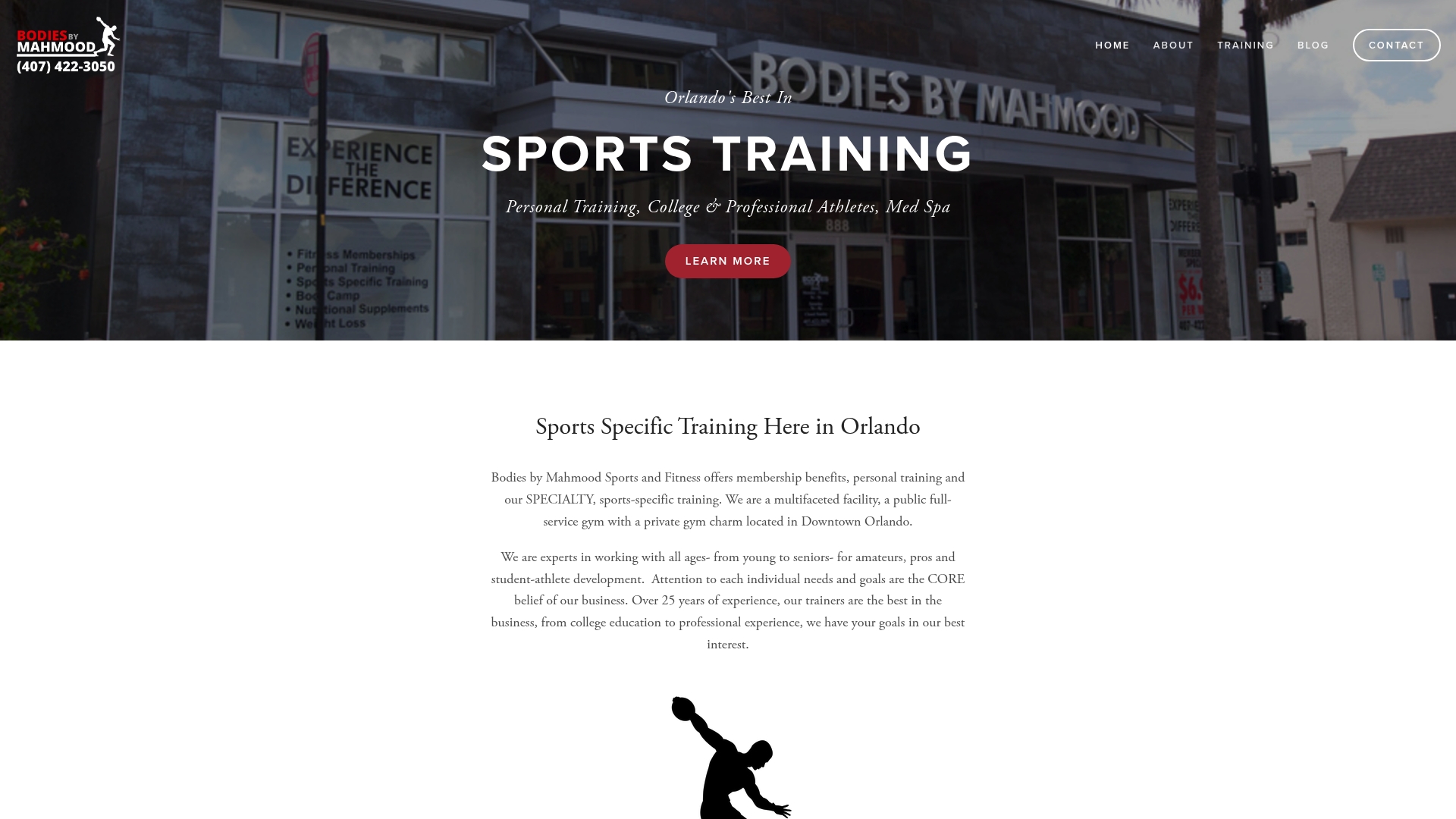
Bodiesbymahmood builds every training program around a full assessment battery, not assumptions. The facility’s trainers, with backgrounds in college athletics and professional sports, use movement screening, body composition tracking, strength baselines, and cardiovascular testing to design programs that fit each athlete’s actual starting point. Whether you are an amateur athlete building a foundation or a competitive player preparing for a college program, the process starts with data. Explore personal training services at Bodiesbymahmood to see how assessment-driven programming works in practice. College-bound athletes can also review the specialized athlete programs built specifically around performance assessment results.
FAQ
What is a personalized fitness assessment?
A personalized fitness assessment is a structured evaluation covering movement, body composition, strength, cardiovascular fitness, flexibility, and balance to create a tailored training program. It provides objective baseline data that guides safe and effective exercise programming.
How long does a fitness assessment take?
A comprehensive initial fitness assessment typically takes 30–45 minutes, covering movement screening, body composition, strength baselines, and a cardiovascular measure.
How often should you reassess fitness?
Reassessment every 3–6 months is the standard recommendation for most individuals and athletes. Athletes in active competition cycles may benefit from more frequent check-ins on key performance metrics.
Is submaximal strength testing as useful as a true one-rep max test?
Submaximal strength testing using the Epley or Brzycki formula provides equally useful programming data with significantly lower injury risk, making it the preferred method for most athletes outside of powerlifting competition.
What is the most repeatable body composition method?
Circumference measurements taken at the same time of day and hydration state are the most repeatable option for regular body composition tracking, outperforming BIA scales in consistency for most athletes.