


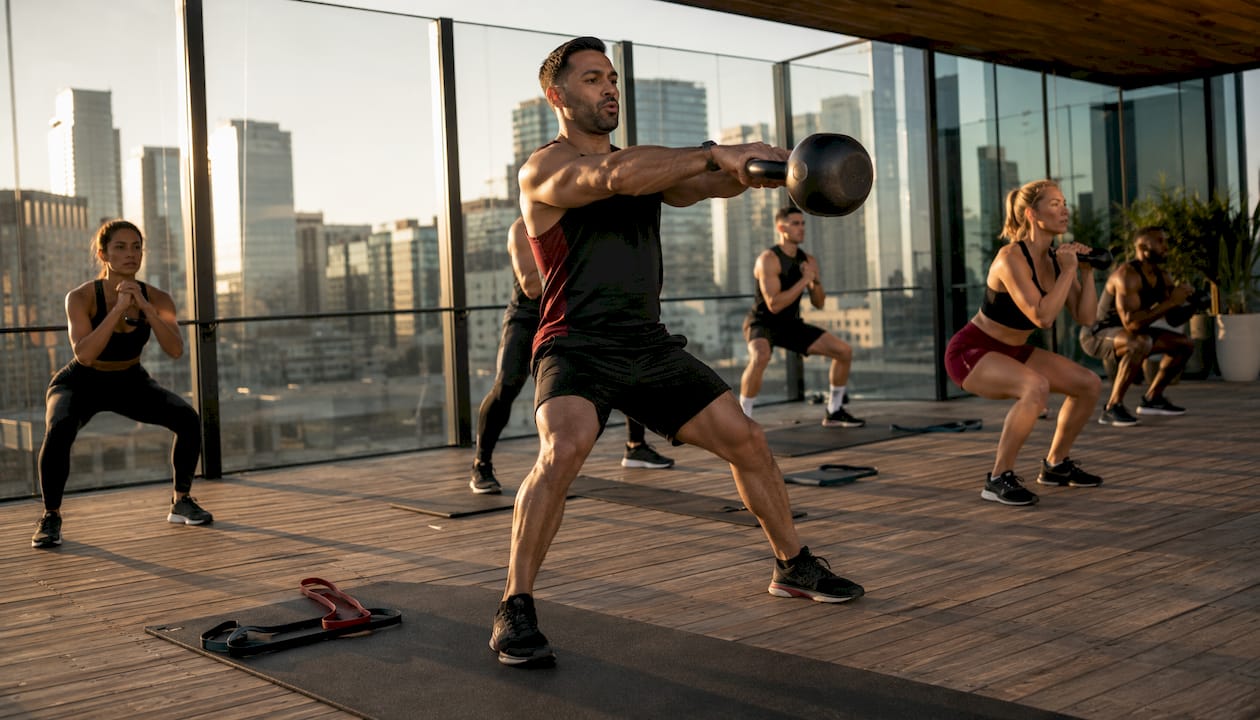
Functional fitness training organizes movement around what your body actually does in real life: squatting to pick something up, pushing a door open, carrying groceries, rotating to reach behind you. The main types of functional fitness training styles break down into six core movement patterns — squat, hinge, push, pull, carry, and rotate — and the training styles built around them include High-Intensity Functional Training (HIFT), circuit-based functional training, bodyweight functional training, loaded carry training, and sport-specific functional training. Unlike traditional gym work that isolates a single muscle, every one of these styles demands that multiple joints and muscle groups coordinate together, which is exactly what makes them transfer so well to real-world performance.
Here is a quick orientation before the deep dive:
- High-Intensity Functional Training (HIFT): Multimodal movements performed at high intensity, recruiting large amounts of muscle mass simultaneously
- Circuit-based functional training: Multiple exercises cycled in sequence to cover all movement patterns with managed rest intervals
- Bodyweight functional training: Push-ups, lunges, squats, and planks using only body resistance, ideal for beginners and travel
- Loaded carry training: Farmer’s carries, suitcase carries, and overhead carries that build full-body stability under real load
- Sport-specific functional training: Movement patterns matched to the demands of a particular sport or occupation
- Core stability training: Planks, Pallof presses, and anti-rotation work that anchor every other movement pattern
Equipment spans the full spectrum: kettlebells, medicine balls, free weights, resistance bands, and bodyweight. The defining contrast with traditional training is simple. A bicep curl trains one joint in one plane. A kettlebell swing trains the hips, spine, shoulders, and core across multiple planes in a single rep.
Table of Contents
- 1. High-Intensity Functional Training (HIFT)
- 2. Circuit-based functional training
- 3. Bodyweight functional training
- 4. Loaded carry training
- 5. Sport-specific functional training
- 6. Core stability training
- 7. Balance and proprioception training
- 8. Functional strength training with free weights
- What are the real benefits of functional fitness training?
- How to build a balanced functional training routine
- Expert perspective from Bodiesbymahmood on individualized functional training
- Bodiesbymahmood brings functional training to life in Orlando
- Key Takeaways
1. High-Intensity Functional Training (HIFT)
HIFT differs from standard HIIT by using multimodal functional movements rather than isolated cardio bursts. Where HIIT might have you sprinting on a treadmill, HIFT has you cycling through kettlebell swings, box jumps, and push-ups at high intensity. The result is simultaneous cardiovascular and muscular adaptation, because you are recruiting more total muscle mass per session.
Common HIFT exercises:
- Kettlebell swings (hinge + power)
- Burpees (squat + push + jump)
- Box jumps (lower body power)
- Thrusters (squat + overhead press combined)
- Battle rope slams (upper body power + core)
One underappreciated advantage of HIFT programs is the community culture they build, which consistently improves adherence compared to solo gym formats. If you have ever struggled to stay consistent, that social accountability is worth more than the programming itself.
2. Circuit-based functional training
Circuit training strings multiple exercises back to back, covering different movement patterns in a single session. Medical News Today recommends starting with circuit-based workouts specifically because they maximize benefits while managing fatigue through structured rest intervals.
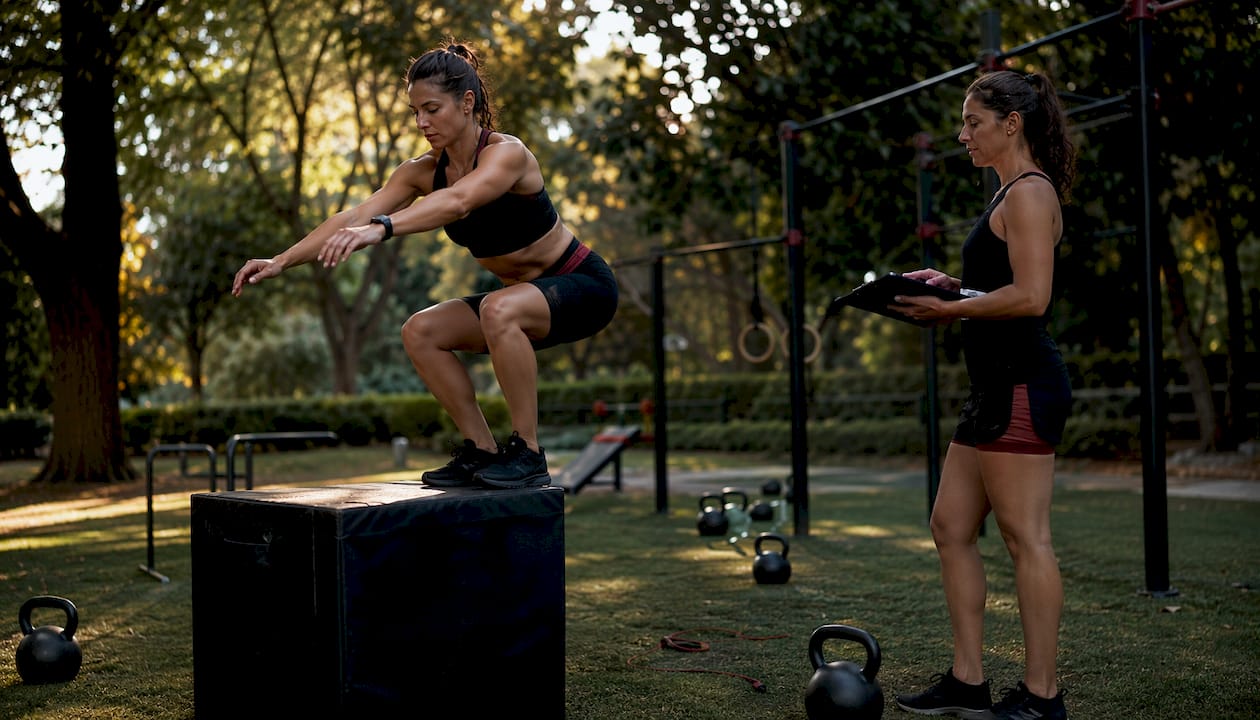
A well-built circuit hits every pattern: a squat, a hinge, a push, a pull, a carry, and a rotational movement. That breadth is the point. You are not just training muscles; you are training movement sequences that mirror how your body coordinates in daily tasks.
Sample circuit structure:
- Goblet squat x 12
- Romanian deadlift x 10
- Push-up x 15
- TRX row x 12
- Farmer’s carry x 40 yards
- Med ball rotational throw x 8 each side
- Rest 90 seconds, repeat 3 rounds
The rest interval matters more than most people think. Too short and form breaks down; too long and the cardiovascular adaptation disappears.
3. Bodyweight functional training
Bodyweight training is where most people should start, and where many experienced athletes return when they want to audit their movement quality. Common functional exercises like push-ups, walking lunges, jump squats, and bodyweight squats cover the primary movement patterns without any equipment at all.
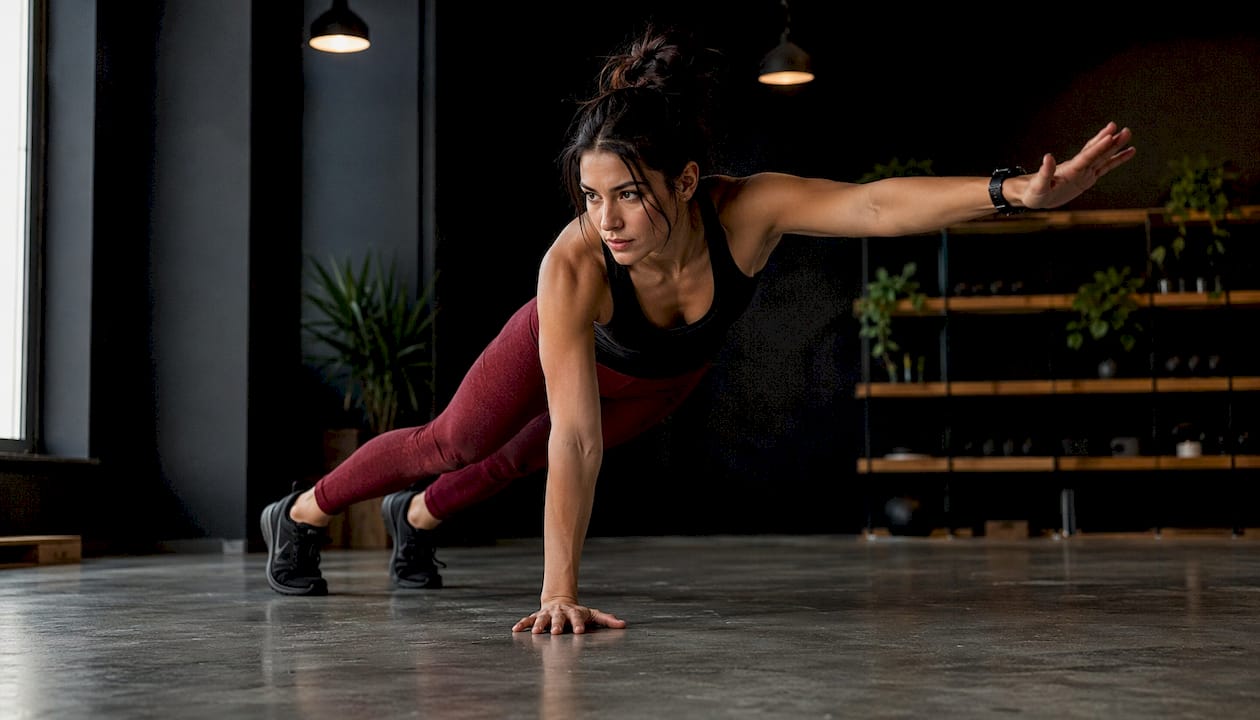
The real value here is that bodyweight training forces honest movement. You cannot load a pattern you cannot control. A shaky single-leg squat tells you exactly where your stability gaps are before you add a barbell.
Bodyweight exercise examples by pattern:
- Squat: Air squat, jump squat, Bulgarian split squat
- Hinge: Single-leg Romanian deadlift, good morning
- Push: Push-up, pike push-up, decline push-up
- Pull: Pull-up, inverted row, chin-up
- Carry: Bear crawl, crab walk
- Rotate: World’s greatest stretch, thoracic rotation
Progressions are straightforward: add tempo (slow the eccentric), reduce stability (single-leg variations), or increase range of motion before you ever reach for a weight.
4. Loaded carry training
Loaded carries are arguably the most underused category in most people’s functional exercise routines. Picking something heavy up and walking with it is one of the most fundamental human movement tasks, yet most gym programs skip it entirely.
The farmer’s carry, suitcase carry, and overhead carry each challenge the body differently. A farmer’s carry (both hands loaded) builds grip strength and bilateral stability. A suitcase carry (one hand loaded) forces anti-lateral flexion, meaning your core has to resist tipping sideways. An overhead carry challenges shoulder stability and thoracic extension simultaneously.
Loaded carry variations:
- Farmer’s carry: dumbbells or kettlebells at sides
- Suitcase carry: single dumbbell, opposite hand free
- Overhead carry: kettlebell or plate pressed overhead
- Zercher carry: load held in the crook of the elbows
- Trap bar carry: heavier loads with neutral grip
Start with 20–30 yard distances at a load that challenges your grip and posture without causing a lean. Build distance before adding weight.
5. Sport-specific functional training
Sport-specific functional training matches movement patterns to the exact demands of an athlete’s sport or an individual’s occupational tasks. A baseball pitcher needs rotational power and shoulder stability. A soccer player needs lateral agility and single-leg strength. A firefighter needs loaded carry capacity and overhead pulling strength.
Functional training complements traditional resistance training by maximizing the transfer of strength gains to real-world tasks. That transfer is the whole point of sport-specific work. General strength matters, but it has to be expressed in the specific movement patterns the sport demands.
Sport-specific exercise examples:
- Rotational power (baseball, tennis, golf): Med ball rotational throw, cable woodchop, landmine rotation
- Lateral agility (soccer, basketball): Lateral band walk, lateral shuffle, side-to-side box jump
- Overhead stability (volleyball, swimming): Bottoms-up kettlebell press, Turkish get-up, single-arm cable press
- Deceleration (all field sports): Eccentric single-leg squat, Nordic hamstring curl
The benefits of functional fitness for sports performance extend well beyond strength. Coordination, proprioception, and reactive stability all improve when training mirrors sport-specific movement demands.
6. Core stability training
Core stability is not about crunches. It is about your ability to maintain a rigid, neutral spine while your limbs move under load. That distinction separates functional core work from traditional ab training entirely.
The Pallof press is the clearest example: a cable or band pulls you laterally, and your job is to resist that pull without rotating. No movement, maximum tension. That anti-rotation demand is exactly what your core does when you carry a bag on one shoulder, swing a bat, or lift a child from a car seat.
Core stability exercises:
- Pallof press (anti-rotation)
- Dead bug (anti-extension)
- Side plank (anti-lateral flexion)
- Plank with shoulder tap (stability under movement)
- Suitcase deadlift (loaded anti-lateral flexion)
- Stir the pot (plank on stability ball)
Rotational movements are the most neglected category in most programs. Beginners especially under-utilize the transverse plane, which creates functional imbalances that show up as lower back pain or shoulder issues over time.
7. Balance and proprioception training
Balance training is not just for older adults recovering from falls, though the data there is striking. It is a foundational component of every functional training style because proprioception — your body’s sense of where it is in space — governs how efficiently you move under any condition.
Single-leg work is the entry point. A single-leg Romanian deadlift challenges hip stability, ankle proprioception, and spinal control simultaneously. Add a reach pattern and you have introduced the transverse plane. Add a load and you have a full functional training exercise.
Balance training techniques:
- Single-leg stance (eyes open, then closed)
- Single-leg Romanian deadlift
- Bosu ball squat
- Single-leg cable row
- Lateral step-up with knee drive
- Y-balance reach patterns
Pro Tip: Before adding load to any balance exercise, master the movement on a stable surface first. A single-leg squat that collapses inward on flat ground will not improve on a Bosu ball — it will just collapse faster.
8. Functional strength training with free weights
Free weights — barbells, dumbbells, and kettlebells — allow you to train the full range of functional movement patterns with progressive overload. The deadlift is the textbook example: it directly trains the muscles used when you pick any object up from the floor, which is why the Mayo Clinic Diet cites it as a primary functional exercise.
Kettlebells earn a special place in functional training because their offset center of mass demands more stabilization than a dumbbell of the same weight. A kettlebell goblet squat forces you to maintain thoracic extension and core bracing throughout the full range of motion.
Free weight functional exercises:
- Deadlift and Romanian deadlift (hinge)
- Goblet squat and front squat (squat)
- Single-arm dumbbell row (pull)
- Dumbbell overhead press (push)
- Kettlebell swing (hinge + power)
- Turkish get-up (full-body integration)
The Turkish get-up deserves its own mention. It moves through six distinct positions, trains every plane of motion, and requires shoulder stability, hip mobility, and core control in a single continuous movement. It is one of the most complete functional exercises in existence.
What are the real benefits of functional fitness training?
The performance gains from functional training are well-documented. Research published in the Journal of Advanced Health Care found that functional physical training improves sprint speed by approximately 5%, balance by 20% in older adults, agility by 15%, and produces a 3% reduction in fat mass alongside a 4% increase in lean mass. Those are not marginal numbers.
Muscular endurance gains are particularly notable. The same research found functional training produced a 35% increase in push-up capacity and a 48% improvement in plank hold time compared to traditional resistance training. For anyone whose goal is to move better and last longer, that gap matters.
Key functional fitness benefits:
- Improved coordination and neuromuscular efficiency across multiple joints
- Reduced fall risk, particularly in adults over 60
- Better transfer of gym strength to real-world tasks
- Lower injury rates through balanced multi-planar training
- Improved posture and spinal stability from loaded carry and anti-rotation work
- Enhanced athletic performance through sport-specific movement patterns
The distinction from traditional isolated training is worth stating plainly. A leg press builds quad strength in one plane. A single-leg squat builds quad strength, hip stability, ankle proprioception, and core control simultaneously. Both have value, but only one of them prepares you for the stairs.
How to build a balanced functional training routine
The most common mistake in building a functional program is overloading one movement pattern while neglecting others. Most people push more than they pull, squat more than they hinge, and almost never train rotation. That imbalance is where injuries start.
Circuit-based training is the most practical structure for covering all six patterns in a single session. Pair a push with a pull, a squat with a hinge, and add a carry and a rotational movement. That pairing also cuts rest time without sacrificing recovery, because opposing muscle groups alternate.
Common mistakes to avoid:
- Skipping rotational movements entirely (the most neglected pattern)
- Progressing load before movement quality is established
- Ignoring single-leg and single-arm variations that expose asymmetries
- Training only in the sagittal plane (forward/backward) and never laterally
- Treating core work as an afterthought rather than integrating it into every pattern
Injury prevention in functional training starts with flexibility and movement quality before load. A tight hip flexor will compromise every squat and hinge pattern you train. Address mobility restrictions first, then build strength through the full range.
For progression, add complexity before load. Master a bilateral squat before a split squat. Master a split squat before a single-leg squat. Add weight only when the movement is clean through the full range. Rest intervals of 60–90 seconds between circuits preserve enough recovery for quality movement without letting heart rate drop completely.
Pro Tip: If you are unsure which style to start with, one-size-fits-all programs rarely work. Map your daily movement demands first — what do you lift, carry, push, or rotate in your actual life — then build your program around those patterns.
Expert perspective from Bodiesbymahmood on individualized functional training
At Bodiesbymahmood, the approach to functional training starts with a concept that most generic programs miss: functionality exists on a continuum. There is no single “functional” program that works for everyone, because what is functional depends entirely on what you need your body to do.
With over 25 years of experience training athletes from amateur to professional levels, the team at Bodiesbymahmood has seen what happens when programs are built around a person’s actual movement demands rather than a generic template. Athletes who need rotational power get rotational training. Adults who need fall prevention get balance and loaded carry work. The programming reflects the person, not a category.
Isolation exercises are not discarded in this model. When a compound movement assessment reveals a specific weakness — a weak glute medius showing up as knee valgus in a squat, for example — targeted isolation work addresses that gap directly. The functional program then reintegrates that strength into the full movement pattern.
Practical recommendations from Bodiesbymahmood:
- Assess movement quality before adding load to any pattern
- Build programs around the six core movement patterns, weighted by individual need
- Include at least one rotational exercise per session
- Use loaded carries weekly as a baseline for full-body stability
- Reassess and progress every 4–6 weeks based on movement quality, not just load
The balance, strength, and flexibility program framework at Bodiesbymahmood integrates all of these principles into a structure that adapts as the athlete develops. That adaptability is what separates a functional program from a fixed routine.
Bodiesbymahmood brings functional training to life in Orlando
Most people who search for functional fitness programs end up with a generic plan that was not built for them. Bodiesbymahmood is the alternative: a facility in Orlando with over 25 years of experience designing individualized programs that actually match how you move, compete, and live.
Where a standard gym gives you equipment and a floor plan, Bodiesbymahmood gives you a trainer who understands sport-specific movement, injury prevention, and the full spectrum of functional training styles covered in this article. The facility blends public gym access with a private training atmosphere, so you get personalized attention without the isolation of a one-person studio. Whether you are an athlete preparing for a college program, a professional managing performance, or an adult who wants to move better for the next 30 years, the programming is built around your specific movement demands. The injury prevention habits that protect long-term performance are built into every session from day one.
Book a personal training session at Bodiesbymahmood and get a program that is actually designed for you.
Key Takeaways
Functional fitness training built around the six core movement patterns — squat, hinge, push, pull, carry, and rotate — produces measurably better real-world performance than isolated training, including a 35% increase in push-up capacity and a 48% improvement in plank hold time.
| Point | Details |
|---|---|
| Six core movement patterns | Every functional program should cover squat, hinge, push, pull, carry, and rotate across multiple planes. |
| HIFT vs. traditional training | HIFT uses multimodal functional movements at high intensity, recruiting more muscle mass than isolated cardio or strength work. |
| Rotation is the most neglected pattern | Skipping transverse plane training creates functional imbalances that show up as injury over time. |
| Measurable performance gains | Functional training produces a 35% increase in push-up capacity and a 48% improvement in plank hold time versus traditional resistance training. |
| Bodiesbymahmood’s approach | Bodiesbymahmood builds individualized functional programs in Orlando based on each person’s movement demands, goals, and sport-specific needs. |